
Hackers Claim Breach of Russian Election Systems Days Before Parliamentary Vote
An anonymous hacking group, CikLeak, claims to have breached Russian election systems, including the Central Election Commission and its contractors, days before parliamentary elections.

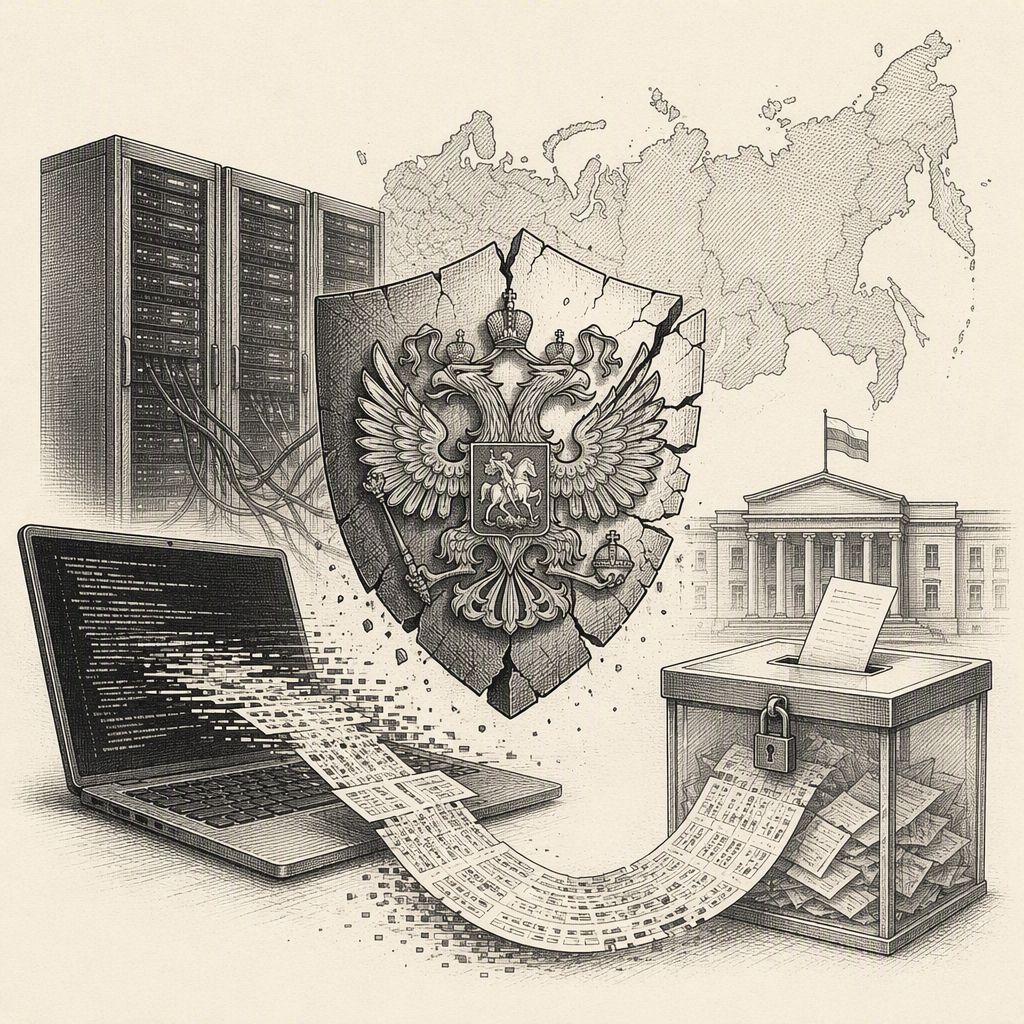
An anonymous hacking group calling itself CikLeak has claimed responsibility for breaching computer systems connected to Russia’s election infrastructure just days before the country begins voting for a new parliament. The group alleges it gained access to internal networks belonging to Russia’s Central Election Commission (CEC) and companies involved in developing Vybory, the state-run platform used to administer elections.
CikLeak asserts it stole internal documents, server configurations, passwords, and employee communications from the CEC and its contractors, including Russian telecom giant Rostelecom. These stolen materials were reportedly provided to Important Stories, an independent Russian investigative outlet that claims to have authenticated them. However, the full extent of the hackers' penetration into the election infrastructure remains unclear, particularly whether they accessed systems directly involved in the voting or ballot counting processes.
"We infiltrated the infrastructure of Russia’s Central Election Commission and downloaded secret documents and developers’ internal chats," the group stated on its website. CikLeak emphasized that its objective was not to disrupt the voting process or interfere with election commissions. Instead, the group stated its aim was to expose the internal workings of the Russian electoral system and highlight what it described as opportunities for authorities to manipulate election results.
The hackers also published screenshots purportedly showing compromised systems. They urged Russian citizens to vote in person on the final day of the election, arguing that this would make manipulation more difficult. Russia is set to hold elections for all 450 seats in the State Duma, the lower house of parliament, over three days starting Friday. This election marks the first for the chamber since Russia's full-scale invasion of Ukraine in February 2022 and will be the first federal election conducted using the Vybory 2.0 platform.
Prior to the alleged breach, Russian election officials had acknowledged growing cyber threats. A day before CikLeak's disclosure, officials conducted security tests on the Vybory portal, the remote electronic voting system, and video surveillance infrastructure. The assessment identified the video surveillance system's uninterrupted feed transmission as a potential "weak link." CEC Chair Ella Pamfilova noted a significant increase in attacks targeting election systems and related infrastructure, stating that the current intensity, volume, and speed of attacks were unprecedented.
Despite assurances in August that the election system was fully protected, Pamfilova mentioned that information about eligible voters was updated twice a year and stored in a closed-access system. Russian election infrastructure has been a target in previous votes. During the March 2024 presidential election, hackers launched distributed denial-of-service attacks and created phishing sites and fake Telegram channels mimicking official Russian services.
Rostelecom reported at the time that most attacks originated from Ukraine, Western Europe, and North America, involving professional hacking groups. Ukraine's military intelligence agency, HUR, later claimed responsibility for attacks on United Russia and Russia's electronic voting system during that period.
This alleged breach by CikLeak adds another layer of concern to the upcoming elections, highlighting the persistent threat of cyberattacks against critical governmental infrastructure, especially in politically sensitive contexts. The group's stated aim of exposing potential manipulation, rather than disrupting the vote, suggests a focus on information warfare and public perception.