
Government Report Revealed Critical Mobile Signaling Vulnerabilities Exploited for Espionage
A 2022 government-commissioned report, suppressed until recently, details how foreign actors exploited critical vulnerabilities in U.S. mobile signaling protocols for espionage.
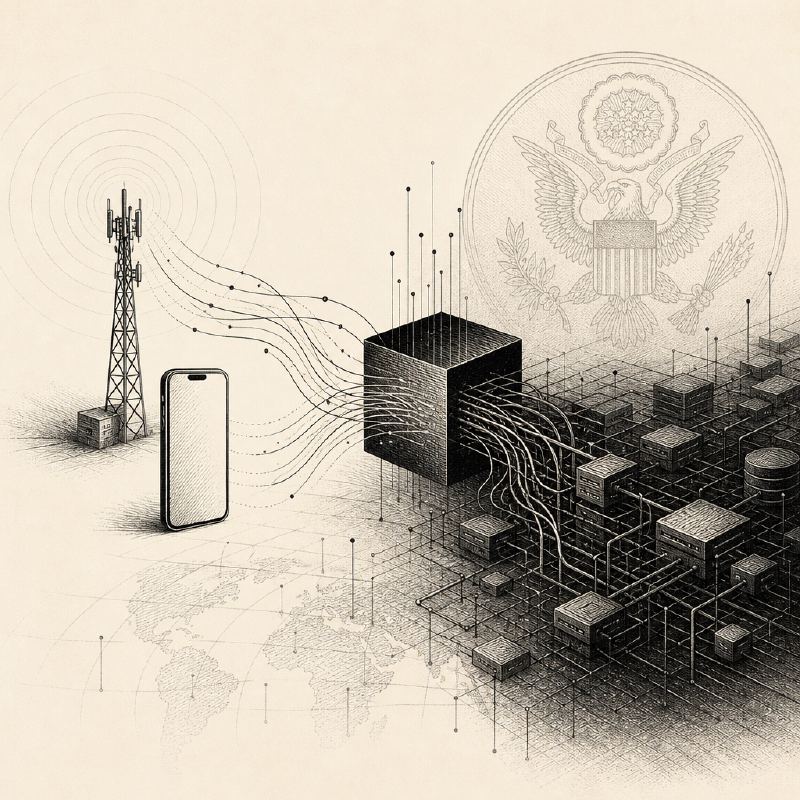

A 2022 government-commissioned report, "U.S. Telecommunications Insecurity 2022," has finally been made public, revealing critical vulnerabilities within U.S. mobile signaling protocols like SS7 and Diameter. These flaws, which have been exploited by foreign actors for espionage purposes including location tracking and call interception, highlight a significant national security risk. The report, prepared by AdaptiveMobile Security under a Department of Homeland Security contract, warns that undefended U.S. telecom networks represent a vulnerable National Critical Function, urging a fundamental shift towards zero trust architectures.
The report details a "perilous and untenable" situation stemming from the reliance on mobile signaling systems designed in the 1970s with minimal security considerations. Foreign adversaries have been able to connect into these networks, enabling a range of malicious activities. These include sophisticated location tracking, interception of calls and texts, phone hijacking, and denial-of-service attacks. The authors emphasize that the industry's historical trust-based model between operators has failed, necessitating a move to more robust security paradigms.
Evidence of surveillance activity on U.S. networks in early 2022 was documented in the report. One instance involved a phone in Indianapolis with a Cypriot subscriber identity receiving a location query routed through network addresses leased by a broker suspected of working for a nation-state agency. The report attributes the success of this query to a gap in the operator's defenses. In another case, queries originating from Southeast Asia targeted three U.S. subscribers, suggesting a potential prior breach or a sophisticated surveillance-for-hire operation.
Over a seven-day period in May 2022, one operator logged over 9,000 signaling violations, with more than 2,000 occurring in a single 24-hour stretch. These violations are believed to have masked attempts to extract subscriber identities. AdaptiveMobile Security had previously warned the operator about similar attack categories in 2019, underscoring a persistent lack of adequate defense.
The report attributes much of the risk to the fragmented nature of the U.S. market, characterized by a patchwork of rural licenses that provide attackers with numerous entry points into the signaling network. Additionally, domestic roaming traffic between carriers often receives less scrutiny than international traffic, creating further opportunities for exploitation. The practice of some smaller carriers leasing network access to third parties, who then appear on the signaling network as legitimate U.S. operators, exacerbates these vulnerabilities.
Further complicating the security landscape, the report found that some domestic roaming traffic was routed through facilities in Canada and Germany, and one operator was observed sending such traffic via Switzerland and Italy. While the Federal Communications Commission regulates how carriers handle customer network data, there is no specific framework governing carriers leasing global titles—the addresses used for signaling messages—to outside parties.
While most of the report's recommendations are redacted, the visible portions call for national-level threat protection for all traffic and place responsibility on international aggregators to prevent malicious traffic from entering the U.S. network. The document is labeled preliminary and does not represent a coordinated Department of Homeland Security position. Despite efforts by CISA to keep the report private, its release was prompted by a Freedom of Information Act lawsuit and pressure from U.S. Senator Ron Wyden.