
GitHub Enterprise Server & BentoPDF: 5 CVEs Including Critical SSRF & XSS Disclosed Together
Key findings • Critical SSRF vulnerability in GitHub Enterprise Server's notebook viewer (CVE-2026-77987). • High-severity stored XSS flaw in Markdown rendering allows arbitrary HTML injectio…
Key findings
- Critical SSRF vulnerability in GitHub Enterprise Server's notebook viewer (CVE-2026-77987).
- High-severity stored XSS flaw in Markdown rendering allows arbitrary HTML injection (CVE-2026-77912).
- Medium authorization bypass permits unauthorized access to private repository pull request diffs/patches (CVE-2026-75101).
- High-severity CORS proxy vulnerability in BentoPDF client-side toolkit (CVE-2026-77581).
- Batch of 5 CVEs disclosed by GitHub between September 22-24, 2026, affecting GitHub Enterprise Server and BentoPDF.
On September 22, 2026, GitHub disclosed four vulnerabilities affecting GitHub Enterprise Server, with an additional vulnerability disclosed on September 24, 2026. The batch of five CVEs, spanning a two-day disclosure window, includes a critical SSRF flaw, two high-severity bugs (XSS and a CORS proxy issue), and a medium-severity authorization bypass. These vulnerabilities collectively highlight potential risks in how GitHub Enterprise Server handles user-supplied data and access controls.
One of the most critical issues, CVE-2026-77987, is a server-side request forgery (SSRF) vulnerability in the notebook viewer. While the viewer validated the scheme and host of a user-supplied URL, it failed to validate the port. This oversight could allow an attacker to direct requests to internal services listening on different ports of the same application, potentially leading to unauthorized access or data exfiltration.
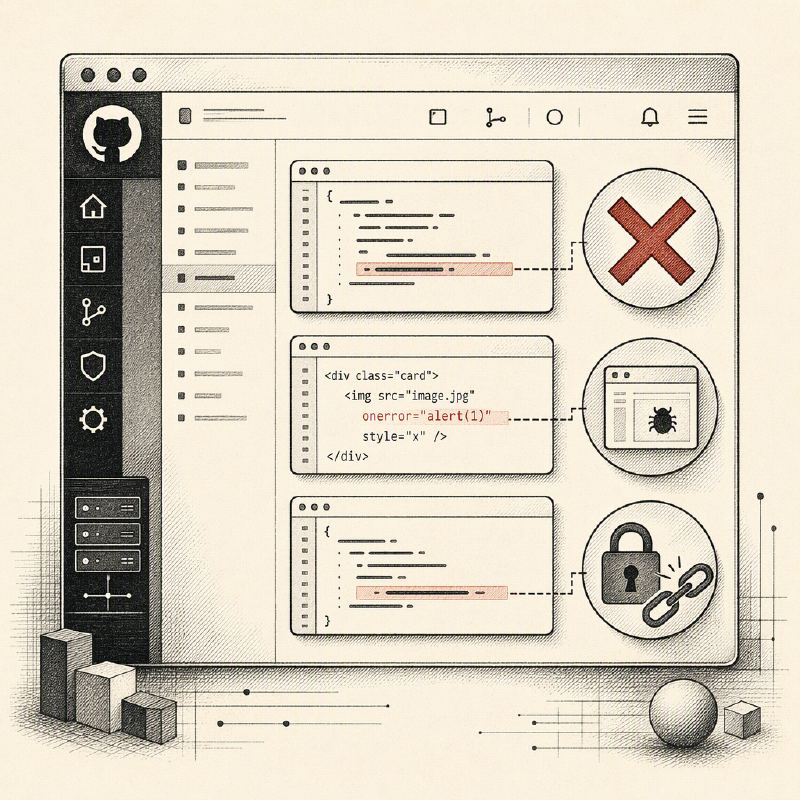
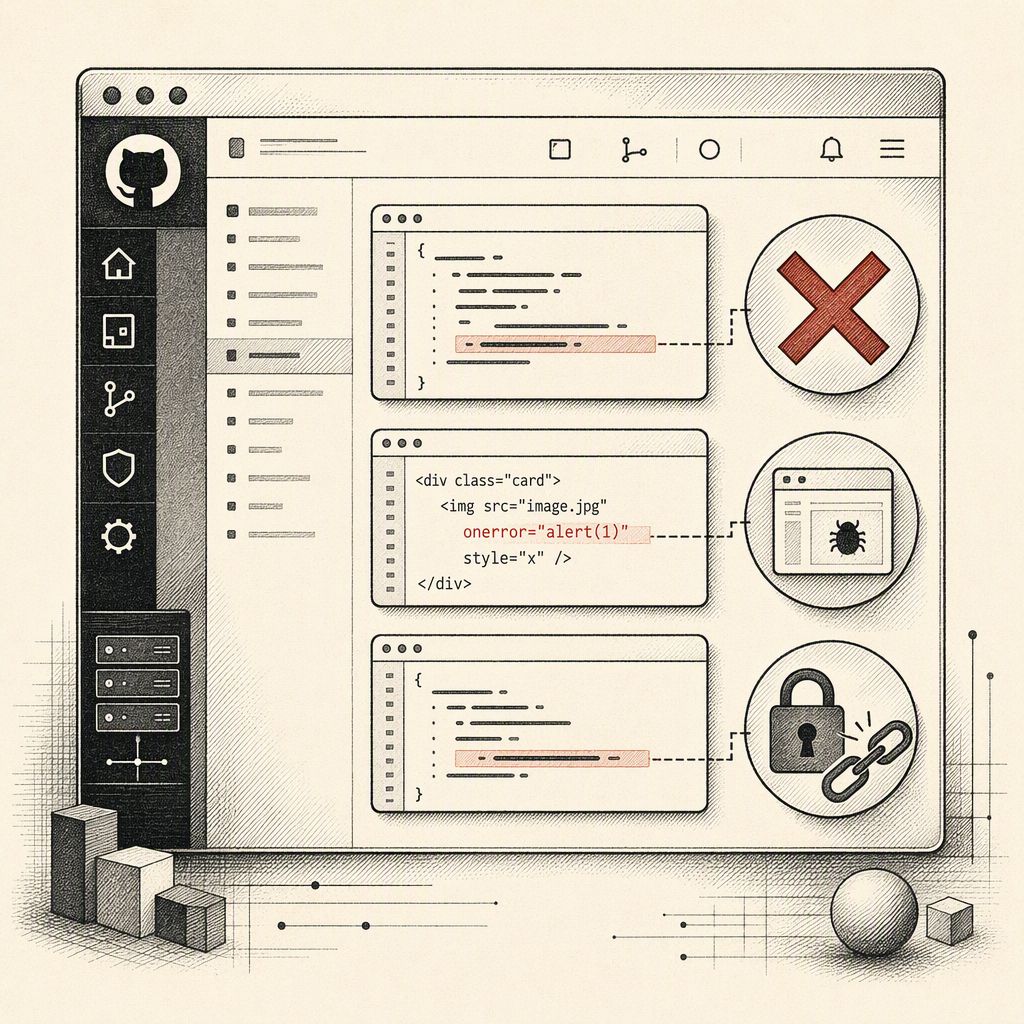
A high-severity stored cross-site scripting (XSS) vulnerability, CVE-2026-77912, was also identified in GitHub Enterprise Server. This flaw existed because the Markdown rendering pipeline incorrectly rewrote quote characters in already-sanitized HTML without re-sanitizing the result. An authenticated attacker could exploit this to inject arbitrary HTML attributes into rendered Markdown, potentially leading to session hijacking or other client-side attacks.
Further compounding the security concerns, CVE-2026-75101, a medium-severity authorization bypass, allowed any authenticated user to read raw diffs or patches of pull requests in private repositories without proper authorization. The access tokens for these raw pull request diffs and patches were inadequately scoped, only considering the repository name and not the specific pull request, thus enabling unauthorized access.
An additional high-severity vulnerability, CVE-2026-77581, was disclosed on September 24th, affecting BentoPDF, a client-side PDF toolkit. This vulnerability in the certificate and timestamp CORS proxy could be exploited by an attacker-controlled hostname due to a separate validation process from DNS resolution.
GitHub Enterprise Server instances running versions prior to the patched releases are potentially affected by these vulnerabilities. Users are advised to consult GitHub's official advisories for specific version information and remediation steps. Prompt patching and adherence to security best practices are crucial for mitigating the risks associated with these disclosed flaws.
This batch of vulnerabilities underscores the importance of continuous security auditing and robust input validation in complex software systems like GitHub Enterprise Server. Users should remain vigilant and apply updates as soon as they become available to protect their repositories and internal services.
CVE-2026-77987, CVE-2026-77912, CVE-2026-75101, CVE-2026-77581