
FTC Sues Sextortion Protection Firms for Defrauding Victims
The FTC has filed a lawsuit against Dmitry Belkin and 12 companies for allegedly defrauding customers seeking help with sextortion scams, taking in $60 million by falsely promising services.
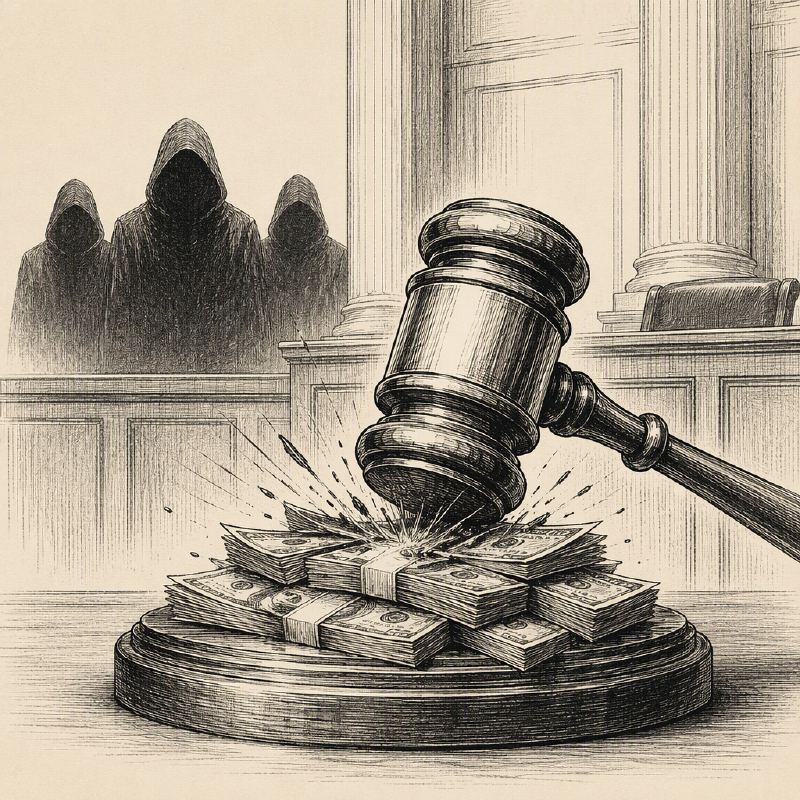

The Federal Trade Commission (FTC) has initiated legal action against Dmitry Belkin and twelve associated companies, accusing them of engaging in widespread fraud against individuals targeted by sextortion scams. The lawsuit, filed in Ohio, alleges that these businesses have systematically deceived customers since at least 2020, collecting approximately $60 million by falsely promising to identify scammers, prevent the leak of compromising images, and coordinate with law enforcement.
Belkin's companies, operating under names such as Digital Forensics Corp. and 1st All Data Recovery, advertised services through websites like BlackmailHelpline.com. These sites were frequently promoted on major platforms like Google and YouTube, appearing when users searched for assistance with sextortion threats. The FTC claims that despite the substantial revenue generated, the companies routinely failed to deliver on their promises. Instead, they allegedly fabricated evidence, such as fake chat transcripts, to convince victims that their threats had been neutralized, and often denied refund requests.
The FTC's complaint details a "Phase 1" service package, priced between $1,499 and $20,000, which purportedly included stopping ongoing attacks, managing communications with scammers, tracing their locations, reporting evidence to law enforcement, and issuing cease-and-desist letters. However, the lawsuit asserts that the companies' actual methods involved merely blocking the scammer from the customer's account and altering settings, rather than providing genuine forensic or investigative services.
Following the purchase of Phase 1 services, customers were allegedly pressured into buying additional "Phase 2" monitoring services, advertised to detect and prevent future attacks. The FTC contends that these services were also never performed. The complaint highlights a script allegedly drafted by Belkin for his employees, designed to exploit victims' fears by suggesting that law enforcement would not be helpful and that contacting the police was the "last thing you want to do."
Furthermore, the script reportedly included tactics to heighten anxiety, such as implying that a scammer could alter a victim's photo to depict them engaging in illegal acts with minors, thereby raising concerns about legal liability. Employees were allegedly required to confirm using specific fear-mongering keywords during calls, including "pedophile," "devastating consequences," and "life altering."
Customers were also subjected to intrusive personal questions about their relationships and family situations, which the defendants purportedly used to gauge their vulnerability and willingness to pay. The FTC also alleges that the companies actively worked to suppress negative feedback, directing unhappy customers to a fake Better Business Bureau website controlled by Belkin and even hiring Uber drivers to post fabricated testimonials with staged photographs.
Despite hundreds of refund requests, the companies allegedly denied most of them, sometimes offering reduced settlements for remaining balances in exchange for non-disparagement agreements. This pattern of deception and exploitation has led to numerous complaints from customers who felt trapped by the services they paid for, with some still making payments due to the companies possessing their personal information.
The FTC is seeking to permanently bar Belkin and his companies from operating and to obtain restitution for the defrauded customers. The lawsuit underscores the predatory nature of some services preying on vulnerable individuals facing severe online threats.
The FTC's complaint details a specific timeline for the alleged fraudulent operation, stating it ran from February 2023 through July 2026. It also specifies the price range for the company's purported services, between $1,499 and $20,000, and outlines the deceptive tactics used, such as fabricating chat transcripts and reusing pre-saved location data to mislead victims into believing their sextortionists had been identified.