
Fortinet FortiAIGate Secures AI Agents on Oracle Cloud Infrastructure
Fortinet's FortiAIGate now integrates with Oracle Cloud Infrastructure (OCI) to provide robust security for enterprise AI agents, mitigating risks like prompt injection and data leaks.
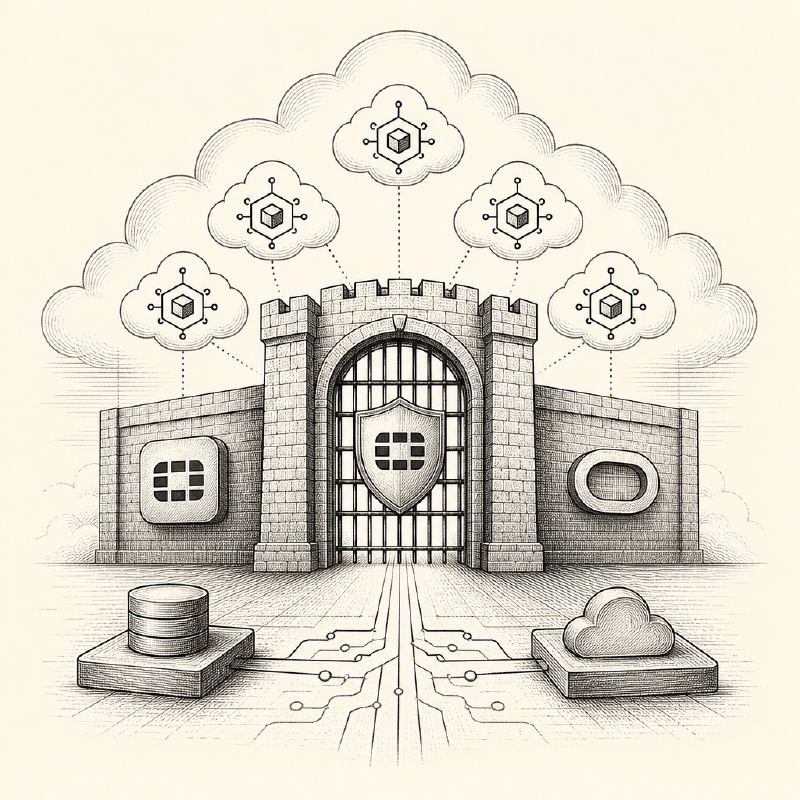
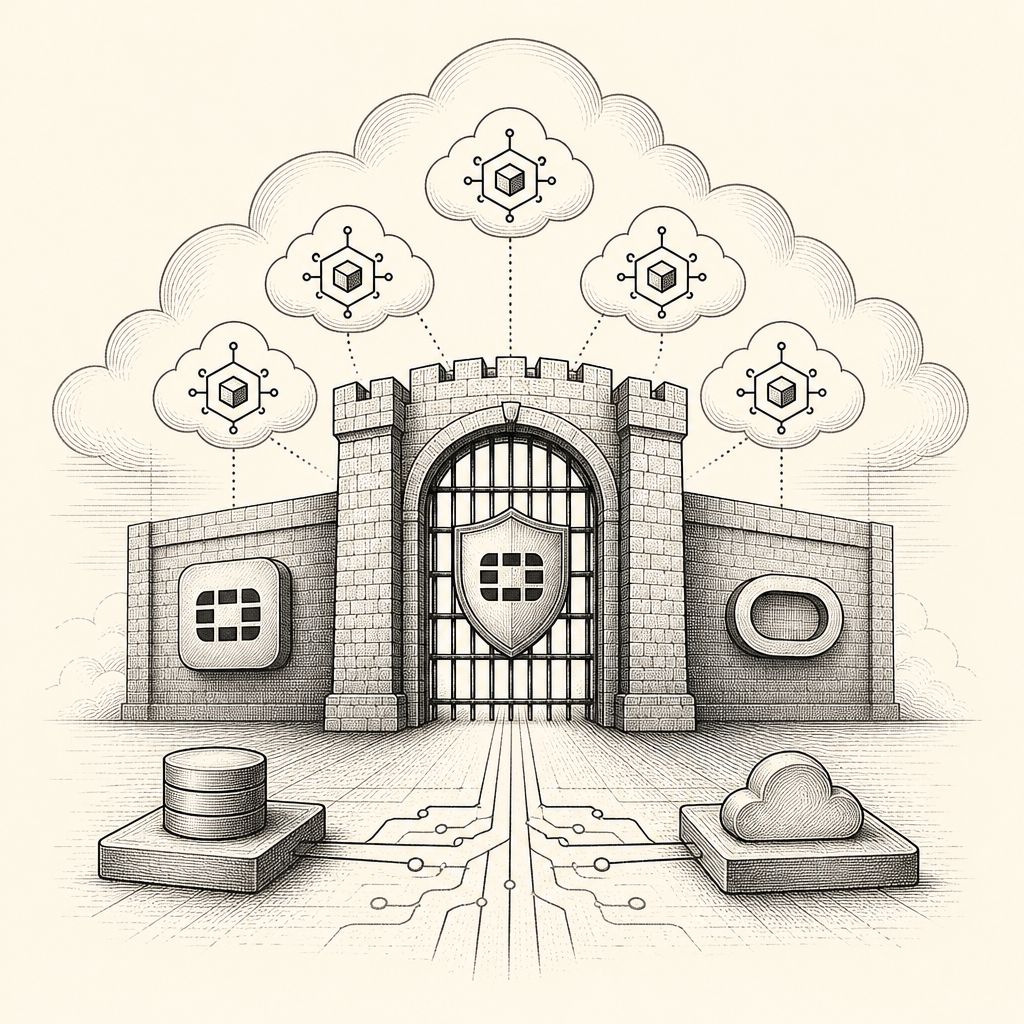
Fortinet is enhancing the security posture of enterprise AI workloads running on Oracle Cloud Infrastructure (OCI) through its FortiAIGate solution. This integration aims to provide critical oversight for AI agents, enabling businesses to inspect prompts, prevent sensitive data exfiltration, and meticulously control the actions these agents can perform. The announcement, detailed by Oracle, highlights how customers can deploy the self-hosted FortiAIGate gateway in conjunction with OCI Enterprise AI services to safeguard applications that interact with proprietary data and business tools.
The necessity for such security measures arises as AI agents evolve beyond simple question-answering capabilities. These agents are increasingly empowered to query databases, access and manipulate code, and interact with various business applications. Relying solely on monitoring user chat messages leaves a significant security blind spot, as other interactions, including the responses from AI models and the tools they employ, could contain hidden malicious instructions or inadvertently expose confidential information. FortiAIGate addresses this by functioning as a containerized, GPU-accelerated reverse proxy, routing all requests through a series of security checks before they reach their intended AI models or tools.
Beyond inspecting outgoing prompts, FortiAIGate also scrutinizes the responses generated by AI models. This dual-layer inspection provides security teams with a centralized point for enforcing consistent security policies across all AI services. The gateway's Model Context Protocol (MCP) protection specifically analyzes tool lists, function calls, and responses in both directions, actively detecting prompt injection attempts, data leaks, and the transmission of harmful content. This comprehensive approach extends security coverage beyond the initial user query to encompass the entire interaction lifecycle, including the data agents receive while executing tasks.
Fortinet emphasizes that FortiAIGate's capabilities include advanced features such as Virtue AI guardrails, which can inspect prompts and responses across multiple languages. Its built-in data loss prevention (DLP) engine is capable of identifying and either blocking or redacting over 35 distinct types of sensitive information. Administrators can also define custom detection rules using natural language, simplifying policy management. The solution supports role-based access controls and segmented workspaces, allowing for granular policy enforcement, model access management, and log auditing while maintaining central oversight. Over 50 pre-configured policies are available to help organizations meet privacy, security, and AI governance requirements.
To further mitigate risks associated with AI usage, FortiAIGate incorporates robust controls for managing resource consumption and preventing abuse. It allows administrators to set spending limits based on various parameters, including organization, workspace, project, user, and virtual keys, automatically halting requests once budgets are depleted. Rate limiting is also implemented to restrict the number of requests and tokens processed per minute, effectively defending against denial-of-wallet attacks aimed at consuming expensive AI resources. Additionally, content-based routing capabilities enable the redirection of routine tasks to more cost-effective AI models, optimizing operational efficiency.
The reference architecture for deploying FortiAIGate on OCI places the gateway on GPU-enabled Oracle Kubernetes Engine worker nodes. A hub-and-spoke deployment model can centralize security inspection while allowing AI applications to operate across separate, isolated cloud networks. While OCI Enterprise AI offers managed access to models and governance tools, Fortinet's self-hosted approach ensures that gateway logs and inspection data remain within the customer's control. However, organizations must carefully manage model routing and processing locations to comply with data residency requirements and ensure that all relevant AI traffic is directed through the FortiAIGate for effective inspection.
This integration represents a significant step in securing the rapidly expanding landscape of AI agents within enterprise environments. By providing a dedicated security gateway that understands the nuances of AI interactions, Fortinet and Oracle are addressing critical vulnerabilities such as prompt injection and data leakage, which pose substantial risks as AI becomes more deeply embedded in business operations. The comprehensive feature set, including DLP, custom rule creation, and spending controls, offers a layered defense strategy essential for protecting sensitive data and maintaining operational integrity in the age of generative AI.