
FATF Targets Global Scam Compounds Generating $500 Billion Annually
The Financial Action Task Force (FATF) has issued a stark warning about the global threat posed by physical scam compounds, which generate an estimated $500 billion annually and increasingly leverage AI and crypto.
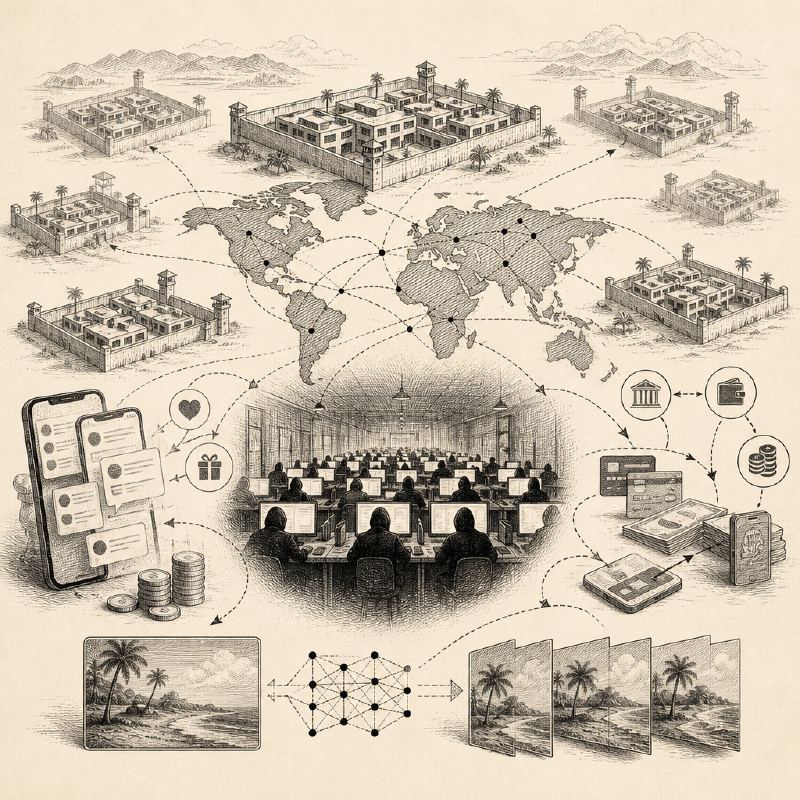

The Financial Action Task Force (FATF), a leading international body combating money laundering and terrorist financing, has released a comprehensive report detailing the pervasive global threat of physical scam compounds. These organized criminal operations are estimated to generate a staggering $500 billion annually, highlighting a significant blind spot in global anti-fraud efforts.
The report underscores that these compounds are often staffed by trafficked victims, with an estimated 120,000 individuals forced into scam operations in Myanmar alone. The criminal infrastructure supporting these activities is sophisticated, leveraging a combination of cryptocurrency and instant payment platforms, money mules, social media, messaging services, and increasingly, AI-enabled content generation to enhance their operations and reach.
Furthermore, the FATF notes a concerning trend towards smaller, more mobile scam operations. These compounds are no longer confined to large, dedicated facilities but are increasingly established in repurposed casinos, rented rooms, apartments, coffee shops, and even moving vehicles. This decentralization and mobility make them more challenging to detect and disrupt.
While many countries have focused on downstream actions like asset tracing and targeting victim payments, the FATF urges a strategic shift. The report calls for a combined approach that includes upstream disruption tactics. This involves targeting fraudulent advertising, recruitment activities, malicious domain registrations, and suspicious phone numbers and telecom indicators before scams can fully materialize.
FATF president Giles Thomson emphasized the urgency of modernizing responses to combat evolving criminal tactics. "With criminals weaponizing AI and other technologies to intensify their scam operations, we need to urgently modernize and accelerate our response," Thomson stated. He stressed the importance of dismantling the criminal networks, proactively collaborating with technology and communications sectors, and accelerating intervention to freeze and seize illicit proceeds.
The FATF report outlines six key pillars for its enhanced approach: shifting focus from physical compounds to criminal leaders and recruiters; disrupting the supporting infrastructure and services; fostering information sharing among financial institutions, technology companies, telcos, and authorities; acting with speed across borders, as the initial 24-72 hours are critical for fund freezing; prioritizing victim protection in investigations; and continuously updating strategies to counter the decentralization and adaptation of scam operations.
Industry experts, such as Jonathan Frost, director of global advisory at BioCatch, have welcomed the FATF's focus. Frost highlighted the critical role of platform providers and banks, noting that while platforms can see much, banks often serve as the last line of defense. He stressed the need for banks to detect manipulation rather than just transactions, intervening before funds are moved, as customers are frequently groomed to trust scammers over their financial institutions.