
Docker Buildx Vulnerability Allows Remote Code Execution via Malicious Bake Files
A critical vulnerability in Docker Buildx's filesystem entitlements protection mechanism could allow remote code execution.
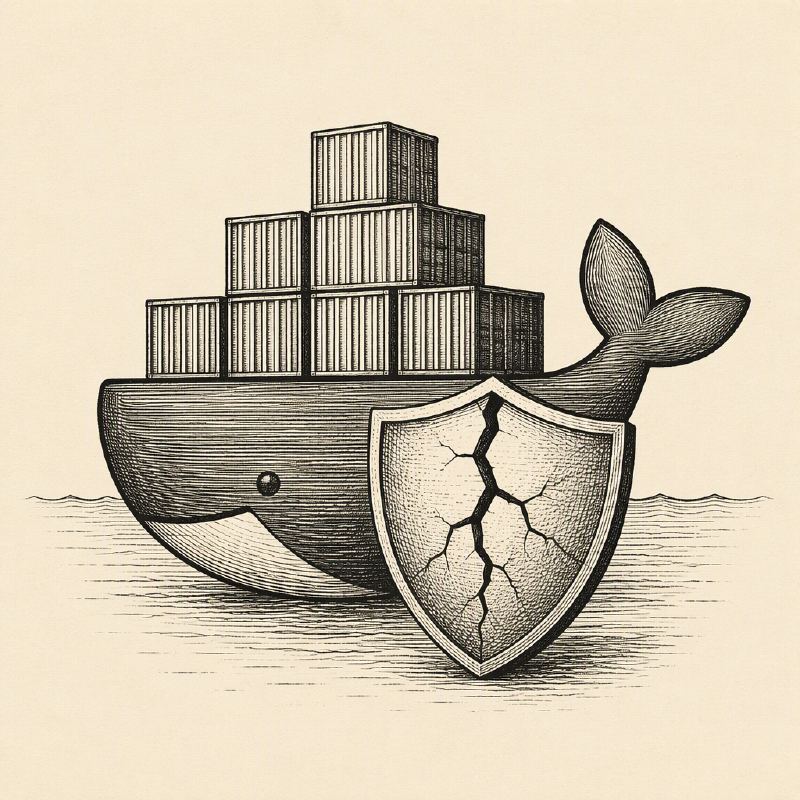
A significant remote code execution (RCE) vulnerability has been identified in Docker Buildx, a popular tool for building container images across multiple platforms. Designated ZDI-26-758 and assigned CVE-2026-93325, the flaw resides within the mechanism that protects filesystem entitlements during the build process.
Exploitation of this vulnerability requires a degree of user interaction. Attackers must trick a target user into visiting a malicious webpage or opening a specially crafted file. This social engineering vector is crucial for initiating the exploit chain, making it a targeted threat rather than a fully automated attack.
The core of the issue lies in the failure of Docker Buildx to properly validate or enforce its protection mechanisms when processing "bake definition files." These files are used to define complex build processes, and a flaw in how Buildx handles them allows an attacker to inject malicious commands. Successful exploitation means an attacker can execute arbitrary code with the same privileges as the user running Docker Buildx.
The Zero Day Initiative (ZDI), which disclosed the vulnerability, has assigned it a CVSS score of 7.8, classifying it as high severity. This score reflects the potential impact and the relative ease of exploitation once the user interaction prerequisite is met. Organizations relying on Docker Buildx for their containerization workflows are urged to take immediate action.
Docker has acknowledged the vulnerability and has released an update to address it. The company's security advisory, available on GitHub, details the affected versions and the patch information. Users are strongly encouraged to update their Docker Buildx installations to the latest version to mitigate the risk of exploitation.
The vulnerability was reported to the vendor on July 29, 2026, and the coordinated public disclosure occurred on October 15, 2026. This timeline indicates a standard responsible disclosure process, allowing time for a patch to be developed and distributed before public awareness.
This discovery highlights the ongoing security challenges within the containerization ecosystem. As tools like Docker Buildx become more integral to modern development and deployment pipelines, vulnerabilities within them can have far-reaching consequences. The need for robust security practices, including regular patching and user awareness training, remains paramount.
The vulnerability was discovered by Jabr Al-Otaibi, who has been credited for their work in identifying and reporting this critical security flaw.