
Cybercrime Evolves into a Five-Stage Supply Chain
Modern cybercrime operations have transformed into a sophisticated, multi-stage supply chain, mirroring legitimate business models with specialized roles and financial transactions at each step.
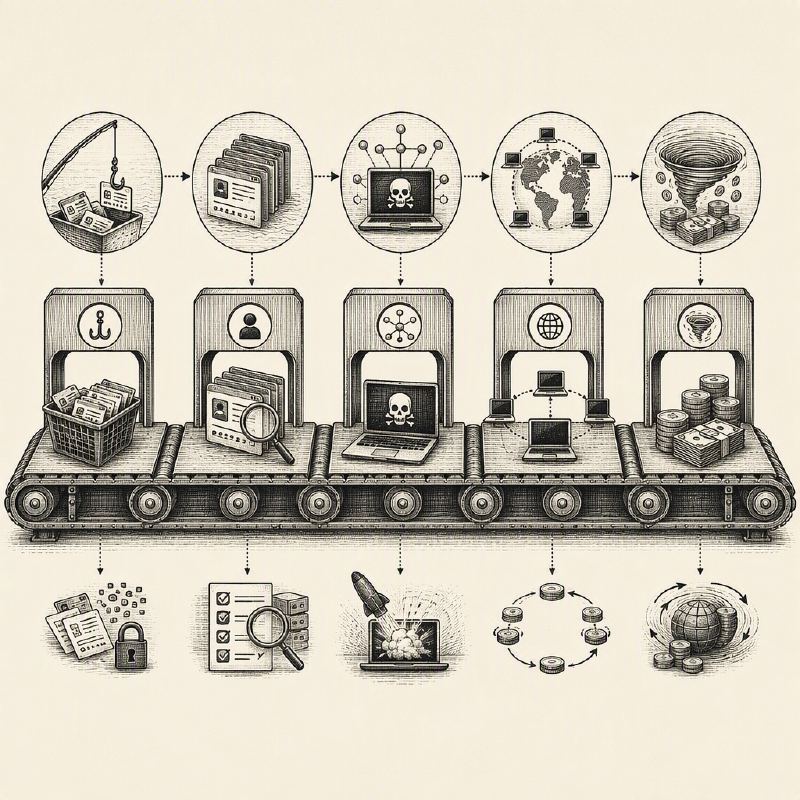
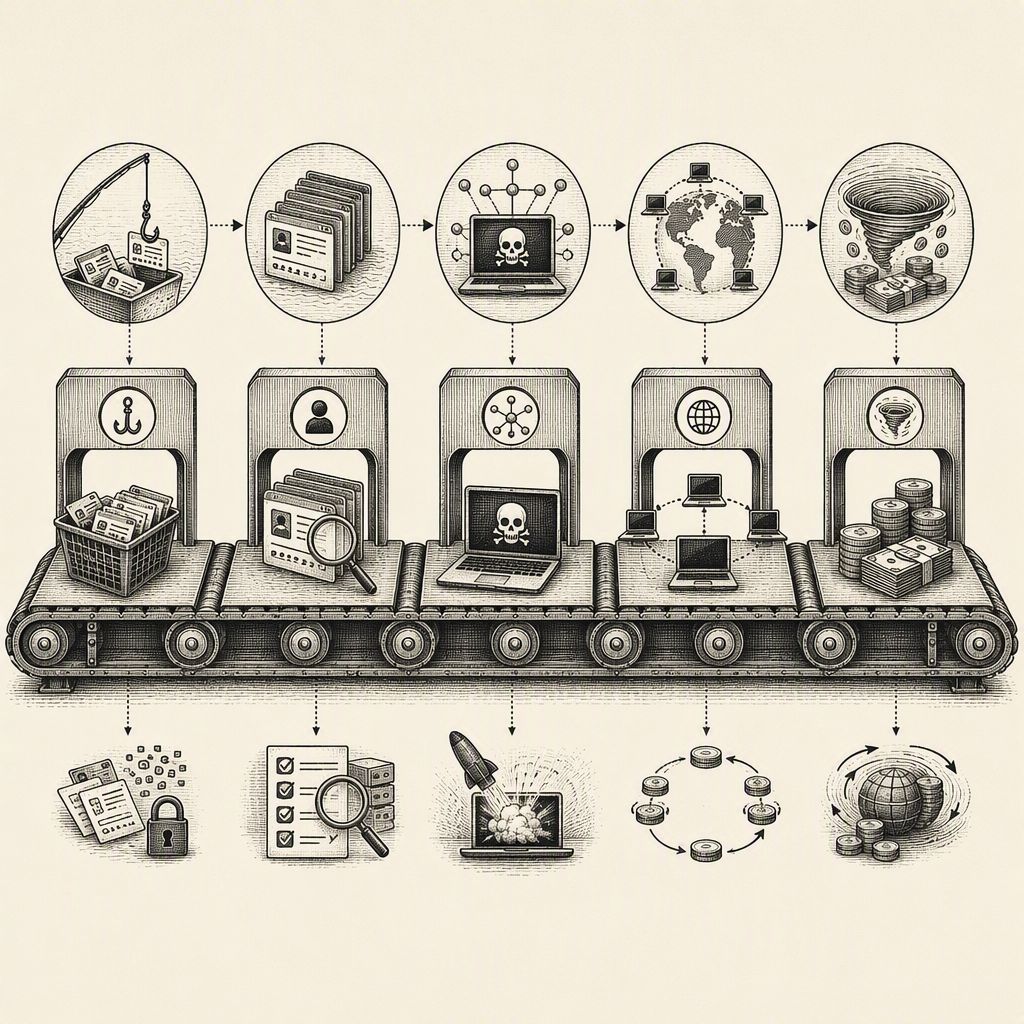
The traditional image of a lone hacker operating in isolation is now a relic of the past. Today's cybercrime landscape is characterized by a highly organized, five-stage supply chain, where distinct groups specialize in specific functions, from initial compromise to the final laundering of illicit proceeds. This evolution highlights the increasing professionalization and business-like approach adopted by cybercriminal enterprises.
The first stage, known as 'harvesters,' focuses on the initial acquisition of data. These actors primarily deploy infostealer malware, such as Vidar or Weedhack, to pilfer credentials, financial information, and other sensitive data from unsuspecting victims. This malware is often distributed through deceptive means, like fake software downloads or compromised websites, preying on user curiosity or trust.
Following the harvesters are the 'brokers.' These entities act as intermediaries, verifying the stolen access information and then reselling it on underground marketplaces. Brokers play a crucial role in ensuring the quality and legitimacy of the access they sell, often categorizing it by the type of organization or the value of the data it contains. This verification process adds a layer of trust and efficiency to the cybercrime ecosystem.
The third stage involves 'Ransomware-as-a-Service' (RaaS) operators. These groups develop and maintain the sophisticated toolkits and infrastructure necessary for executing ransomware attacks. They provide these tools to 'affiliates,' who are the ones that actually carry out the intrusions and deploy the ransomware. This RaaS model lowers the barrier to entry for aspiring attackers, allowing them to leverage pre-built attack frameworks without needing deep technical expertise.
The 'affiliates' are responsible for the execution of the attacks. They utilize the tools provided by RaaS operators to breach target networks, move laterally, and deploy the ransomware payload. Their success often depends on the quality of the access purchased from brokers and the effectiveness of the RaaS toolkit. This stage is where the direct impact on victim organizations is felt, leading to service disruptions and data exfiltration.
Finally, the 'launderers' handle the proceeds of the cybercrime operations. This involves moving and obfuscating the illicit funds obtained through ransomware payments or other criminal activities, making them difficult to trace by law enforcement. They employ various techniques to legitimize the money, often using cryptocurrency or complex financial schemes.
This structured supply chain allows for specialization, efficiency, and scalability within cybercrime. Each stage has its own associated costs, from the price of infostealer malware and verified access to the fees charged by RaaS operators and the cut taken by brokers and launderers. Understanding these stages and their economic underpinnings is crucial for developing effective defenses against the evolving threat landscape.