
Confidential Computing Platforms Ranked: Azure Leads Amidst AI-Driven Mainstream Adoption
A 2026 ranking of confidential computing platforms highlights Microsoft Azure's broad portfolio, with AI applications driving mainstream adoption of hardware-enforced trusted execution environments (TEEs).

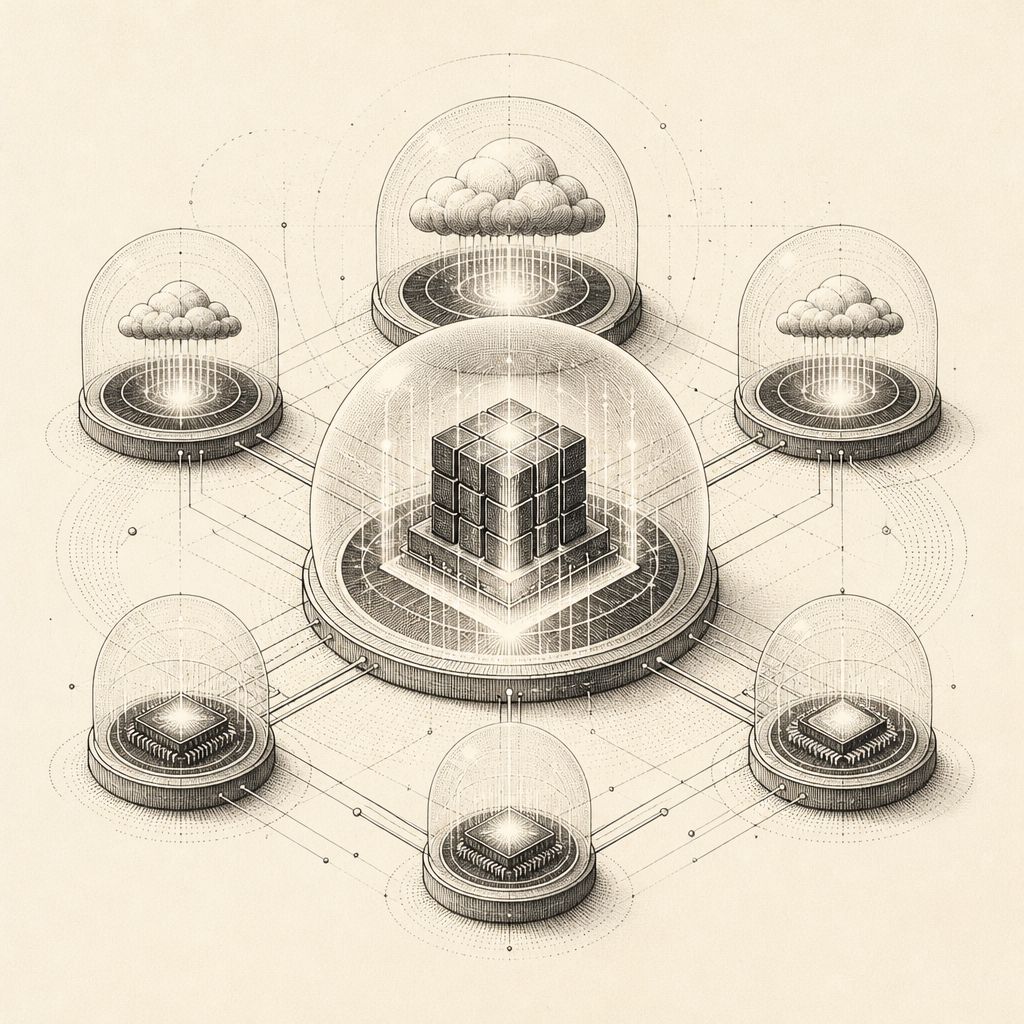
Confidential computing, a paradigm shift in data security, is rapidly moving from niche to mainstream in 2026. Its core innovation lies in hardware-enforced trusted execution environments (TEEs), which keep data encrypted even during processing and provide cryptographic proof of integrity through attestation. This capability is particularly crucial for emerging AI applications, where enterprises need to fine-tune and run models on sensitive, regulated data within isolated enclaves that neither cloud providers nor model vendors can inspect.
The "Top 10 Best Confidential Computing Platforms in 2026" report, based on a research-driven evaluation, ranks ten key players. The methodology weighted attestation and assurance (25%), adoption friction (25%), confidential AI readiness (20%), TEE breadth (20%), and pricing clarity (10%). Notably, Intel and AMD are recognized not as competing platforms but as the foundational silicon providers upon which most other solutions are built.
Microsoft Azure secured the top spot, lauded for its "best portfolio breadth." The platform offers a comprehensive suite of confidential computing services, including confidential virtual machines (VMs) supporting both AMD SEV-SNP and Intel TDX, fine-grained SGX enclaves, confidential containers on AKS, and confidential GPU capacity for AI workloads. Its integrated Microsoft Azure Attestation service further solidifies its leading position by providing mature tooling for attestation and assurance.
Amazon Web Services (AWS) and Google Cloud follow closely, rounding out the podium. AWS ranks second for its "best operational isolation model" with Nitro Enclaves, which carve out isolated environments from parent EC2 instances with cryptographic attestation integrated into KMS. Google Cloud takes third place for its "best one-checkbox adoption," allowing users to enable confidential computing on VMs and GKE nodes with minimal configuration changes, alongside its Confidential Space offering for multi-party data collaboration.
Intel and AMD are positioned as "silicon lanes" rather than direct competitors. Intel is recognized for its SGX, which offers the finest-grained application-level enclaves, and its maturing TDX for VM-scale isolation. AMD's SEV-SNP is highlighted for its strength in enabling lift-and-shift confidential VMs. Both vendors provide the underlying hardware that powers the cloud provider solutions, with their respective technologies (SGX/TDX for Intel, SEV-SNP for AMD) being key differentiators.
Other notable platforms include Fortanix for its enclave application platform, Anjuna for its lift-and-shift enclave runtime, Edgeless Systems for its open-source confidential Kubernetes, IBM for its focus on regulated industries, and Decentriq for its confidential data clean room capabilities. These vendors offer specialized solutions that cater to specific use cases within the broader confidential computing ecosystem.
The primary driver for this surge in confidential computing adoption in 2026 is the escalating demand for secure AI development and deployment. As AI models become more sophisticated and data privacy regulations tighten, the ability to process sensitive information within attested, isolated enclaves becomes non-negotiable. This trend underscores the growing importance of TEEs in protecting intellectual property and complying with data governance mandates across various industries.
In summary, the confidential computing landscape in 2026 is characterized by robust innovation from major cloud providers, underpinned by advancements in silicon security from Intel and AMD. The increasing adoption, fueled by AI's insatiable need for secure data processing, signals a significant evolution in how sensitive data will be protected and utilized in the cloud.