
Cloudflare Traces Beta Offers End-to-End Request Visibility
Cloudflare has launched Cloudflare Traces in open beta, providing developers with comprehensive, end-to-end visibility into request flows across its entire platform.
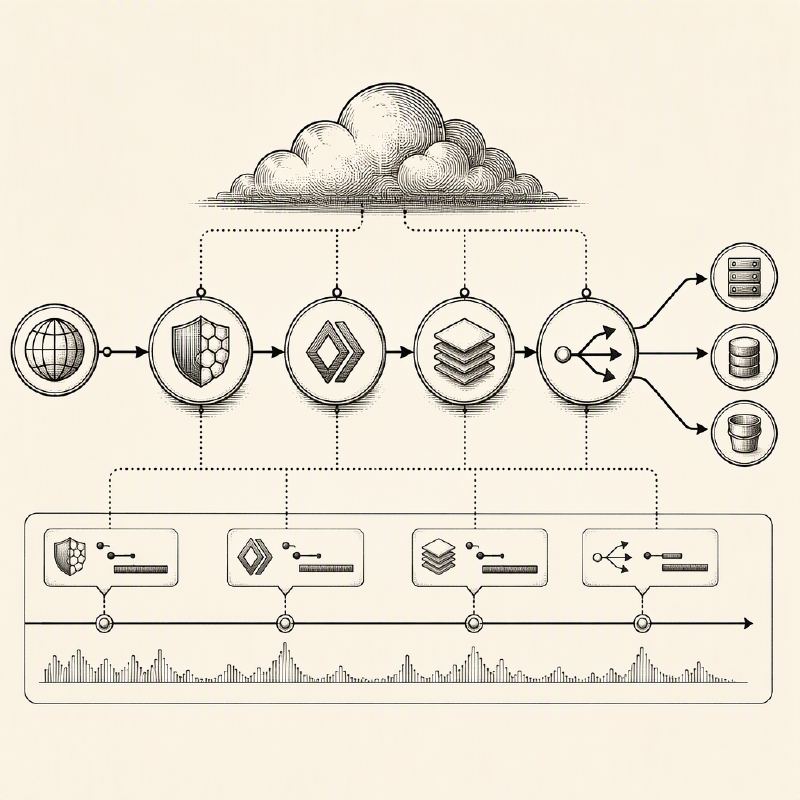
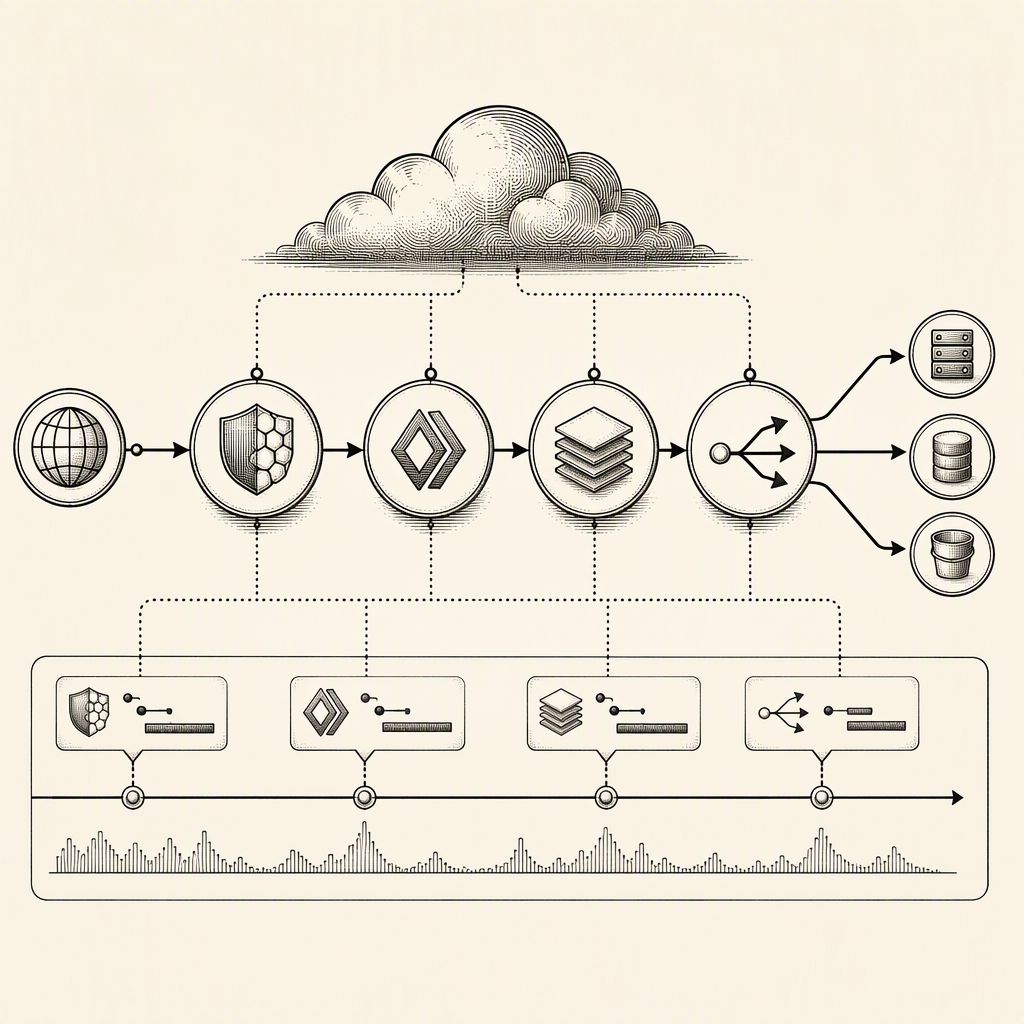
Cloudflare has introduced Cloudflare Traces in open beta, a significant expansion of its observability capabilities designed to offer developers unparalleled visibility into how requests traverse its platform. This new feature extends automatic tracing beyond Cloudflare Workers to encompass the entire request path, including security rule evaluations, data transformations, cache decisions, routing logic, and origin server interactions.
Previously, developers could trace the execution within Cloudflare Workers, but understanding the full journey of a request through Cloudflare's broader infrastructure was more challenging. Cloudflare Traces aims to bridge this gap by automatically capturing supported platform operations and presenting them in a single, request-level timeline. This allows users to see not only what happened within their Workers but also how Cloudflare's edge network processed the request before and after Worker execution, and even trace requests through services running at their origin or elsewhere in their stack.
The feature is built with a long-term investment in OpenTelemetry, a widely adopted standard for observability. Cloudflare Traces supports W3C traceparent header propagation, enabling seamless integration with existing distributed tracing systems. This means that traces can originate from outside Cloudflare, pass through the platform, and continue to other services, providing a truly end-to-end view of request lifecycles.
Users can configure Cloudflare Traces to automatically capture data across the platform with minimal setup. A baseline sampling rate can be set to manage data volume and cost, while Trace Rules offer granular control to override this rate for specific traffic patterns. This allows for detailed investigation of particular issues or user segments without incurring the cost of tracing every single request.
With Cloudflare Traces, developers can answer critical questions about request behavior. For instance, they can identify precisely which security rule blocked or challenged a request, understand the impact of Transform Rules on URLs, see which Page Rules or Workers handled a request, and pinpoint performance bottlenecks by examining cache hits/misses and origin response times. The detailed span information provides timing, outcomes, and relevant attributes for each step of the request's journey.
To facilitate integration, Cloudflare Traces can accept incoming W3C traceparent headers, allowing spans generated by Cloudflare to join traces initiated elsewhere. Conversely, it can forward these headers to origin servers, enabling a continuous trace across different environments. This interoperability is key to achieving comprehensive observability in complex, distributed systems.
This open beta release signifies Cloudflare's commitment to making its platform the most observable part of its customers' technology stacks. By providing deep insights into request processing, Cloudflare Traces empowers developers to debug more effectively, optimize performance, and gain a clearer understanding of how their configurations interact with Cloudflare's services.