
Cloudflare Proposes Agent Access Model to Secure Software Principals
Cloudflare introduces the Agent Access Model (AAM) to address the unique security challenges posed by software agents in Zero Trust architectures, advocating for real-time least privilege enforcement.
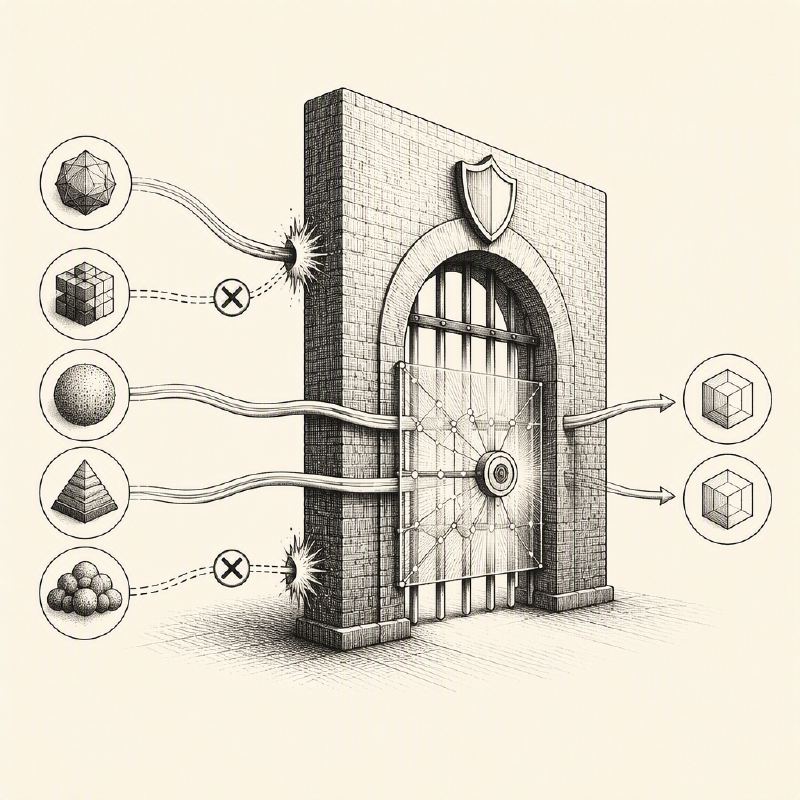
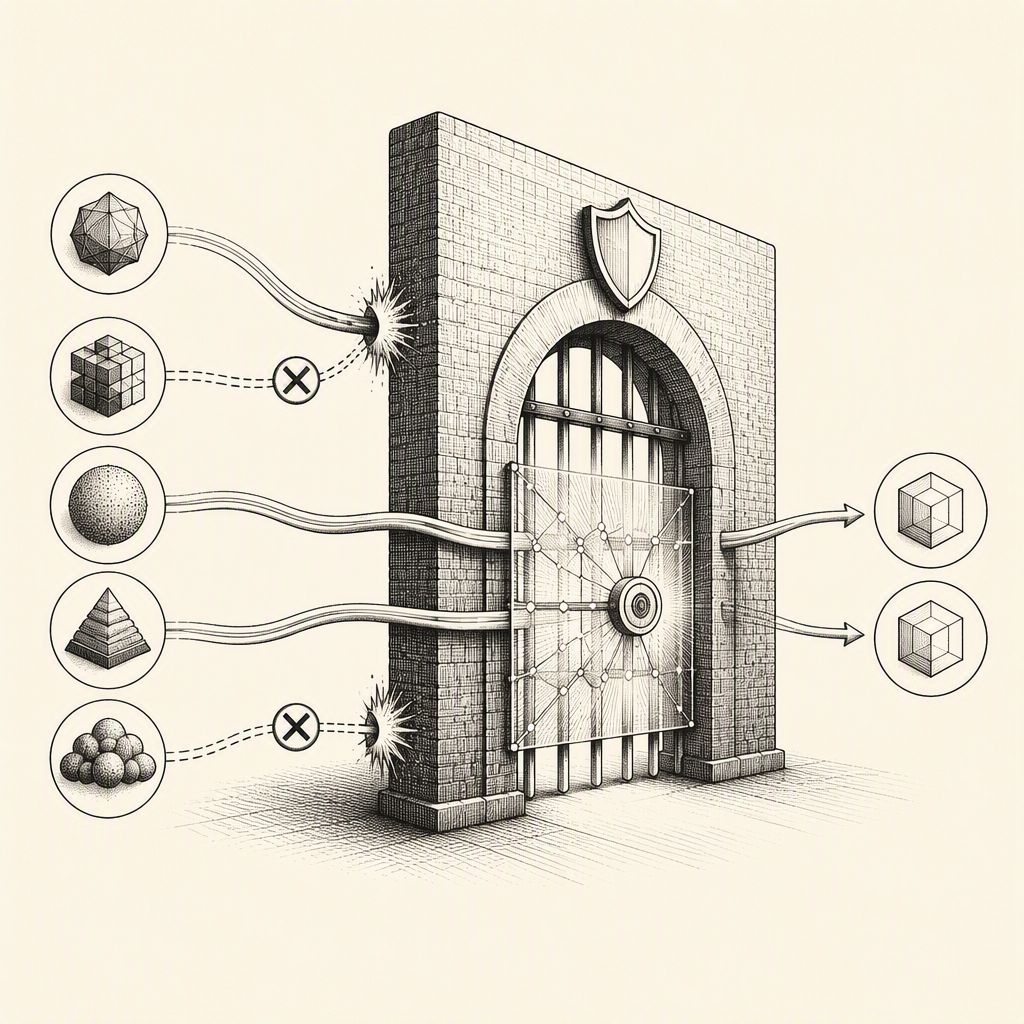
The cybersecurity landscape is evolving beyond the traditional perimeter-based security model, with Zero Trust architectures now widely adopted. However, these models, largely designed for human users accessing resources from devices, struggle to adequately secure software agents. Cloudflare's new proposal, the Agent Access Model (AAM), aims to bridge this gap by introducing a framework specifically tailored for the unique characteristics of agents.
Unlike human users, software agents can operate at machine speed, execute tasks ephemerally, and potentially access and move data far faster than a person. Existing security controls, built around human-centric assumptions like quarterly policy reviews and anomaly detection tuned for human activity, often fail to keep pace. This quiet failure manifests as granting excessive permissions, insufficient visibility, and credentials that outlive their intended purpose, creating significant security risks.
AAM proposes a fundamental shift: instead of trying to make each access decision smarter, it focuses on reducing the agent's inherent capabilities. The core principle is to enforce least privilege in real-time, aligning credential lifetimes with the specific task execution rather than relying on long-lived service account credentials. This means an agent should only have the authority necessary for its immediate task and no more, with authorization re-evaluated for each subsequent action.
The model addresses several key shortcomings of applying human-centric controls to agents. Firstly, the ephemeral nature of agent tasks requires credentials that match their short lifespan, preventing the replay of stale credentials. Secondly, agents' machine-speed operations necessitate inline, real-time enforcement of preventive controls, as human-tuned anomaly detection is too slow. Thirdly, AAM emphasizes that prompts and inferred intent are not sufficient for enforcement; robust controls must be embedded within the tools agents use and at the network layer.
Furthermore, AAM tackles the complexity of chained agent invocations, where authority can become diluted or lost across multiple hops. By authorizing each action against the specific task, its accumulated state, and the agent's identity, AAM ensures that the trust boundary shrinks from the application to the individual action, even across complex delegation chains.
The proposed model mandates that every action taken by an agent is evaluated against its authorized task, its identity, and the policy-relevant resources it has already accessed. This accumulated state serves to progressively reduce the agent's remaining capabilities, ensuring that access is continuously constrained.
Cloudflare's AAM builds upon the principles of Zero Trust, extending them to the realm of automated systems. By focusing on minimizing an agent's attack surface and enforcing granular, real-time access controls, AAM seeks to provide a more robust security posture for the increasing deployment of software agents in enterprise environments.
This new model is crucial as organizations increasingly rely on automated agents for tasks ranging from data reconciliation and alert triaging to code deployment and system maintenance. Implementing AAM could significantly reduce the risk of credential compromise, data exfiltration, and unauthorized system access by software principals.