
Cloudflare Introduces Spend Management Beta to Prevent Unexpected Cloud Bills
Cloudflare launches Spend Management in Beta for pay-as-you-go customers, allowing developers to set spending limits and automatically pause services to avoid unexpected charges.
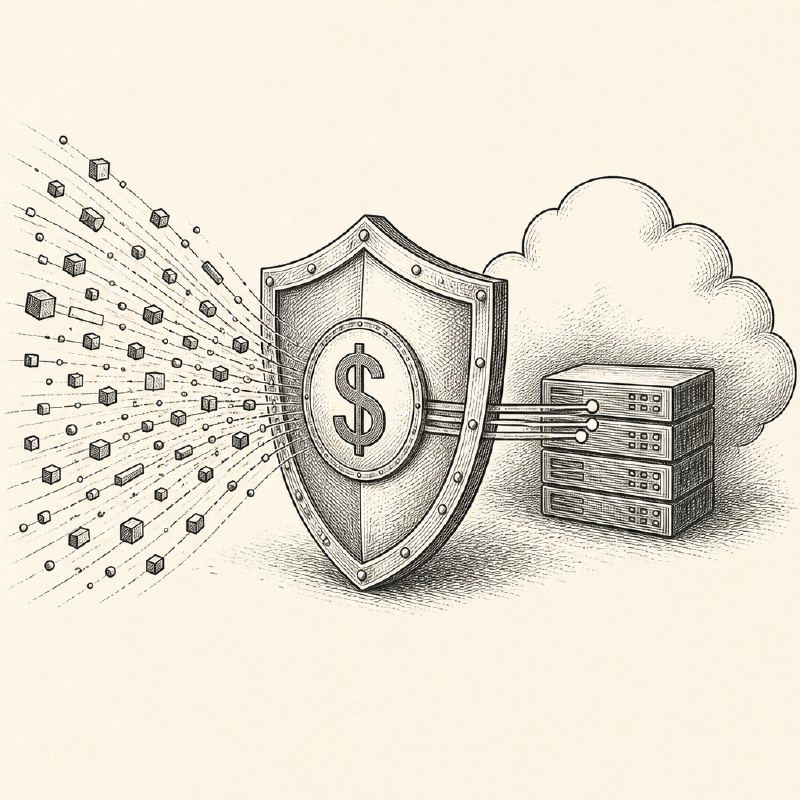

Cloudflare has officially launched Spend Management in Beta, a highly anticipated feature designed to give developers greater control over their cloud spending. This new offering is initially available to pay-as-you-go (PayGo) customers and focuses on Cloudflare Workers and Durable Objects, two core components of its developer platform. The primary goal of Spend Management is to prevent unexpected and potentially large bills by allowing users to set explicit spending limits and configure automatic service pauses when these thresholds are approached or breached.
For developers building on Cloudflare's extensive platform, which now boasts over 10 million users, cost predictability is a critical concern. While Cloudflare previously offered usage notifications and budget alerts for paid plans, these were largely informational and did not provide active control over expenditure. Spend Management directly addresses this gap by enabling users to not only be informed but also to enforce spending controls, ensuring that unplanned usage does not lead to financial surprises. This feature is particularly relevant for those leveraging AI services, as it integrates with AI Gateway to manage compute and inference costs.
Implementing Spend Management is designed to be straightforward, with options available through the Cloudflare dashboard, the Command Line Interface (CLI) via cf, or programmatically via the REST API. Users can navigate to the 'Billing' section in their account settings to enable spending controls for supported products. Within this interface, they can define a specific spending limit, set one or more alert thresholds, and designate an email address to receive notifications. When the accumulated spend reaches a configured threshold or the hard limit, Cloudflare will automatically enforce a blocking policy, pausing the affected product's activity.
The dashboard provides a near real-time view of current billing cycle costs for each supported product, typically updated within ten minutes. This allows developers to monitor their spending closely and adjust their limits or policies as needed. It's important to note that the billing cycle begins with the start of the paid subscription, not necessarily on a calendar month basis or when a specific service is deployed. The audit log within the dashboard also offers transparency, tracking any changes made to limits and policies, as well as when caps were enforced.
When a spending cap is enforced, Cloudflare automatically pauses customer-code invocations that incur costs. For instance, in Workers, this would include services like Cron Triggers and Queue consumers, while static asset delivery would continue unaffected. To resume service after a pause, users have several options: they can increase the spending limit to accommodate current accumulated spend, disable or delete the blocking policy, or wait for the current billing cycle to end, at which point the existing block expires automatically.
Building a system capable of enforcing spending limits at Cloudflare's global scale presented significant engineering challenges. The solution involves a sophisticated two-stage metering pipeline designed to collect and aggregate usage measurements as close to the source as possible. This approach minimizes the volume of raw data that needs to be processed, enhancing efficiency and scalability. The first stage aggregates events into one-minute windows, while the second stage further consolidates these into five-minute windows before they are processed by the Usage Engine.
This robust backend infrastructure ensures that Cloudflare can reliably track and control usage across its distributed network. The introduction of Spend Management marks a significant step in Cloudflare's commitment to empowering developers with better tools for managing their cloud resources and costs, with plans to extend these controls to additional products in the near future.