
Cloudflare Enhances CDN Performance with New Origin Range Requests Feature
Cloudflare has rolled out Origin Range Requests, a self-service feature designed to optimize the handling of large file requests within its Content Delivery Network.

Cloudflare has introduced a significant enhancement to its Content Delivery Network (CDN) capabilities with the launch of Origin Range Requests. This new self-service feature aims to dramatically improve the efficiency of serving large files, such as videos, by intelligently managing how Cloudflare's cache handles HTTP range requests. Previously, naive caching of range requests could lead to substantial waste in network bandwidth and origin server load, as Cloudflare might pull significantly more data than a user actually requested.
The core problem addressed by Origin Range Requests lies in the inherent inefficiency of traditional range caching. When a user seeks to a specific point in a video, their player requests only a small segment of the file. Under the old system, Cloudflare's cache might have been configured to pull much larger, fixed-size chunks (e.g., 128 MiB) from the origin, even if only a fraction of that chunk was needed. This not only consumed unnecessary bandwidth but also increased the processing load on Cloudflare's infrastructure and potentially led to cache invalidation issues if the range size needed adjustment. Furthermore, concurrent requests falling within the same large cache range could block each other, impacting performance for multiple users.
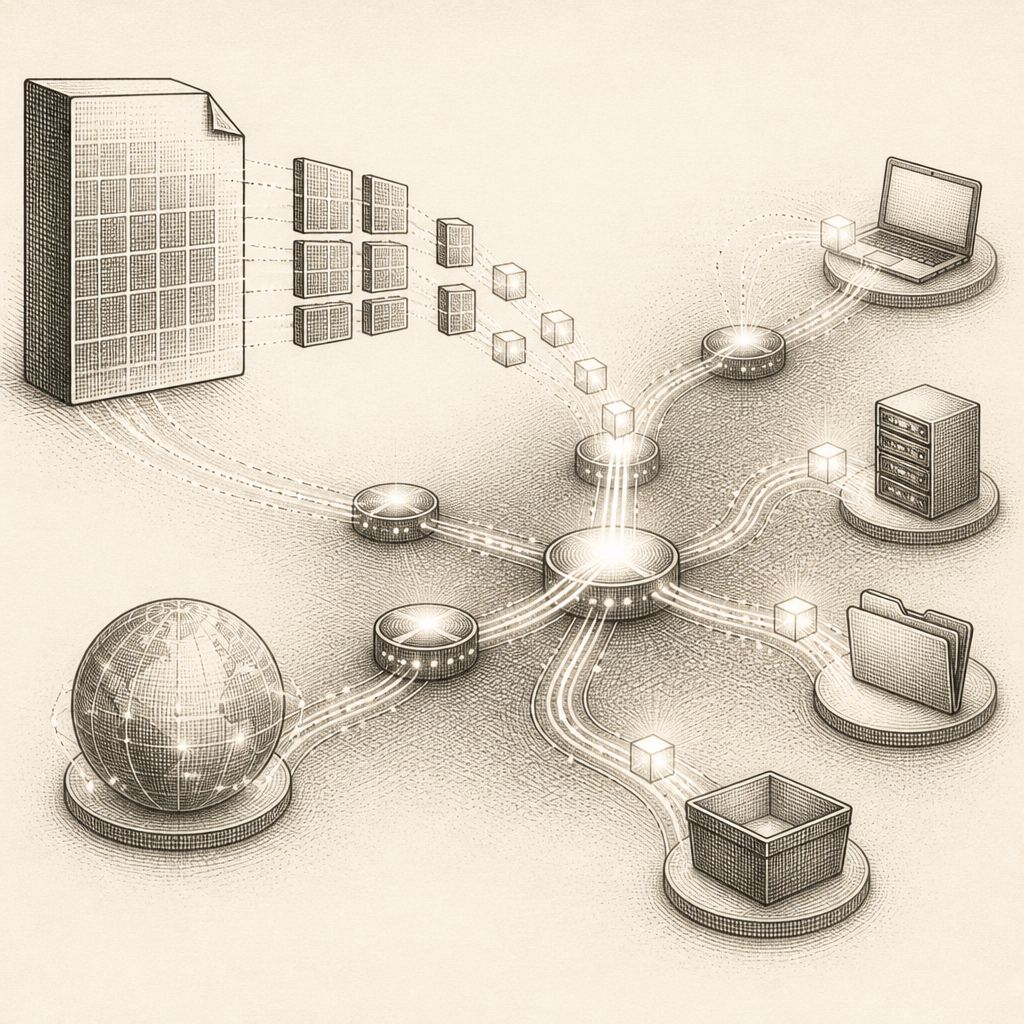
This new implementation, built on Cloudflare's Pingora infrastructure, fundamentally changes how these requests are processed. Instead of relying on static, user-configured range sizes, Origin Range Requests leverages Cloudflare's internal fixed-size cache chunks. When a range request is received, Cloudflare first checks which parts of the requested range are already cached. For any missing bytes, it fetches only the necessary data from the origin, aligning these fetches with its internal chunk boundaries. The system then serves only the bytes the client specifically requested, while storing the fetched data in its standard cache chunks.
The benefits of this approach have been substantial. In internal testing, Cloudflare observed a reduction in p99 time to first byte by approximately half for its R2 object storage. Additionally, a subsequent optimization cut tiered cache traffic for R2 and similar workloads by about 6%. This indicates a more efficient use of resources, leading to faster delivery times and reduced operational costs for both Cloudflare and its customers.
Previously, customers had to manually tune range sizes or contact support to optimize caching for range requests, a process that was often complex and yielded suboptimal results due to the varied nature of file sizes and access patterns. Origin Range Requests removes this burden by offering a dynamic, automated solution. Administrators can enable the feature simply by configuring a Cache Rule within their Cloudflare dashboard, allowing Cloudflare to manage the complexities of range caching automatically.
The underlying mechanism involves a sophisticated coordination process at the edge. Cloudflare's system first inspects the asset headers and range-coverage metadata. It then retrieves any available data from its local cache or memory. Crucially, it fetches any missing portions from the origin, using ranges that align with its cache chunks. This newly fetched data is then stored, and the system combines all retrieved pieces to construct the precise response for the client, ensuring correct Content-Range and Content-Length headers are set.
This new feature is now available to all Cloudflare customers across all plans, signifying a commitment to democratizing advanced performance optimizations. By abstracting away the complexities of range request caching, Cloudflare empowers users to serve large files more efficiently without requiring deep technical expertise in CDN configuration or network engineering. This move is expected to particularly benefit applications dealing with streaming media, large software downloads, and other content delivery scenarios that rely heavily on byte-range requests.