
Cloudflare Deploys Multi-Agent AI Harness for Security Operations
Cloudflare introduces an advanced AI agent harness designed to automate and enhance the analysis of security alerts, addressing the 'alert paradox' faced by human analysts.
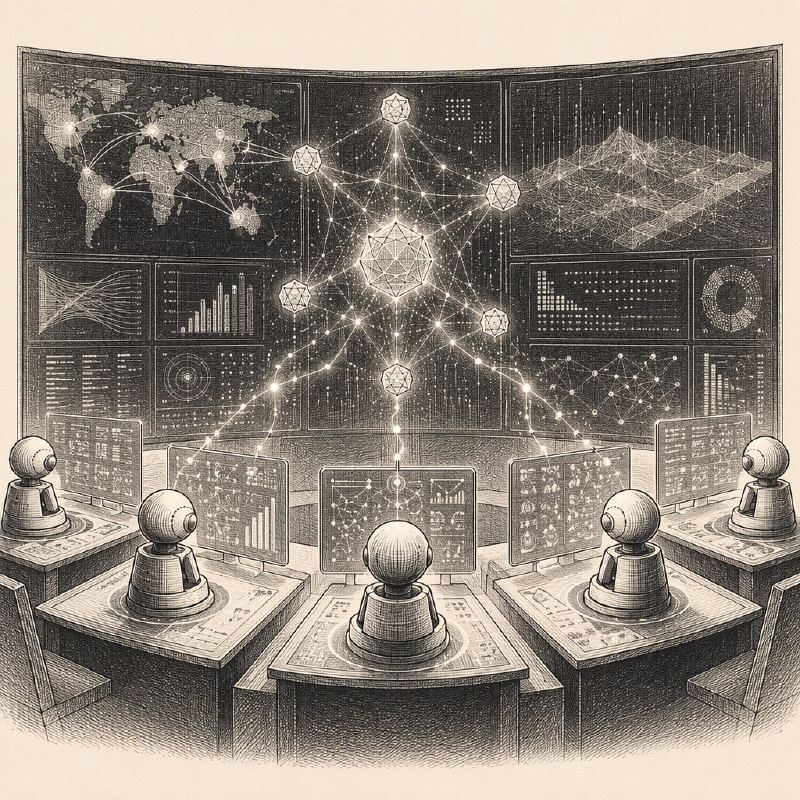
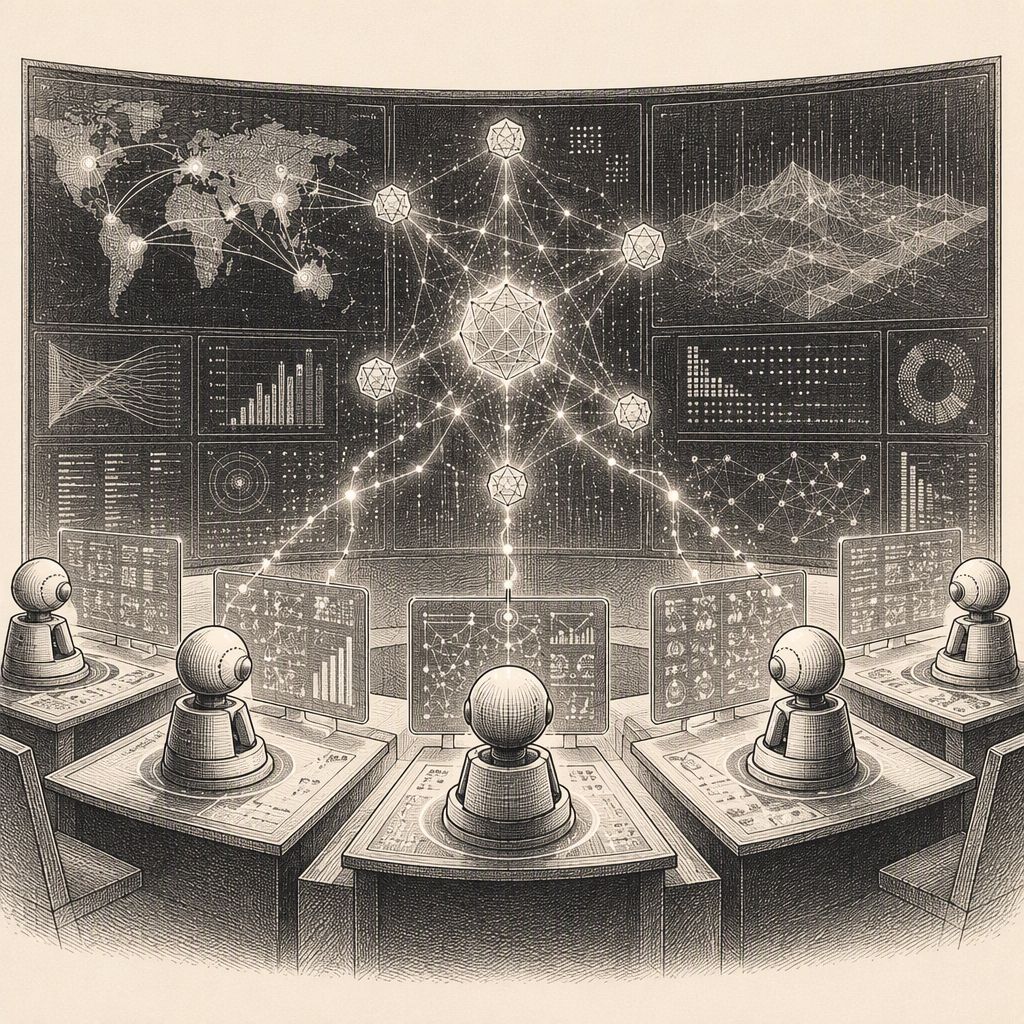
Cloudflare has unveiled a sophisticated agentic security operations harness, leveraging multiple AI agents to manage and analyze the deluge of security alerts organizations face. This new system aims to tackle the "alert paradox," where a single alert can trigger a cascade of related events, overwhelming human analysts. By aggregating detections, accounting for missing data sources, and employing advanced AI models, the harness provides a consolidated view of security incidents, significantly reducing the workload on human security teams.
The system integrates with leading AI models, including OpenAI's GPT-5.6 Cyber and Anthropic's models, alongside Cloudflare's own open-source decision model, Clef. The harness operates by first performing deterministic reconnaissance to gather essential data such as customer identity, detection history, traffic baselines, and network observations. This structured approach ensures that evidence collection is robust and reproducible, preventing the issues encountered with earlier single-agent prototypes that suffered from context drift, scope creep, and the disappearance of failures.
One of the key challenges addressed is the distinction between a detection and actual proof of a successful exploit or attack. Single-purpose AI agents often blur this line. Cloudflare's new harness separates reconnaissance from inference, ensuring that AI agents are provided with a stable, versioned snapshot of data. This allows for more accurate analysis and reduces the likelihood of hallucinations or unsupported claims, as the AI's scope is clearly defined.
Furthermore, the harness incorporates a lightweight triage model to filter out common false positives early in the process. Alerts that are highly likely to be benign are automatically classified and do not enter the deeper analysis queue. This efficiency is crucial, as most alerts are not actual security incidents, and by reducing noise, human analysts can focus on genuine threats.
For alerts that require deeper investigation, a coordinator AI agent dispatches four specialist AI agents in parallel. These agents focus on specific areas: traffic analysis, customer context, global telemetry, and threat intelligence. Each specialist agent works within its defined domain, contributing typed findings to a synthesis agent. This modular approach enhances auditability and makes it easier to identify any unsupported claims or errors in the analysis.
The "global telemetry" specialist is particularly noteworthy, as it compares an alert against aggregated, privacy-preserving patterns seen across Cloudflare's global network. This provides crucial context that a single organization's security tools might miss, such as whether an IP address is scanning thousands of sites or if an activity is entirely novel.
By separating evidence collection, scope enforcement, and analysis into distinct stages and employing specialized AI agents, Cloudflare's harness offers a more reliable, scalable, and efficient approach to security operations. This system aims to empower Managed Defense Analysts by providing them with consolidated, actionable insights, allowing them to focus on resolving incidents and deploying mitigations rather than getting bogged down in data collection and initial analysis.
This development aligns with Cloudflare's broader strategy of integrating AI into its security offerings, aiming to provide customers with advanced protection against evolving cyber threats in an increasingly complex digital landscape.