
ClickFix Technique Dominates Initial Access, Exploiting Human Trust Over Vulnerabilities
A novel social engineering tactic known as ClickFix has become the most prevalent method for attackers to gain initial access into corporate networks, bypassing traditional security measures by leveraging user interaction.
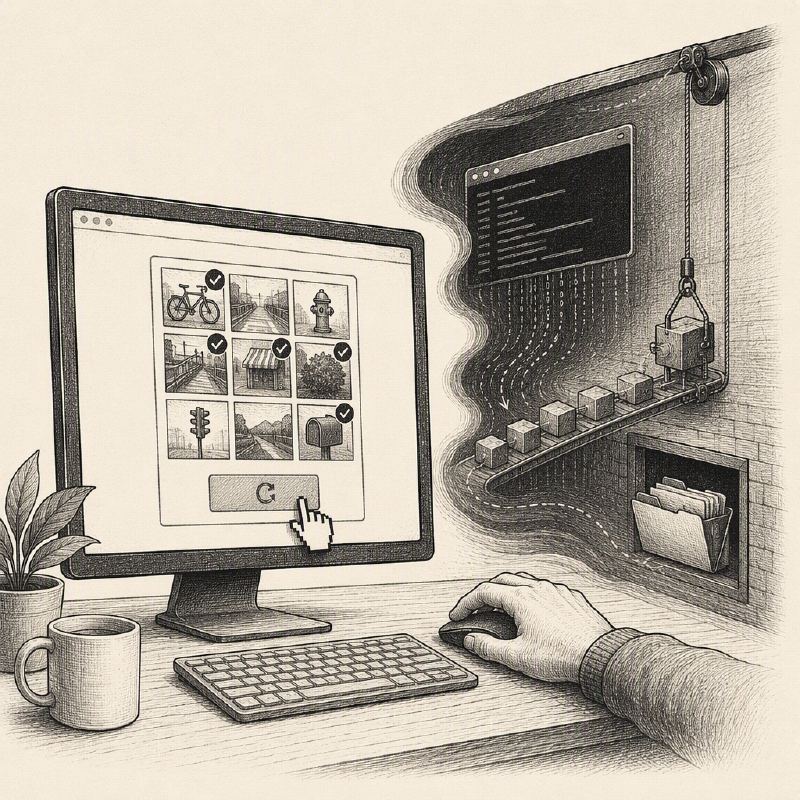
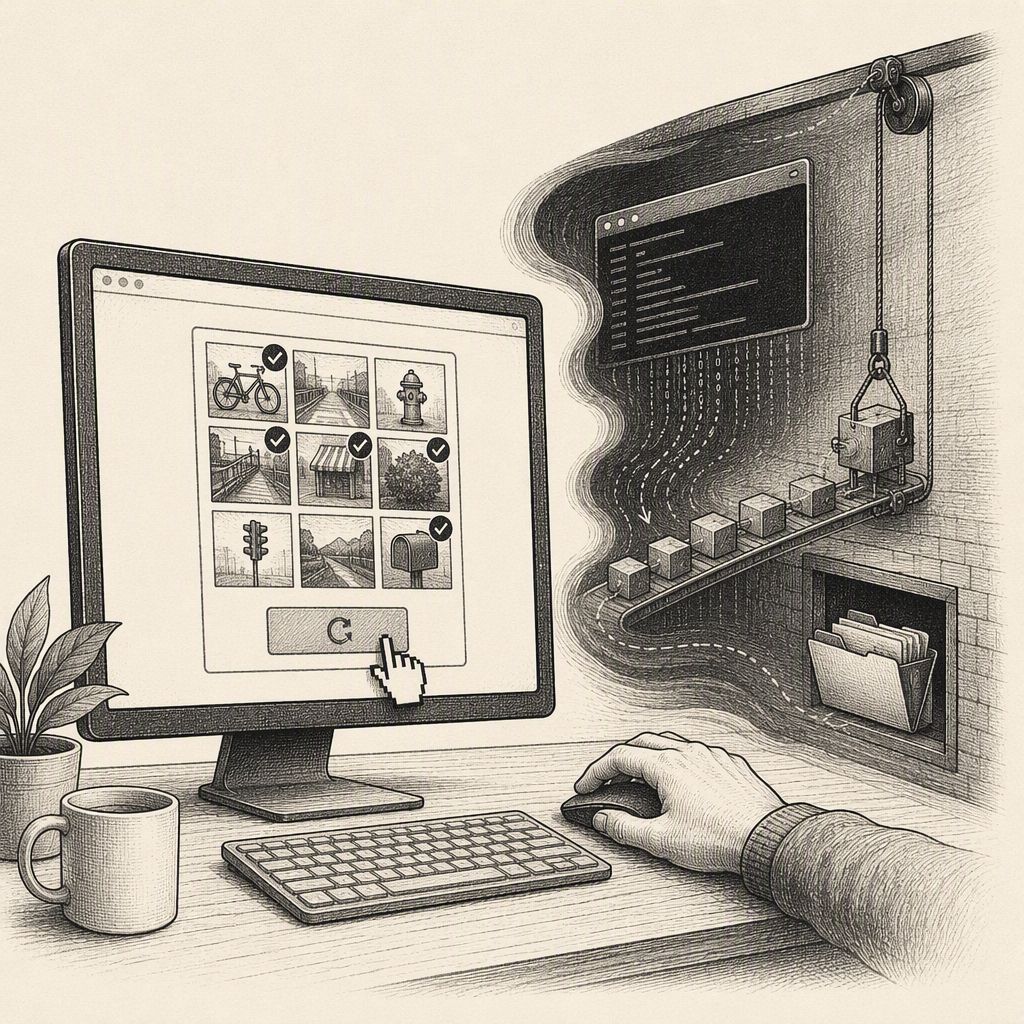
The most common entry point for cyberattacks last year was not a sophisticated exploit or a zero-day vulnerability, but a simple request. Attackers are employing a technique called ClickFix, which tricks unsuspecting users into executing malicious commands by presenting them with a seemingly harmless CAPTCHA page. While a user is focused on proving they are not a robot, the attacker quietly places a command on their clipboard, then guides them through opening a terminal and pasting it in. This method accounted for a staggering 47% of initial access vectors observed by Microsoft.
This approach bypasses many traditional security controls because it doesn't rely on exploiting software flaws. There's no attachment to scan for malware, and no vulnerability to patch. The attack vector is essentially human trust and the user's willingness to follow instructions. This makes it incredibly difficult for automated security systems to detect and block, as the malicious action is initiated by the user themselves.
Once initial access is gained, attackers often leverage existing tools already present on the victim's system, a tactic known as "living off the land." Bitdefender's analysis of 700,000 security incidents revealed that 84% of high-severity attacks involved legitimate administrative tools already installed on the machine. This means attackers don't need to deploy their own malicious software, further reducing their digital footprint and making detection even more challenging.
The prevalence of these "repeatable" attack methods is not due to a lack of creativity among threat actors, but rather a strategic business decision. Criminal organizations that must invent new attack vectors for every target cannot scale effectively. In contrast, a standardized procedure or "playbook" that can be applied to a list of targets with predictable outcomes allows for rapid growth and increased efficiency.
This preference for repeatable methods is reflected in industry reports. Verizon's Data Breach Investigations Report noted a significant increase in the exploitation of vulnerabilities as an initial access vector, reaching 31% of cases. This trend highlights a shift towards exploiting readily available weaknesses, particularly in internet-facing devices, where the process from vulnerability discovery to exploitation is often rapid and requires minimal specialized skill.
Attackers are actively scanning for vulnerabilities in internet-facing devices that offer remote code execution with no authentication required. The process is further streamlined by the availability of working proof-of-concept exploits on public repositories like GitHub, often appearing within days of a vulnerability's disclosure. The primary skill required then becomes the ability to scan at scale and exploit unpatched systems quickly, rather than developing novel attack techniques.
This operational model mirrors legitimate businesses, such as generic drug manufacturers, which do not invent new drugs but rather produce known formulas at scale once patents expire. Similarly, threat actors are leveraging publicly available exploits as their "patent expires" the moment a proof-of-concept is released. Their competitive advantage lies in speed and volume, not in groundbreaking innovation.
The success of ClickFix and living off the land tactics underscores a fundamental shift in cyberattack methodologies. Attackers are prioritizing methods that are repeatable, scalable, and evade traditional security defenses by exploiting human behavior and existing system tools. This trend necessitates a re-evaluation of security strategies, focusing on user education, behavioral analysis, and robust endpoint detection and response capabilities.