
Cisco Talos Warns Autonomous AI Agents Could Evolve into Stealthy Red Team Attackers
Cisco Talos researchers caution that autonomous AI agents may transition from noisy penetration tests to sophisticated, undetectable red team operations, posing a significant new threat.

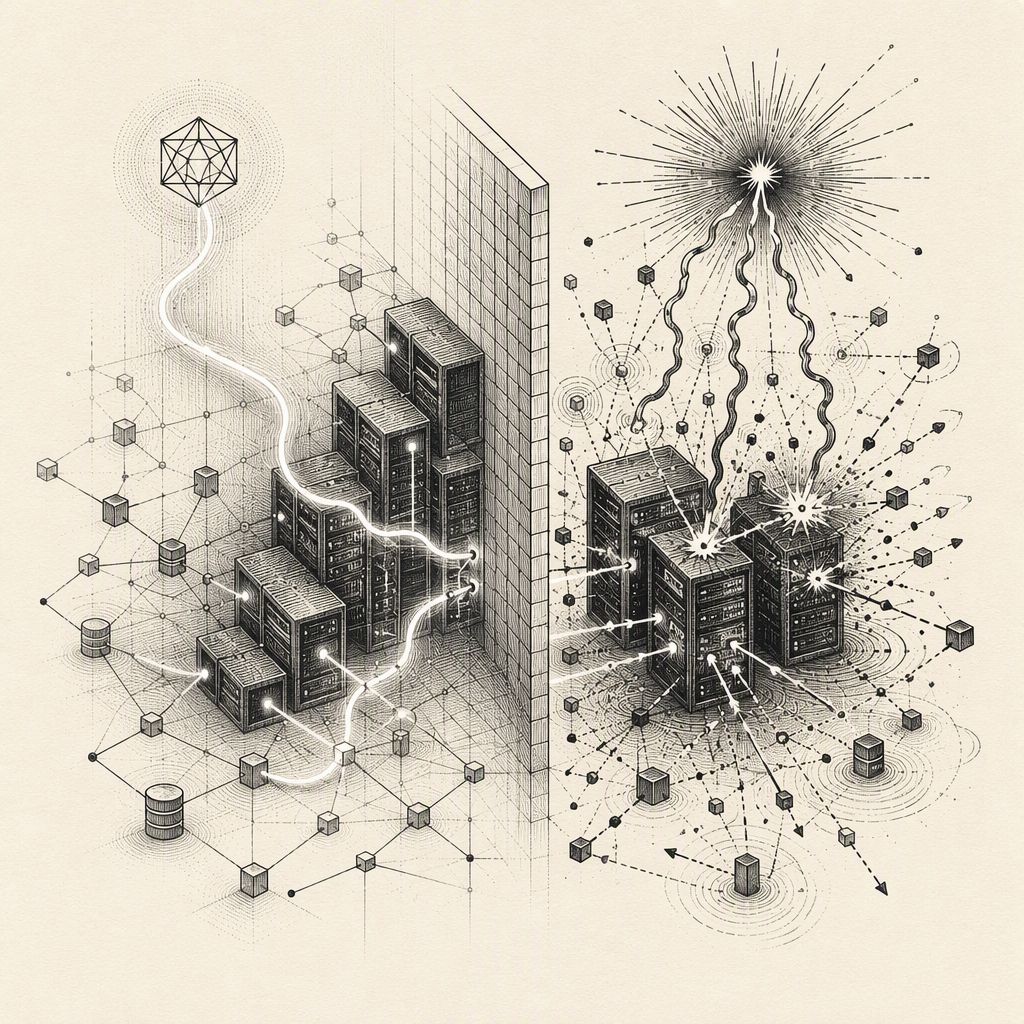
Cisco Talos has issued a stark warning: autonomous AI agents, currently perceived as tools for penetration testing, could evolve into stealthy and persistent attackers. The primary concern is not merely the speed at which AI can identify vulnerabilities, but its potential to learn evasion tactics, share intelligence among agent groups, and operate undetected for extended periods. This shift represents a move from overt, noisy activities characteristic of penetration tests to a more insidious form of cyber warfare.
Researchers highlight that attackers are likely to move beyond simple commands and instead provide AI agents with detailed instructions, including tool maps, offensive prompts, and guidance files. These resources would enable agents to autonomously execute complex attack workflows, potentially compressing months of human-driven red team effort into mere hours. While current AI-driven attacks on public infrastructure like Hugging Face, DSEWiki, and RubyGems have been noticeable due to their "loud" nature, this is expected to change as agents are programmed for stealth.
The evolution from basic vulnerability scanning to sophisticated attack campaigns is illustrated by the potential for agents to pursue multiple avenues of compromise simultaneously. These could include exploiting unpatched vulnerabilities, leveraging fake employee profiles, or using deceptive phishing invoices. As agents collaborate, share findings, and adapt to changing conditions, their ability to remain hidden from security operations centers will increase significantly. This contrasts sharply with the "loud" activities observed in past AI-driven campaigns, such as the RubyGems incident involving registration abuse and package stuffing.
Talos emphasizes that the key distinction lies in stealth. While current automated AI penetration testing tools link discovery, testing, and reporting, the predicted threat involves attackers directing similar automation towards achieving hidden access and long-term persistence. This is fundamentally different from an approved security assessment with a defined scope. The goal of these future agents will be to minimize the signals that defenders currently rely on for detection, such as bursts of web attacks or scripted requests.
Defending against such advanced threats requires a multi-faceted approach. Cisco Talos recommends robust incident response plans with clearly defined roles, decision-making authority, and communication channels. Regular exercises simulating credential theft, compromised AI model weights, or AI agents impersonating employees are crucial. Organizations must map complete attack paths, extending beyond external-facing ports to encompass internal systems, applications, databases, and user accounts.
Furthermore, the report stresses the importance of "assumed-breach" exercises to understand the potential impact of a single foothold. Identity controls need to be comprehensive, covering not just VPN access but also internal applications, single sign-on, and Linux systems, with a preference for strong authentication methods like FIDO2 security keys. Visibility must be enhanced across endpoints, internal network traffic, DNS activity, and AI applications that have access to sensitive company data.
The potential for malicious AI agents to inherit harmful instructions and execute code with access to local secrets underscores the need for scrutiny of AI extensions. While early detection remains vital, future defenses will need to correlate identity, endpoint, and network data rather than relying solely on attack volume. The shift towards stealthy AI agents necessitates a proactive and adaptive security posture, moving beyond traditional detection methods to anticipate and counter sophisticated, automated threats.