
CISA Alerts Critical Stack Buffer Overflow in Danfoss Industrial Controllers
CISA has issued a critical alert for a stack-based buffer overflow vulnerability in Danfoss AK-SM 8xxA Series controllers, potentially allowing arbitrary code execution.
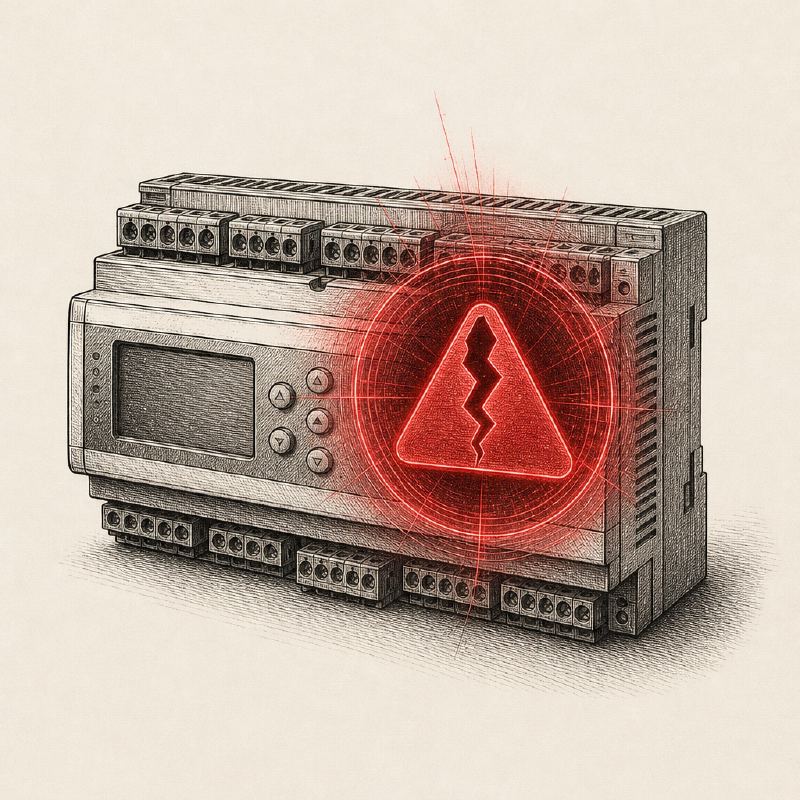
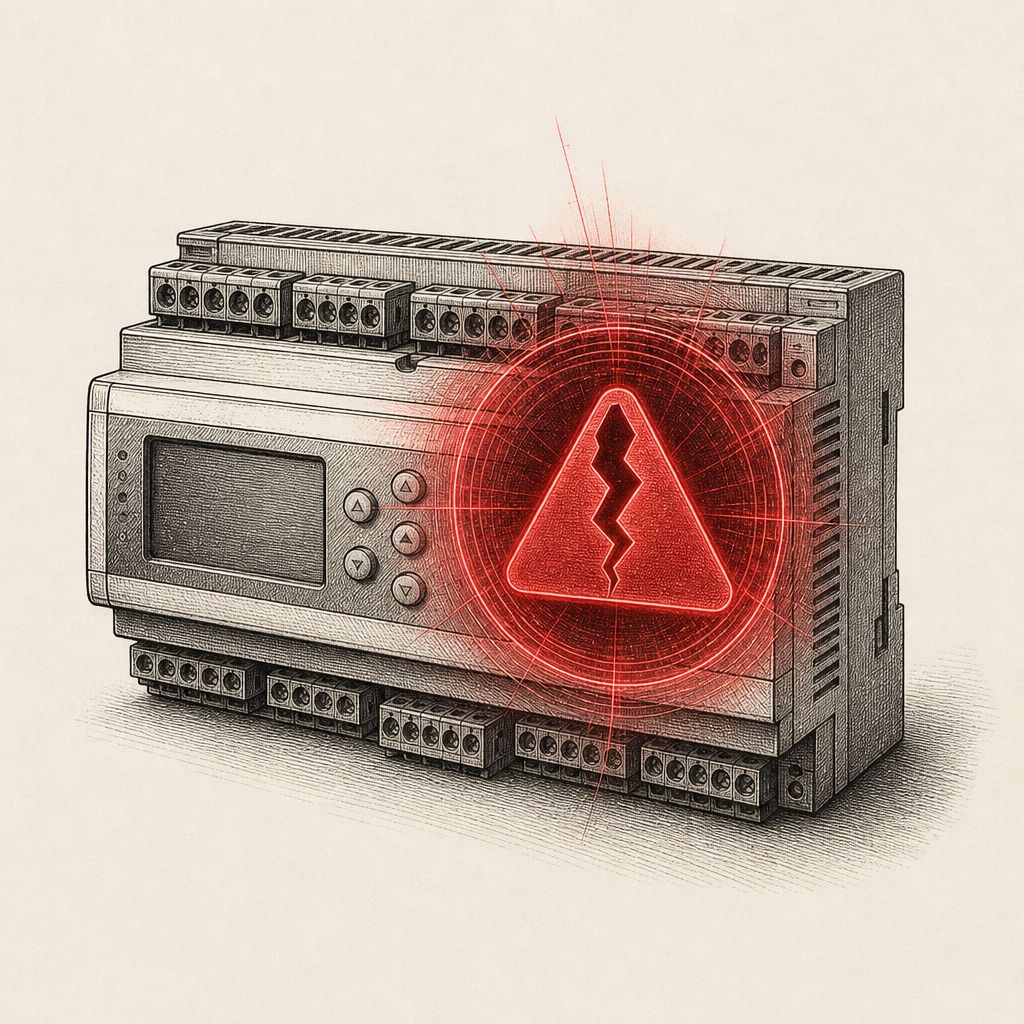
CISA has issued a critical alert regarding a stack-based buffer overflow vulnerability affecting Danfoss AK-SM 8xxA Series controllers, identified as CVE-2026-129713. This flaw, present in versions up to 5.4.0, poses a significant risk to industrial control systems (ICS) within commercial facilities worldwide.
The vulnerability resides within an unauthenticated CGI handler of the controller. Attackers can exploit this by sending specially crafted HTTP or HTTPS POST requests. Successful exploitation could lead to memory corruption, a webserver restart, and, critically, the potential for arbitrary code execution with the privileges of the webserver. Notably, no authentication is required to leverage this vulnerability, making it accessible to a wide range of threat actors.
The Common Vulnerability Scoring System (CVSS) v3.1 assigns this vulnerability a base score of 9.8 (Critical), with a CVSS v4.0 score of 9.3 (Critical). The vector strings highlight its network accessibility (AV:N), low attack complexity (AC:L), no privileges required (PR:N), no user interaction needed (UI:N), and its potential for high confidentiality, integrity, and availability impacts (C:H/I:H/A:H).
Danfoss has acknowledged the vulnerability and plans to address it in an upcoming software release, version 5.5.x. In addition to the patch, Danfoss intends to remove the ability for users to disable "Strict Mode" in future software updates, which may serve as an additional layer of defense or a hardening measure.
Carlo Meijer of Midnight Blue is credited with reporting CVE-2026-129713 to CISA. While no known public exploitation has been reported to CISA at this time, the critical nature and ease of exploitation warrant immediate attention from organizations utilizing these controllers.
CISA strongly recommends that organizations minimize network exposure for all control system devices, ensuring they are not accessible from the internet. Implementing firewalls, isolating control system networks from business networks, and utilizing secure remote access methods like VPNs are crucial defensive measures. Organizations should also perform thorough impact and risk assessments before deploying any defensive strategies.
This alert underscores the persistent threats targeting operational technology (OT) and industrial control systems. Vulnerabilities in these systems can have far-reaching consequences, potentially disrupting critical infrastructure and essential services. Proactive security practices, including regular patching and robust network segmentation, remain paramount in safeguarding these environments.