
China-Nexus Actors Deploy AI Tool Cairn for Autonomous Espionage Attacks
State-sponsored threat actors linked to China have utilized the AI-driven penetration testing framework Cairn to conduct autonomous cyberattacks, breaching at least 10 organizations across critical sectors.

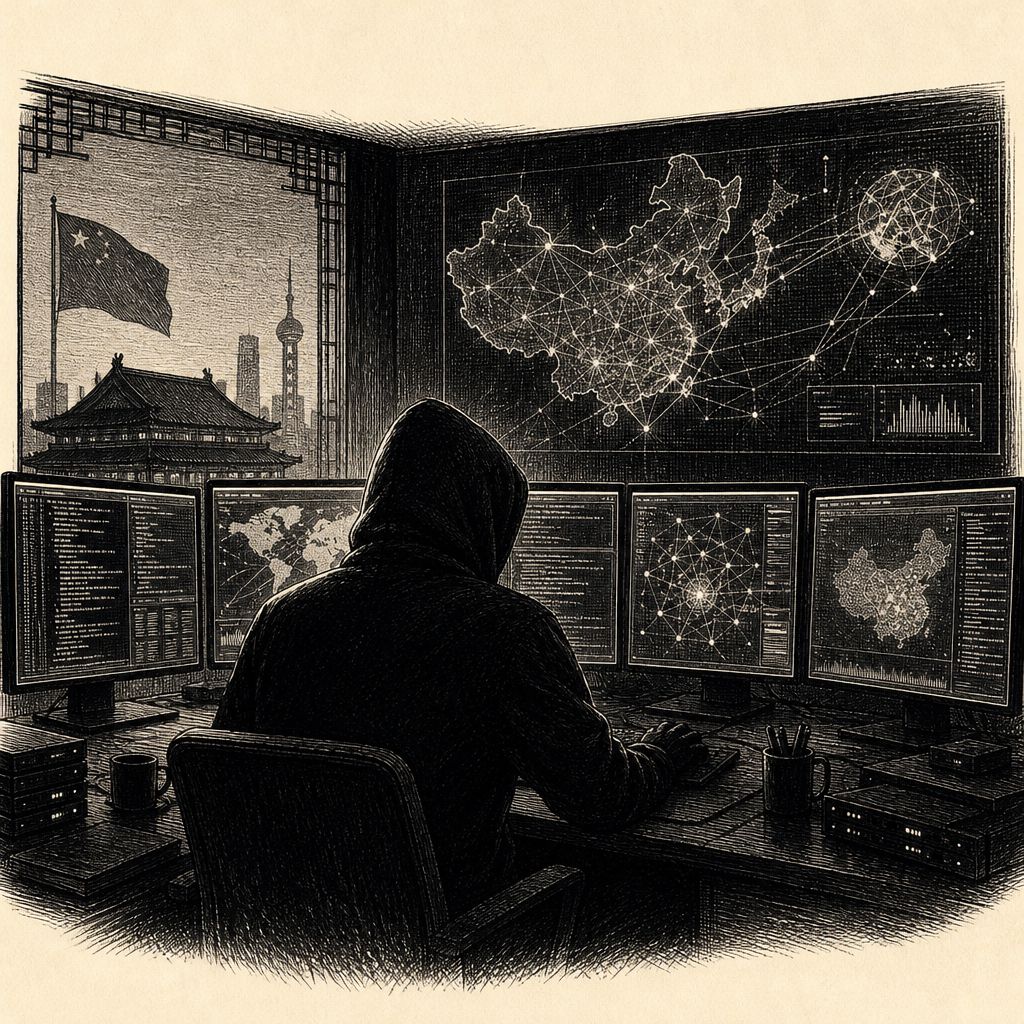
China-nexus threat actors have escalated their espionage efforts by employing the open-source AI penetration-testing framework, Cairn, to automate sophisticated attacks. Researchers at Palo Alto Networks' Unit 42 have tracked this activity under CL-STA-1238, marking the second documented instance of China-linked groups leveraging Cairn for autonomous operations. Between August and September, attackers conducted 25 operations against at least 19 organizations, successfully compromising 10 of them.
The successful breaches resulted in the exfiltration of sensitive data, including dozens of valid credentials, personal data exceeding one million records from a single organization, and military and government identities. The actors also established persistent administrator accounts within production systems and even modified a live industry standards-ballot document, demonstrating a broad range of disruptive and intelligence-gathering capabilities.
Victims spanned critical sectors, with seven organizations operating within the semiconductor and advanced-manufacturing supply chain, and three others involved in US defense and defense policy. The campaign also targeted human rights and civil society organizations, indicating a wide-ranging espionage agenda. Specific targets included an industry standards body hit by password spraying, a semiconductor company that fell victim to credential brute-forcing on a partner-integration application, a US teacher's union exploited via an unauthenticated account-creation bypass, and a defense policy think tank whose identity platform was targeted.
The use of Cairn signifies a notable shift in offensive cyber operations, allowing threat actors to supply a target and a high-level objective, with the AI framework autonomously planning, executing, and recording results. In this campaign, Cairn was weaponized using Chinese large language models (LLMs) such as Zhipu GLM 5.2 and DeepSeek V4 Flash and Pro. However, initial network access was often gained through traditional security vulnerabilities.
Researchers noted that the exploited weaknesses were largely known, including authentication bypasses, insecure direct object references, mass-assignment privilege escalation, weak credentials, exposed cloud APIs, and outdated CVEs. This suggests that while AI enhances the speed and scale of attacks, the underlying attack vectors remain familiar, offering defenders a degree of predictability.
Each CL-STA-1238 operation varied in duration, lasting from 20 minutes to over 50 hours. The ability to conduct simultaneous operations against multiple targets reduced the reliance on human operators, enabling a more efficient and expansive campaign. The AI model drives individual Cairn 'agent workers,' which coordinate through a shared 'blackboard,' building on learned information without constant human oversight.
Despite the advanced AI tools employed, defenders can still rely on fundamental security practices. Unit 42 emphasizes that identity hygiene, attack-surface reduction, and timely software patching remain effective countermeasures against AI-driven attacks like those powered by Cairn. Continuous monitoring of exposed services and restricting access are also crucial steps in mitigating risks from these evolving threats.