
China-Linked APT SilkParasite Uses AI to Enhance Hand-Built Malware Targeting Central Asia
A China-linked advanced persistent threat group, dubbed SilkParasite, has been observed employing artificial intelligence to optimize its custom-built malware, deploying seven remote access trojans against government agencies in Central Asia.
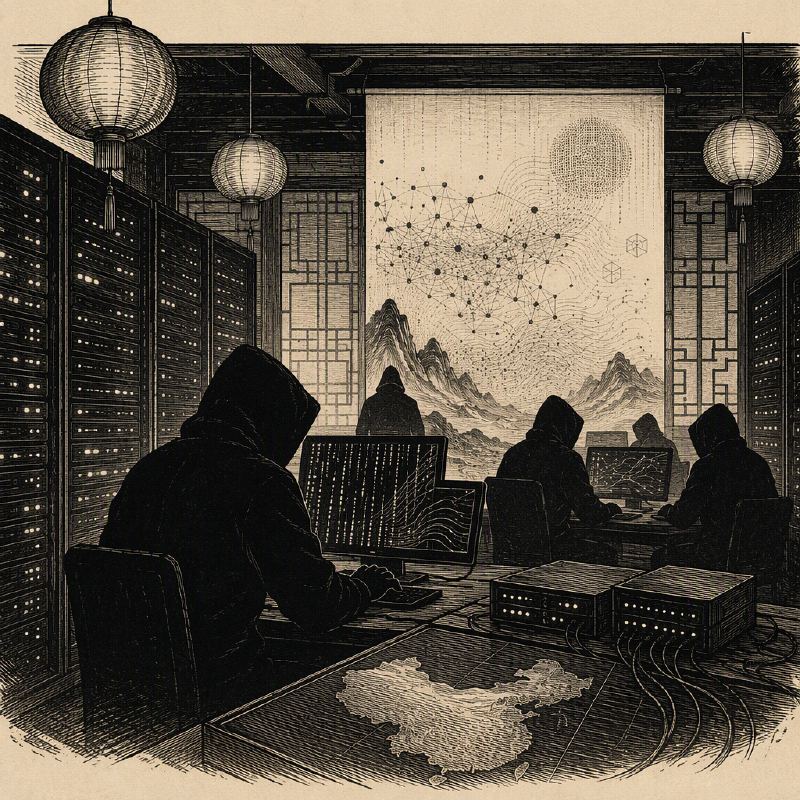
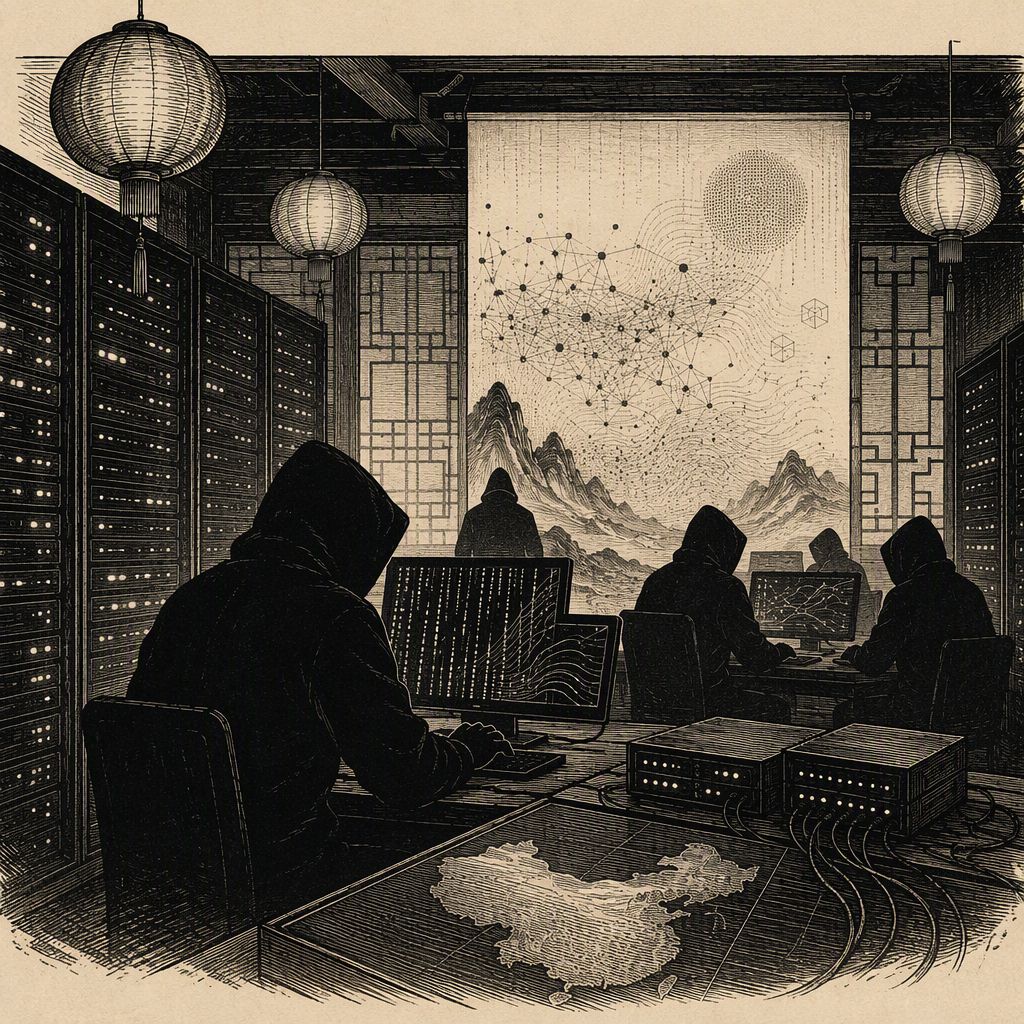
A sophisticated cyberespionage campaign, identified by security firm Bitdefender as "SilkParasite," has targeted government agencies across Central Asia for nearly a year, employing a unique blend of expertly crafted malware and artificial intelligence-assisted development. The threat actor deployed seven distinct malware families, five of which were previously unknown, in a campaign that ran throughout 2025. Researchers noted that while the malware itself is professionally engineered and stealth-focused, it bears the "traces of AI-assisted development," distinguishing it from fully AI-generated malware.
This operation marks the third significant cyber campaign observed by Bitdefender in the Central Asian region, following earlier activities by threat actors tracked as UAC-0063 and FamousSparrow. The targeting of Central Asian governments aligns with China's increasing economic engagement in the region as Russia's influence wanes, suggesting a correlation between geopolitical shifts and heightened intelligence-gathering efforts.
Several tools within the SilkParasite arsenal show similarities to malware used by the China-aligned FamousSparrow group, a common characteristic among Chinese espionage operations that often involves toolset-sharing. The primary delivery method for the new malware leverages the DLL sideloading technique, a tactic frequently employed by Chinese hackers. Initial access was typically gained through malicious Microsoft Office documents, likely distributed via spear-phishing emails.
To bypass email gateway scanning and automated sandbox inspections, the attackers often packaged lure documents within password-protected RAR archives, with the password provided directly in the email body. Upon opening the document, a macro would execute, dropping a signed-application sideloading chain to disk and launching the initial payload. Notably, the threat actors demonstrated an awareness of the targets' common antivirus solutions, adapting the script's behavior to evade detection if the macro identified specific security software.
The phishing documents were meticulously crafted to appear relevant to government entities in Uzbekistan, Turkmenistan, Kyrgyzstan, Tajikistan, and Kazakhstan, sometimes impersonating specific ministries. Intriguingly, two of the AI-generated lures depicted a poorly rendered fake energy-sector organization and a fake cloud-computing provider advertising GPU services. Researchers suspect this low-quality AI content was deliberately used to blend in with the increasing volume of similar AI-generated material that these organizations already receive and produce.
Compared to less adept threat actors, SilkParasite's use of AI appears to optimize components rather than autonomously generate the entire malware. The toolset is characterized by a "minimum footprint, dynamic in-memory execution and code deliberately built not to resemble previous malware families." This contrasts with AI-generated malware, which can often be verbose and easily detectable. The researchers emphasize that "APT-grade malware like this remains firmly the work of human professionals," with AI serving as an enhancement rather than a replacement for skilled developers.
Nearly all seven malware families—DriveSilkRAT, SpiceRAT, CookiETagRAT, BloodAlchemy, NomadRAT, GoginRAT, and NodeEdgeRAT—were written in various languages and supported a plug-in architecture. This design allows for additional capabilities to be loaded from the attacker's command-and-control server, minimizing the initial footprint, limiting exposure on any single victim, and enabling easier updates without replacing the entire implant.
Traces of AI assistance were found in two specific malware families. The Go-based GoginRAT contained test functions that were not stripped before deployment and used a hardcoded AES key. NomadRAT, written in C++, had a placeholder for an encryption key that read "change_this_key." The overlapping architectures of these families suggest an AI-assisted workflow that implemented high-level design concepts twice in different programming languages. The primary benefit of AI for such advanced persistent threats lies in assistance, optimizing efficiency and stealth, rather than mass-producing malware.
This new reporting details the specific technical mechanisms employed by the SilkParasite campaign, including the use of five previously undocumented RAT families: DriveSilkRAT, CookiETagRAT, NomadRAT, GoginRAT, and NodeEdgeRAT. It also highlights the campaign's sophisticated use of AI for development, particularly in crafting phishing lures, and its reliance on DLL sideloading for payload delivery, alongside specific anti-detection measures like checking for Kaspersky installations.
This latest report from Dark Reading details how the SilkParasite group employs spear-phishing as its primary initial access vector, a tactic not explicitly highlighted in previous reporting. The article also emphasizes the campaign's focus on Central Asian organizations, providing further context on the geopolitical motivations behind these cyber operations.
This new report from The Record provides additional detail on the SilkParasite campaign, specifically highlighting the use of AI in generating spearphishing lures and assisting in the development of five previously undocumented malware strains. It also notes the campaign's potential geopolitical motivations, suggesting China's economic expansion in Central Asia as a driver for espionage against regional governments.
This new report details the specific malware families used in the SilkParasite campaign, including five previously undocumented tools: DriveSilkRAT, CookiETagRAT, NomadRAT, GoginRAT, and NodeEdgeRAT. It also highlights the campaign's use of cloud services like Google Drive for command and control and the abuse of DLL sideloading for persistence, further elaborating on the technical methods employed by the threat actors.