
China Developing Capabilities to Sabotage Asian Submarine Cables, Report Warns
A U.S.-China Economic and Security Review Commission report indicates Beijing is building the means to disrupt trans-Pacific undersea communication cables, potentially crippling regional connectivity without open conflict.
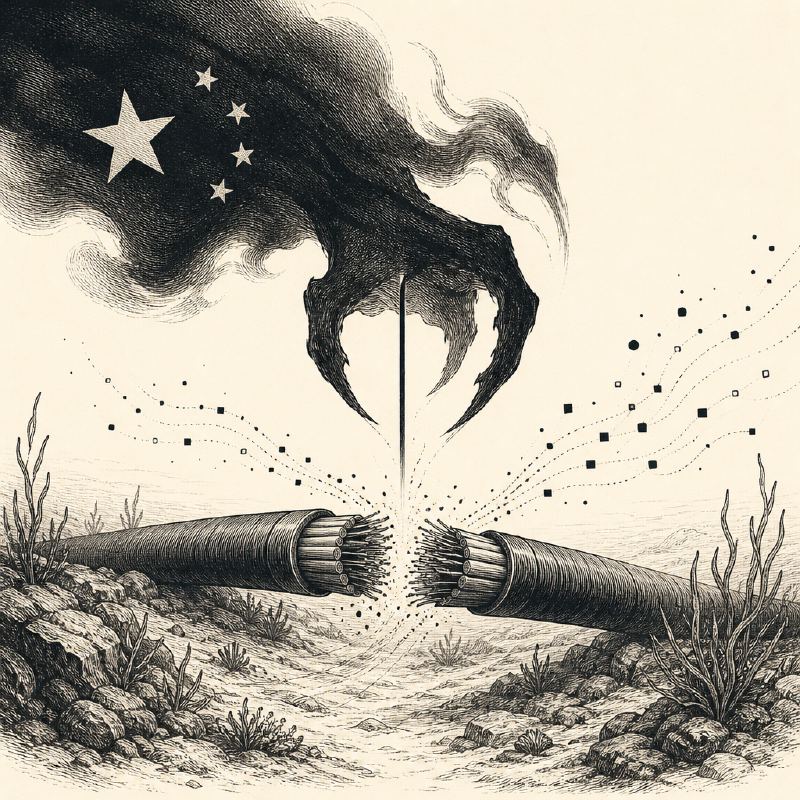
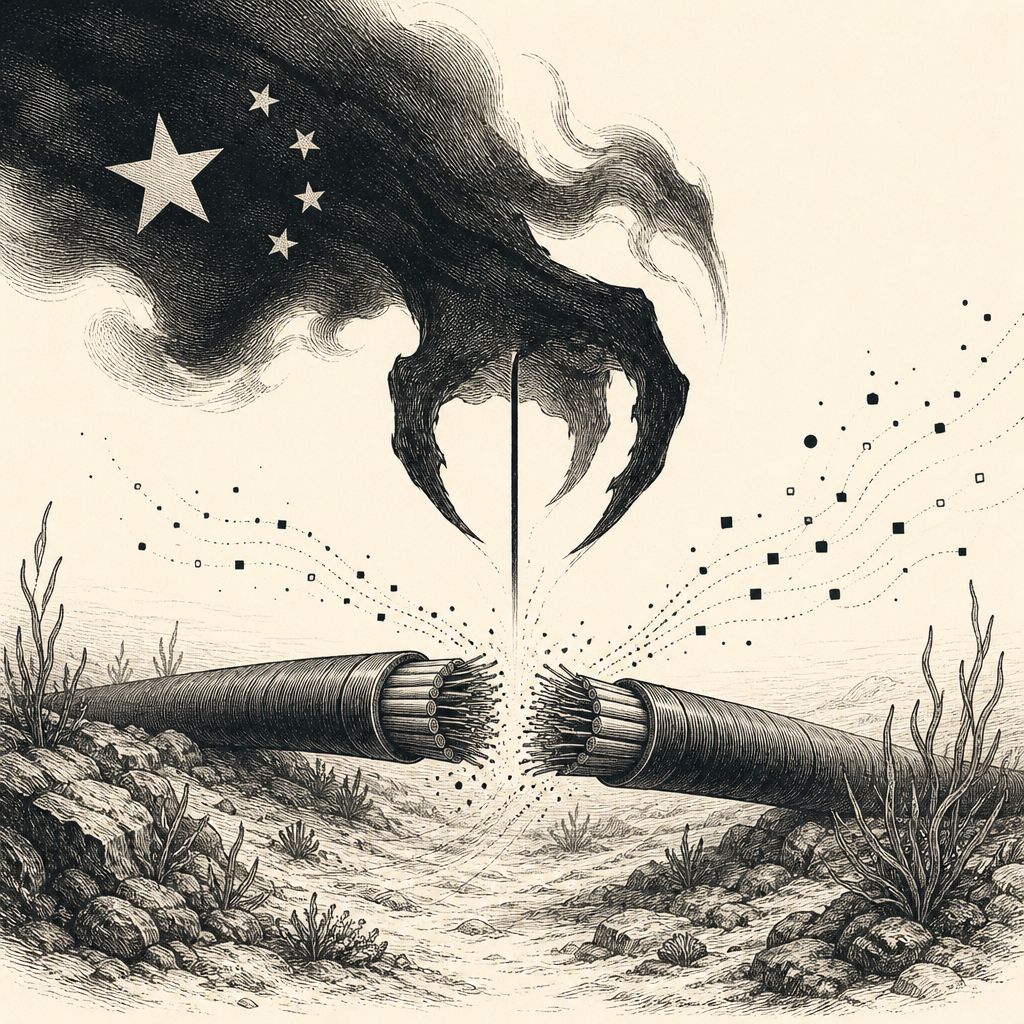
A new report commissioned by the U.S.-China Economic and Security Review Commission highlights significant concerns that China is actively developing the capabilities to sabotage critical undersea communication cables in the Asia-Pacific region. Researchers from the China Strategic Risks Institute found that Beijing is amassing the tools and infrastructure necessary to damage these vital data conduits, a move that could severely impact global internet traffic and regional stability.
The report points to a recent incident involving a Chinese work barge suspected of damaging a cable near Taiwan as evidence of this growing threat. The vulnerability index developed by the researchers scores cables higher if they land in or traverse waters claimed by Beijing, noting that shallow and busy shipping lanes present an increased risk, as a dragged anchor could easily be disguised as an accident. Several high-profile cables, including Google's TPU and Meta's ORCA, are noted as being particularly vulnerable due to their planned routes and the absence of Chinese ownership, suggesting Beijing may have little incentive to protect them.
The potential consequences of such an attack are dire. The report estimates that severing just three of the four direct U.S.-Taiwan cables could overwhelm the remaining capacity, leaving the network unable to handle peak traffic. The Philippines faces a similar risk with its direct links to Guam, a critical node for U.S. connectivity. A coordinated attack on all four U.S.-Taiwan cables could reduce the trans-Pacific network's spare capacity to a mere 2% during peak demand.
Should trans-Pacific routes become saturated, traffic between Taiwan and the U.S. could be rerouted through the Indian Ocean and across the Atlantic. This detour would add over 900 milliseconds to each round trip, a delay significant enough to cause timeouts for financial transactions and severely degrade real-time communication services. While operators could mitigate some of this impact by activating unused fiber pairs, the scale of disruption could still be catastrophic.
Beyond accidental damage, the report details dual-use technologies that could enable deep-water cable attacks, previously considered out of reach. This includes advanced cutting devices developed by Chinese research centers linked to state shipbuilders. Furthermore, China reportedly plans to deploy a crewed seabed station around 2030, which could support sustained operations targeting undersea infrastructure.
In response to these findings, the report urges Congress to mandate acoustic sensors for new cables in high-risk areas and to assign a dedicated agency, such as the Department of Homeland Security, responsibility for subsea cable security. It also recommends funding at least five new regional repair ships by 2040, acknowledging that the current global fleet of 62 cable ships is insufficient, with repairs in the Asia-Pacific already averaging 30 days.
The report also calls for enhanced coordination between agencies like CISA and critical sectors such as finance and healthcare to develop outage playbooks. Stricter penalties for deliberate cable damage, potentially including sanctions on foreign actors, are also advocated, building on existing legislative efforts like the Strategic Subsea Cables Act.