
Browser-Based Attacks Dominate 2026 Threat Landscape
Attackers are increasingly leveraging the browser as the primary vector for the entire attack chain, from initial access to data exfiltration, security experts warn.
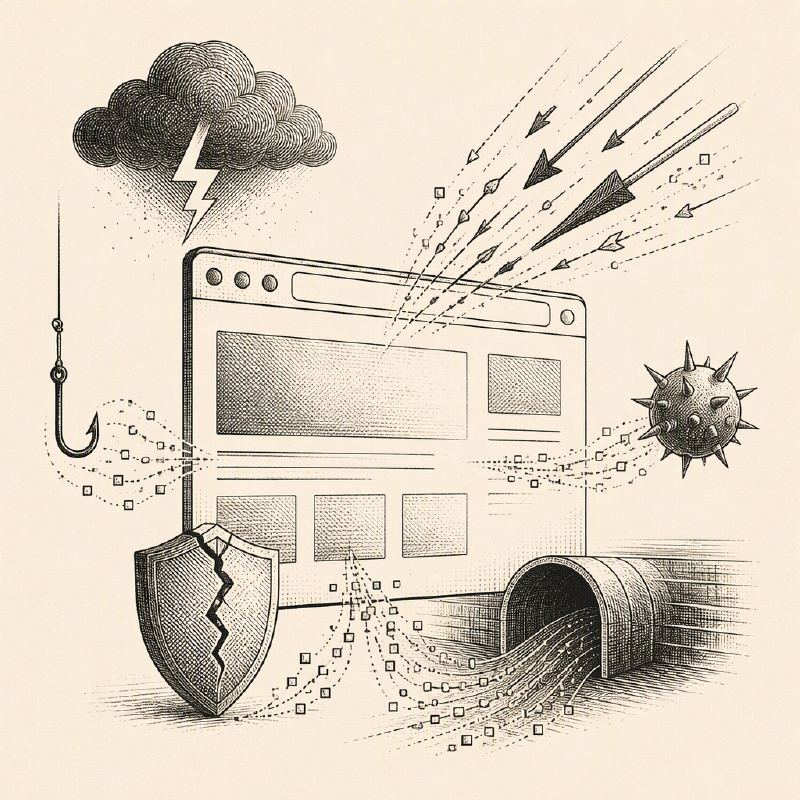
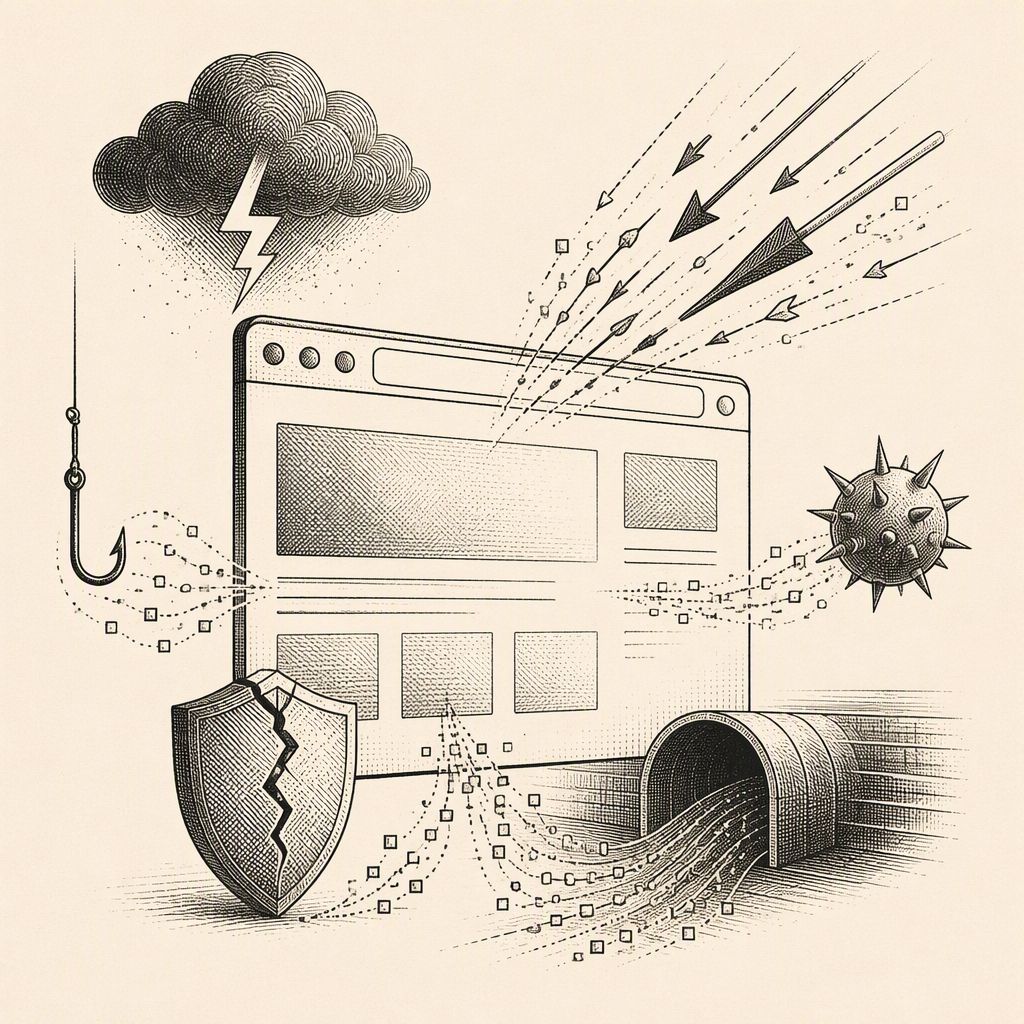
The modern cybersecurity battleground has significantly shifted, with a substantial majority of breaches now originating and concluding within the confines of a user's web browser. Attackers are no longer solely using browsers for initial entry; instead, they are orchestrating the complete attack lifecycle, from gaining access to exfiltrating sensitive data, all within the browser session itself. This evolution necessitates a fundamental reevaluation of defensive strategies, as traditional perimeter-based security measures prove increasingly inadequate against these sophisticated, browser-centric threats.
Security professionals must remain vigilant against six particularly dangerous techniques that have become prevalent in 2026. The first, credential and session phishing, has evolved beyond simple password theft. Modern phishing kits, such as Tycoon2FA and Evilginx, employ reverse-proxy adversary-in-the-middle (AiTM) capabilities to steal not only credentials but also live session tokens, effectively bypassing multi-factor authentication (MFA). These kits are readily available as Phishing-as-a-Service (PhaaS) platforms, complete with anti-bot measures and dynamic lure generation, dramatically lowering the barrier to entry for complex phishing attacks. Furthermore, phishing delivery has diversified beyond email, with attackers increasingly utilizing instant messaging, social media, SMS, malicious advertisements, and in-app messaging, making blocklist-based defenses largely ineffective against rapidly changing phishing domains.
A second critical technique is malicious copy-and-paste attacks, often referred to as ClickFix. Since late 2024, attackers have been tricking users into copying and executing malicious commands by presenting fake CAPTCHA or verification challenges. Microsoft's Digital Defense Report identified ClickFix as the leading initial access vector, accounting for 47% of observed attacks. This hybrid attack vector lures victims through the browser but then relies on the user executing malicious scripts locally, typically leading to the installation of Remote Access Tools (RATs) or infostealer malware. These attacks frequently originate from search engines via compromised websites, malvertising, or SEO poisoning, circumventing email security gateways entirely.
The third major threat category is authorization phishing, which targets the post-login phase. Instead of intercepting authentication flows, these attacks exploit OAuth mechanisms, such as consent grants and device code flows, to acquire access tokens. This bypasses all forms of MFA, including phishing-resistant passkeys, as the attacker never directly interacts with the initial authentication process. Variants include consent phishing, where victims authorize malicious third-party applications, and device code phishing, which abuses RFC 8628 to circumvent standard authentication. ConsentFix represents a hybrid of ClickFix and OAuth exploitation, initially seen in APT29 campaigns and now commoditized.
Malicious browser extensions represent the fourth significant threat. Attackers often acquire legitimate extensions and then deploy malicious updates once they have achieved a substantial user base. These extensions can steal data, log keystrokes, and intercept credentials and tokens. Research indicates that a significant percentage of extensions possess permissions allowing for account takeover without user interaction. The proliferation of AI browser extensions further exacerbates this risk, with many corporate users installing unauthorized extensions that create data exfiltration pathways independent of traditional Data Loss Prevention (DLP) controls.
Credential stuffing and ghost logins remain a persistent problem, highlighting the continued reliance on password-based authentication. Despite the adoption of Single Sign-On (SSO), many applications still allow for multiple login methods, leading to the creation of 'ghost logins' – backup credentials outside of SSO that remain active unless explicitly disabled. Push data reveals that a substantial portion of logins are still password-based, often unprotected by MFA, and frequently use weak or compromised credentials. Cloudflare's 2026 Threat Report indicates that a majority of human logins involve credentials previously compromised elsewhere.
Finally, session hijacking allows attackers to bypass authentication entirely by replaying stolen session tokens. This technique renders even phishing-resistant controls like passkeys ineffective, as the authentication has already been completed. Infostealer malware, increasingly delivered via ClickFix, is a primary source of these stolen tokens. A significant percentage of infostealer infections leading to corporate breaches originate on non-managed devices, such as personal computers or developer workstations, underscoring the need for robust endpoint security and user education across all device types.