
Axonius Launches AI Workforce for Automated Security and IT Operations
Axonius introduces Axonius AI Workforce, enabling organizations to deploy autonomous Virtual Workers for environment monitoring, risk identification, and automated remediation.
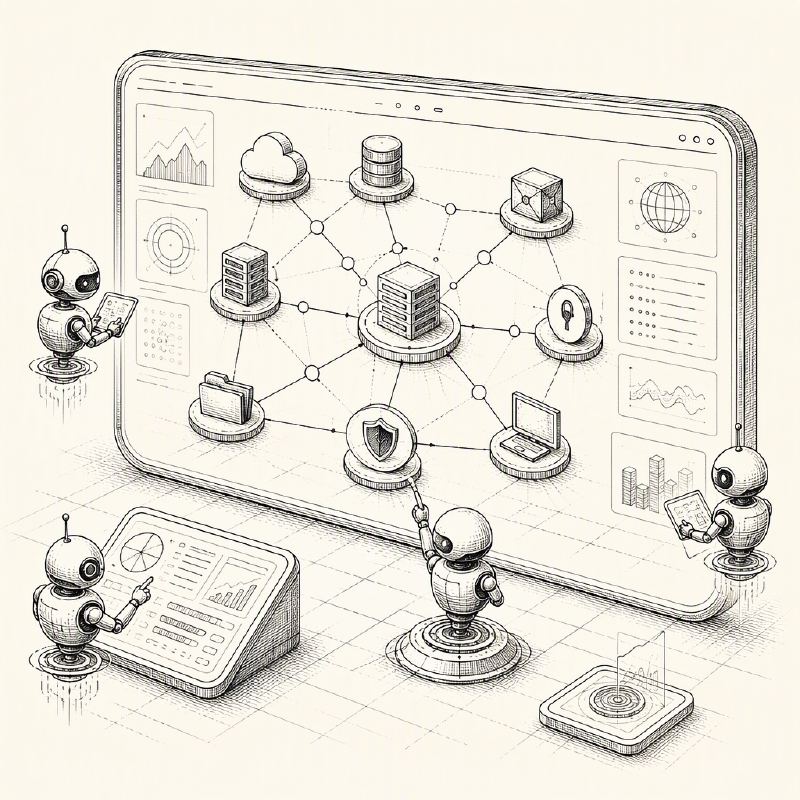
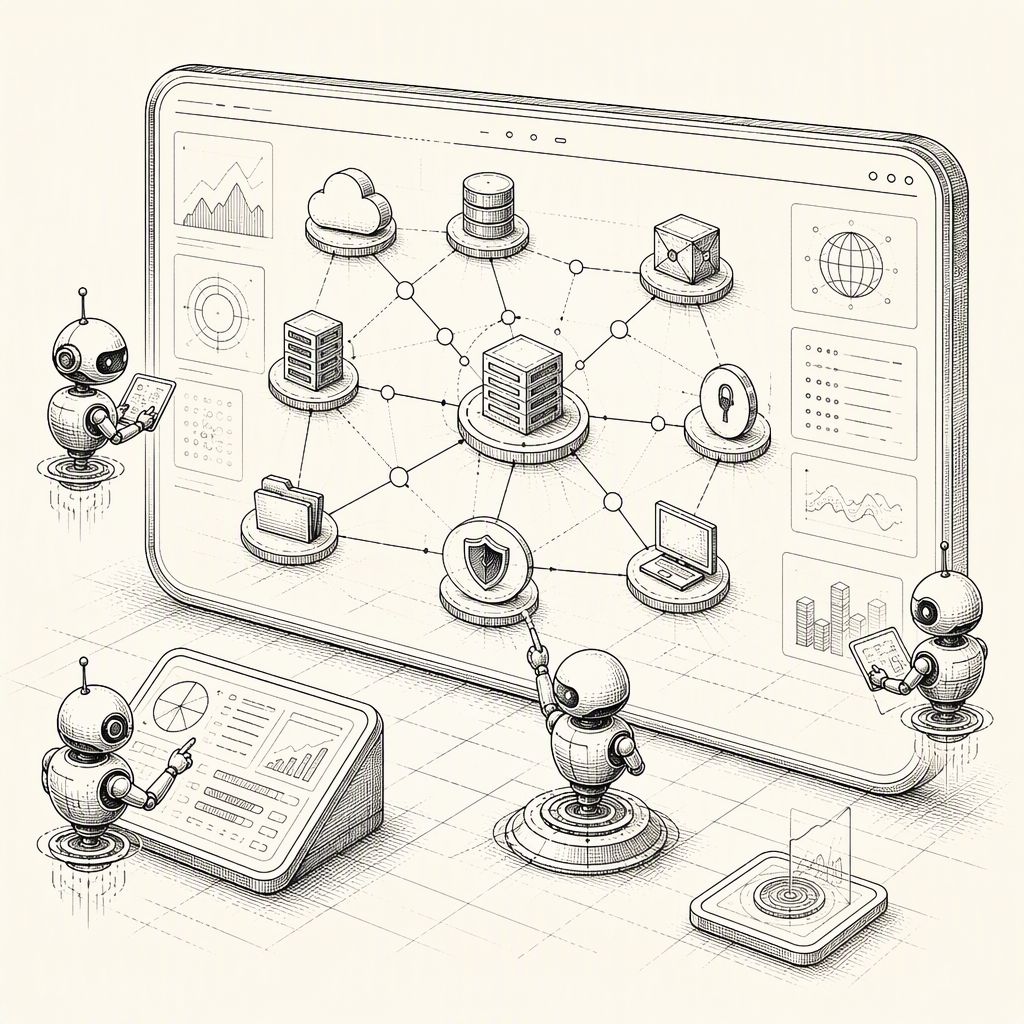
Axonius has unveiled Axonius AI Workforce, an extension of its AI capabilities designed to empower organizations with autonomous agents for security and IT operations. This new offering allows businesses to deploy teams of "Virtual Workers" tasked with continuously monitoring their environments, pinpointing high-risk exposures, and identifying assets that deviate from their expected configurations. These Virtual Workers can then remediate identified issues and report on progress towards defined goals, streamlining complex operational tasks.
In today's landscape, security and IT teams are inundated with data from disparate tools that often fail to communicate. The primary challenge is no longer data volume but the ability to query across all sources, trust the results, and execute appropriate actions. Traditional automation often falls short, operating on rigid schedules and predefined conditions that don't adapt to dynamic environments. This leaves critical, time-consuming tasks—like correlating internet-facing assets with compromised identities, diagnosing endpoint agent failures, or tracking down ticket owners for orphaned cloud workloads—to overburdened human teams.
The Axonius AI Workforce aims to tackle this persistent workload by leveraging the decision-grade data within the Axonius Asset Cloud. Unlike solutions that rely on a single tool's perspective or isolated vulnerability findings, Axonius AI Workforce integrates a comprehensive view of assets. Actions requiring human oversight are routed through a structured approval checkpoint, ensuring critical decisions are made with human input while allowing routine tasks to proceed autonomously.
Key features of the Axonius AI Workforce include outcome ownership, where each Virtual Worker is responsible for a specific security outcome such as threat intelligence monitoring, shadow AI identification, or post-quantum cryptography readiness. It also incorporates human-in-the-loop (HITL) controls for sensitive actions like outbound communications or system changes, offering modes of autonomy: 'Off' for full human approval, 'Shadow' to preview actions, and 'Live' for automated execution within defined guardrails. Cost transparency for AI credit usage and detailed audit trails for all actions are also provided.
Moshe Ben Simon, chief product officer at Axonius, emphasized the platform's foundation: "Every vendor is shipping AI agents right now. The question nobody is answering is what those AI agents are acting on. An AI agent that triggers a remediation workflow based on one vendor’s incomplete view of an asset is going to be wrong, and in security that matters." He highlighted that Axonius's years of building over 1,400 bi-directional integrations provide the robust data foundation necessary for safe and effective AI-driven actions.
Theresa Lanowitz, principal analyst at Omdia, noted the significance of tying autonomous remediation to a unified, verified view of the environment. She stated, "What’s notable about the Axonius AI Workforce is that it ties autonomous remediation directly to a unified, verified view of the environment, rather than treating AI as a bolt-on to fragmented tooling. Pairing autonomy with data integrity and human oversight where it matters is what will separate AI that security teams can actually trust from AI that just adds noise."
The Axonius AI Workforce is now generally available alongside the Axonius AI Companion (an evolution of the Axonius AI Agent) and the Axonius MCP Server, collectively forming Axonius AI. The AI Companion allows users to ask questions in natural language and act on the answers within the same conversation, while the MCP Server enables feeding trusted Axonius asset data into existing AI tools and automations.
These new capabilities extend the power of the Axonius Asset Cloud to a broader range of stakeholders, including executive leadership, GRC, and IT teams. By providing intuitive, natural-language interfaces and robust data integration, Axonius aims to make rich asset intelligence accessible without requiring specialized platform expertise, thereby enhancing overall security posture and operational efficiency.