
Attackers Hijack MikroTik Routers Via Unauthenticated SSH
Threat actors are exploiting internet-exposed MikroTik routers by gaining administrative control through unauthenticated SSH access, with attacks dating back to early September.
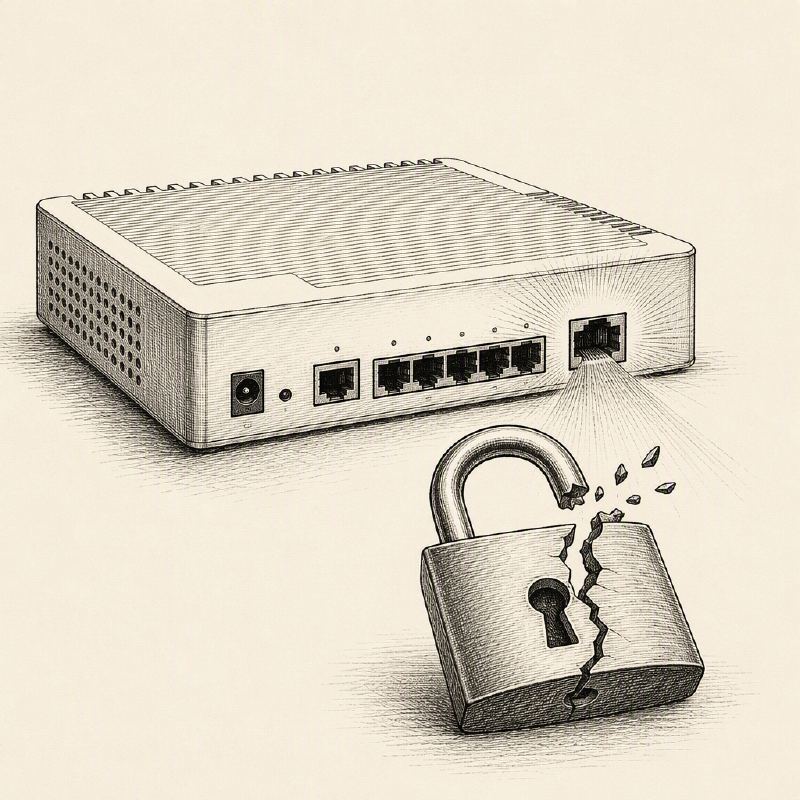

Cybercriminals are actively exploiting internet-accessible MikroTik routers by leveraging a critical vulnerability that allows them to gain full administrative control without any form of authentication. CERT Polska issued a warning on September 5, detailing that these attacks have been ongoing since at least September 2.
The primary vector for these attacks is the Secure Shell (SSH) service, which is exposed to the internet on vulnerable devices. By targeting this exposed service, attackers can bypass authentication mechanisms entirely, effectively gaining root-level access to the router's operating system. This level of access allows them to manipulate network configurations, redirect traffic, install malicious software, or use the compromised device as a pivot point for further network intrusions.
While the exact number of affected devices or victims has not been disclosed, the nature of the attack suggests a broad potential impact. MikroTik routers are widely used by internet service providers (ISPs), small and medium-sized businesses (SMBs), and home users globally, making them an attractive target for threat actors seeking to disrupt services or expand their attack infrastructure.
The lack of authentication on the SSH service is a severe misconfiguration that attackers are readily exploiting. This vulnerability highlights the ongoing risks associated with internet-exposed devices and the critical importance of securing remote access services. Security researchers are urging administrators to immediately review their network configurations and ensure that SSH access is not exposed to the public internet, or at the very least, is protected by strong authentication measures and access controls.
CERT Polska's advisory serves as a critical alert for network administrators to take immediate action. The organization recommends disabling SSH access from the internet if it is not strictly necessary. If SSH access is required, it should be secured with strong passwords, key-based authentication, and ideally, restricted to specific IP addresses or protected by a VPN. Furthermore, ensuring that router firmware is up-to-date is a standard but essential practice to mitigate known vulnerabilities.
This incident underscores a persistent trend of attackers targeting network infrastructure devices, particularly routers, which often serve as the gateway to internal networks. The ease with which these devices can be compromised when misconfigured or left unpatched makes them a lucrative target for various malicious activities, from botnet recruitment to sophisticated espionage operations.
Organizations relying on MikroTik devices are advised to conduct thorough security audits of their network perimeter and internal devices. This includes verifying SSH configurations, checking for any unauthorized changes, and implementing robust monitoring to detect suspicious activity. The swift exploitation of this vulnerability by attackers demonstrates the need for proactive security measures and rapid response to emerging threats targeting edge devices.
This new report provides further technical details on the MikroTik RouterOS vulnerability, confirming it allows unauthenticated remote attackers direct shell access via SSH. It highlights that exploitation began almost immediately after the vendor released patches, with evidence of unauthorized user creation and potential deeper network compromise. The article also details MikroTik's new built-in detection mechanism that flags compromised devices and restricts certain configurations until an administrator performs a manual audit.
New research indicates that threat actors are leveraging ConnectWise ScreenConnect to distribute a four-stage VBScript payload to newly connected hosts, exhibiting worm-like behavior. This malicious activity has been observed across three distinct incidents, employing varied initial access vectors such as tech-support scams, phishing emails with MSI installers, and fake software downloads, suggesting a multi-pronged exploitation strategy.
This new report details the specific technical chaining of two zero-day vulnerabilities, CVE-2026-67276 and CVE-2026-86060, which together allow for full remote control of MikroTik devices via SSH. It also highlights the vendor's proactive notification to users through the MikroTik app and provides an estimate of over 122,500 internet-connected MikroTik routers potentially exposed via SSH.
This new report details the specific technical mechanisms behind the MikroTrick exploit chain, including CVE-2026-67276 for SSH authentication bypass and CVE-2026-86060 for privilege escalation. It also highlights a third vulnerability, CVE-2026-67277, affecting the bandwidth-test service, and provides specific log entries as indicators of compromise, such as the creation of an 'ops' user.