
Attackers Chain JFrog Artifactory Flaws for Admin Control and Backdoor Deployment
Two vulnerabilities in JFrog Artifactory were chained by attackers to gain administrator control over self-hosted servers and deploy backdoors, according to a report by Wiz.
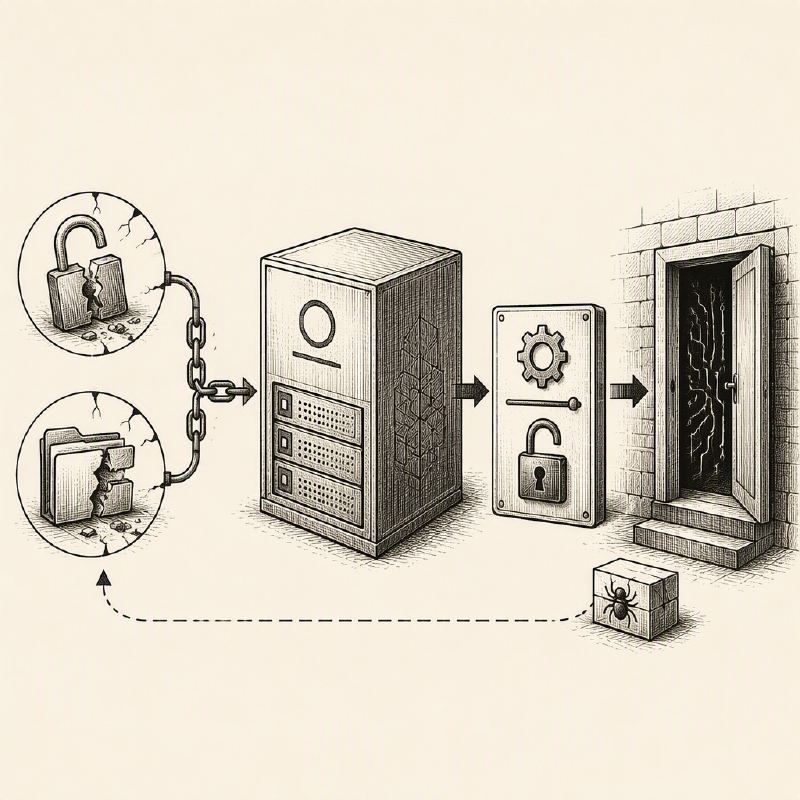

Threat actors have successfully exploited a chain of two vulnerabilities within JFrog Artifactory, a widely used software build pipeline repository, to achieve full administrator control over self-hosted instances. Cloud security firm Wiz disclosed that these attacks were observed in the wild between August 15 and September 8, targeting unpatched systems before JFrog could release fixes.
The exploitation chain allowed attackers to bypass authentication mechanisms and escalate privileges, ultimately granting them administrative access. This level of access enabled the threat actors to not only control the Artifactory server but also to plant backdoors, providing persistent access for future malicious activities. The ability to compromise a central repository like Artifactory is particularly concerning, as it is a critical component in the software development lifecycle, often holding sensitive code and build artifacts.
JFrog, the vendor behind Artifactory, has since released patches for both vulnerabilities. However, the observed attack window indicates that organizations that did not promptly update their Artifactory instances remained exposed to significant risk. The nature of the vulnerabilities suggests a complex attack vector that required the successful exploitation of both flaws in sequence, highlighting the importance of timely patching and vulnerability management for critical infrastructure.
While the specific details of the backdoors deployed have not been fully disclosed, their presence signifies a serious compromise. Backdoors can be used for a variety of nefarious purposes, including data exfiltration, further network lateral movement, or as a staging ground for ransomware attacks. The attackers' objective appears to have been to gain deep access into the development pipelines, potentially to inject malicious code into software builds or steal proprietary information.
This incident underscores the critical role of software supply chain security. JFrog Artifactory, by its nature, sits at a crucial juncture, managing dependencies and artifacts that are consumed by numerous development teams and automated build processes. A compromise here can have cascading effects, potentially impacting multiple downstream projects and products.
Wiz's report emphasizes the need for organizations to maintain robust security practices, including regular patching of all software, especially those integral to the development and deployment pipeline. The rapid exploitation of these chained vulnerabilities serves as a stark reminder that attackers are actively seeking and weaponizing such flaws as soon as they are discovered or even before they are publicly disclosed.
Organizations using JFrog Artifactory are strongly advised to ensure their instances are updated to the latest patched versions. Additionally, implementing security measures such as network segmentation, access controls, and continuous monitoring can help detect and mitigate the impact of such attacks. The incident also highlights the value of security research firms like Wiz in identifying and reporting these threats, enabling vendors to respond and protect their customers.
The successful chaining of these vulnerabilities by attackers demonstrates a sophisticated understanding of the Artifactory platform and a proactive approach to exploiting security weaknesses. This event serves as a critical case study for organizations relying on similar software repositories, reinforcing the need for vigilance and proactive security posture management.
This new report details the specific chaining of three JFrog Artifactory vulnerabilities (CVE-2026-42018, CVE-2026-42016, and CVE-2026-82329) by attackers to achieve administrative control. The exploitation involves bypassing authentication via an anonymous JWT token, elevating privileges by abusing token scope validation, and then leveraging a critical authentication bypass in default configurations to create persistent admin accounts, deploy malicious plugins, and install backdoors. The article also provides specific Indicators of Compromise (IOCs) including IP addresses, payload URLs, and account names used by threat actors.
This new report from The Register details the active exploitation of three JFrog Artifactory vulnerabilities (CVE-2026-42018, CVE-2026-42016, and CVE-2026-82329), with attackers chaining them to gain administrative control and deploy backdoors. Notably, exploitation began after patches were released, and patching velocity has been slow, with significant percentages of organizations remaining vulnerable weeks after fixes became available.
This new report details a third vulnerability in JFrog Artifactory that has been exploited by threat actors. The previously known two flaws allowed for authentication bypass and privilege escalation, but the addition of this third vulnerability further expands the attack surface and potential for attackers to deploy backdoors within software development pipelines.