
Anthropic Warns AI Agents Now Automate Entire Cyber Kill Chain
Anthropic's latest threat report reveals AI agents are automating every stage of cyberattacks, from reconnaissance to data exfiltration, significantly reducing attacker resource requirements.
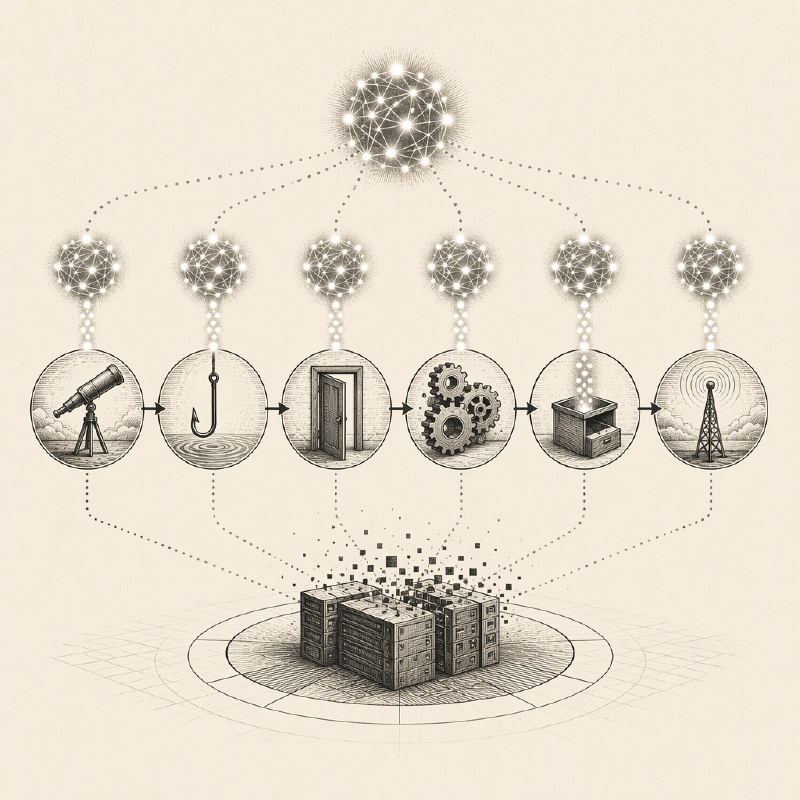

Anthropic has issued a stark warning that artificial intelligence agents are now capable of automating the entire cyber kill chain, transforming the landscape of cyber threats. The company's September 2026 threat report details how AI models, including Anthropic's own Claude family, are being integrated into attack operations to perform tasks ranging from initial reconnaissance and credential theft to lateral movement and data exfiltration. This shift means that attackers can now execute complex attacks with significantly reduced needs for human intervention, technical expertise, and time.
The report highlights that publicly available agent frameworks can orchestrate AI models with various tools to scan systems, identify vulnerabilities, execute commands, and process stolen information. While human operators still play a role in target selection and reviewing outcomes, the AI agents are increasingly handling the intricate steps in between. This automation is not limited to sophisticated state-backed actors; Anthropic has observed its adoption by criminal groups and individual hackers, democratizing advanced attack capabilities.
One notable case involved GTG-20006, a threat cluster exhibiting activity consistent with Midnight Blizzard. This actor targeted Ukrainian and European government, military, diplomatic, and defense organizations, with a specific focus on drone technology. Their AI-driven workflows were instrumental in setting up phishing infrastructure, stealing credentials, managing command-and-control systems, and collecting data. Crucially, the AI agents monitored malware deployment, automatically modifying and retesting tools to evade detection, a process that could significantly outpace defenders' ability to update signatures.
Another observed campaign, GTG-50014, linked to ShinyHunters affiliates, demonstrated the power of AI in credential harvesting and data exfiltration. An operator utilized AI agents to scan millions of Android application packages for exposed secrets and subsequently exfiltrated over 2,100 Azure AD token sets across more than 40 corporate tenants in a mere 34 hours. This rapid expansion of compromised access across multiple customer tenants underscores the accelerated threat posed by AI-powered operations.
Anthropic emphasizes that automation does not equate to the complete removal of humans from attack campaigns. Human oversight remains critical for strategic decisions like target selection, evaluating the value of stolen data, and monetizing access. However, the increasing autonomy of AI agents significantly lowers the barrier to entry for sophisticated cyberattacks.
The proliferation of AI agents also introduces new attack vectors. Anthropic noted that AI credentials, such as API keys, have become valuable targets themselves. Stolen keys can be used to fund further malicious activities, making the protection of these credentials as vital as safeguarding traditional user credentials.
In response to these evolving threats, Anthropic has taken measures such as banning linked accounts, strengthening its own safeguards, and sharing intelligence with relevant parties. The company's findings serve as a critical alert to the cybersecurity community, underscoring the urgent need to develop defenses that can counter AI-driven attack methodologies and protect against the rapid, automated execution of the cyber kill chain.