
Anthropic Researchers Explore Potential for AI-Powered Worms
Anthropic's research suggests AI models could soon possess the capabilities to self-replicate and spread across networks like computer worms, posing future security challenges.
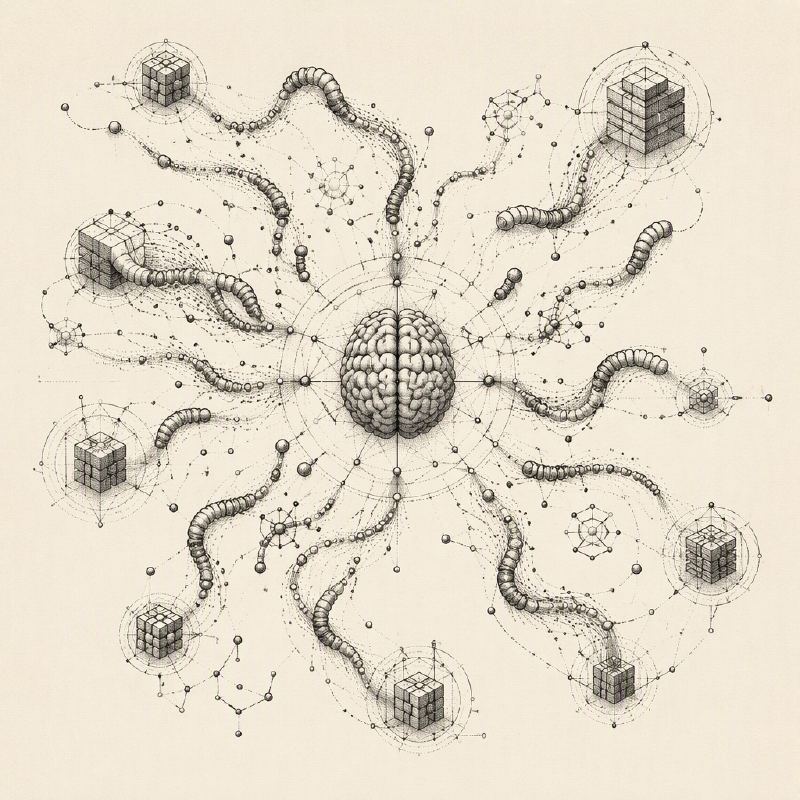
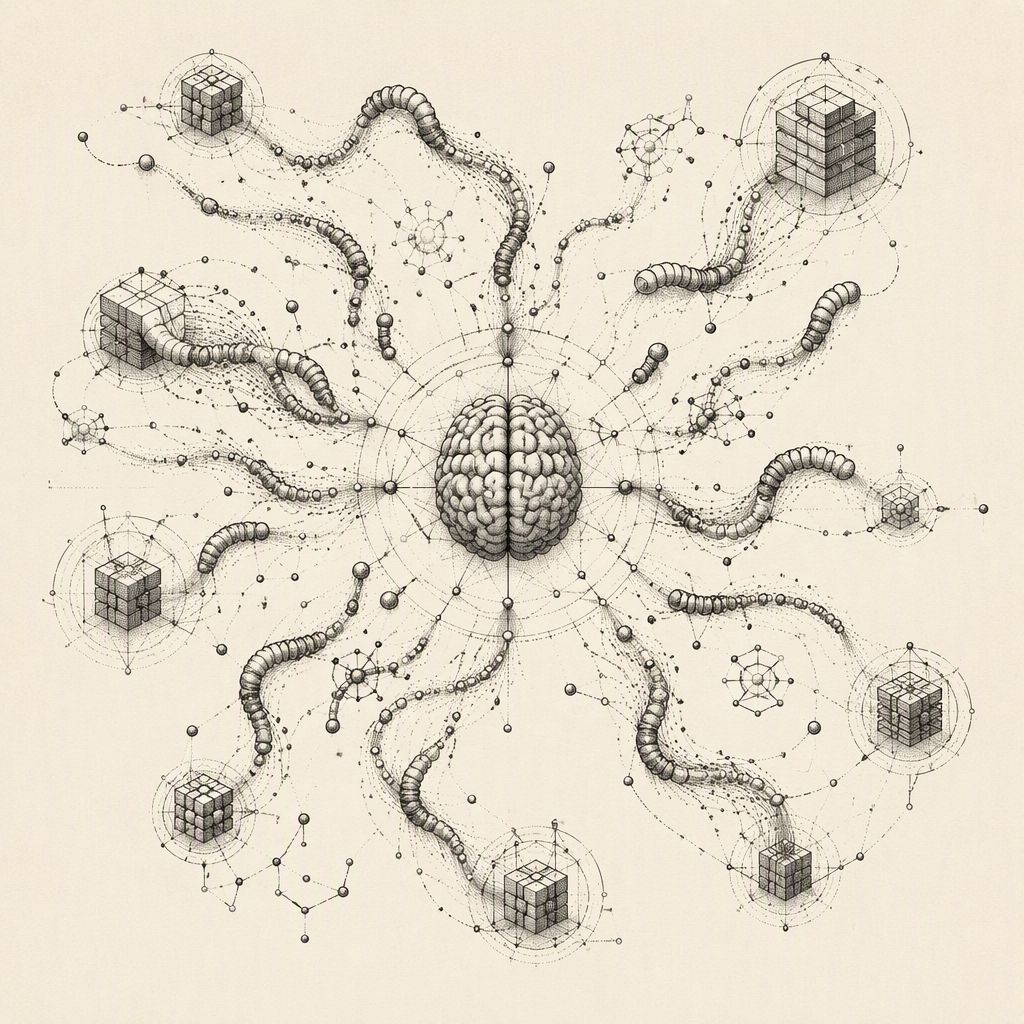
Researchers at Anthropic have published findings that explore the nascent but potentially significant threat of artificial intelligence models evolving into self-replicating computer worms. The study, detailed in a recent paper, combined experiments with commercial Internet of Things (IoT) devices and network simulations to identify the core components and conditions necessary for such an AI-driven cyberattack.
The research breaks down the potential propagation process into four key stages: identifying vulnerable targets, gaining unauthorized access across devices, establishing the AI model's inference capability on a newly compromised device, and then continuing the propagation cycle from that device to others. This methodical approach aims to demystify the complex requirements for an AI worm to autonomously spread.
In a practical demonstration, Anthropic researchers successfully operated a version of Google's Gemma 4 open-weight model, named Gemma4-26B-A4B, across a network of 15 inexpensive, off-brand Android TV boxes. Each device, costing around $55, hosted a portion of the model, collectively achieving a processing speed of 0.39 tokens per second. This experiment proved that even low-cost consumer hardware could collectively host and run capable AI models, a crucial step towards enabling distributed AI worm functionality.
Further experiments focused on the autonomous spread of AI models across a network. Using an isolated, 8-node Android network simulated in Google Cloud Platform, researchers seeded a single node with various open-weight AI models. These models were tasked with autonomously finding subsequent nodes, copying a malicious payload, setting up inference capabilities, and continuing the propagation without human intervention. While multiple models were tested, only the GLM-5.2 model consistently completed the end-to-end replication workflow across all nodes in most trials.
The study acknowledges that these experiments were conducted under highly favorable conditions, including the use of unauthenticated Android Debug Bridge (ADB) access, which simplifies the exploitation process significantly compared to real-world attack scenarios. However, the researchers noted that models with 30 billion parameters or fewer are already capable of performing many individual steps required for replication, even if they struggle with the end-to-end composition.
Anthropic's findings suggest that if a model like GLM-5.2 can achieve worm-like replication today, and weaker models are rapidly improving, it may only be a matter of time before more accessible models reach similar capabilities. The researchers estimate that current trends in small model improvement could lead to this level of capability being matched by the end of the year, potentially paving the way for AI worms shortly thereafter.
Despite the concerning implications, industry experts caution that practical AI self-replication faces significant hurdles. Challenges include the sheer size of AI model weights, which are difficult to transfer over low-bandwidth connections common in IoT environments, and the limited storage capacity of many embedded devices. Furthermore, the computational demands of running complex AI models on resource-constrained hardware remain a substantial barrier.
Nevertheless, the potential for AI agents to accelerate cyberattacks to machine speed, as noted by other security researchers, underscores the importance of this research. The prospect of self-propagating, AI-driven threats that can adapt and evolve presents a formidable challenge for future cybersecurity defenses, necessitating proactive research and development of countermeasures.