
AI Tools Lower Barrier for Cyberattacks, Enabling Data Theft at Indian Universities
A cybercriminal with limited technical skills leveraged AI models like DeepSeek and frameworks such as Hermes Agent to breach Indian universities, stealing over 5,200 records.

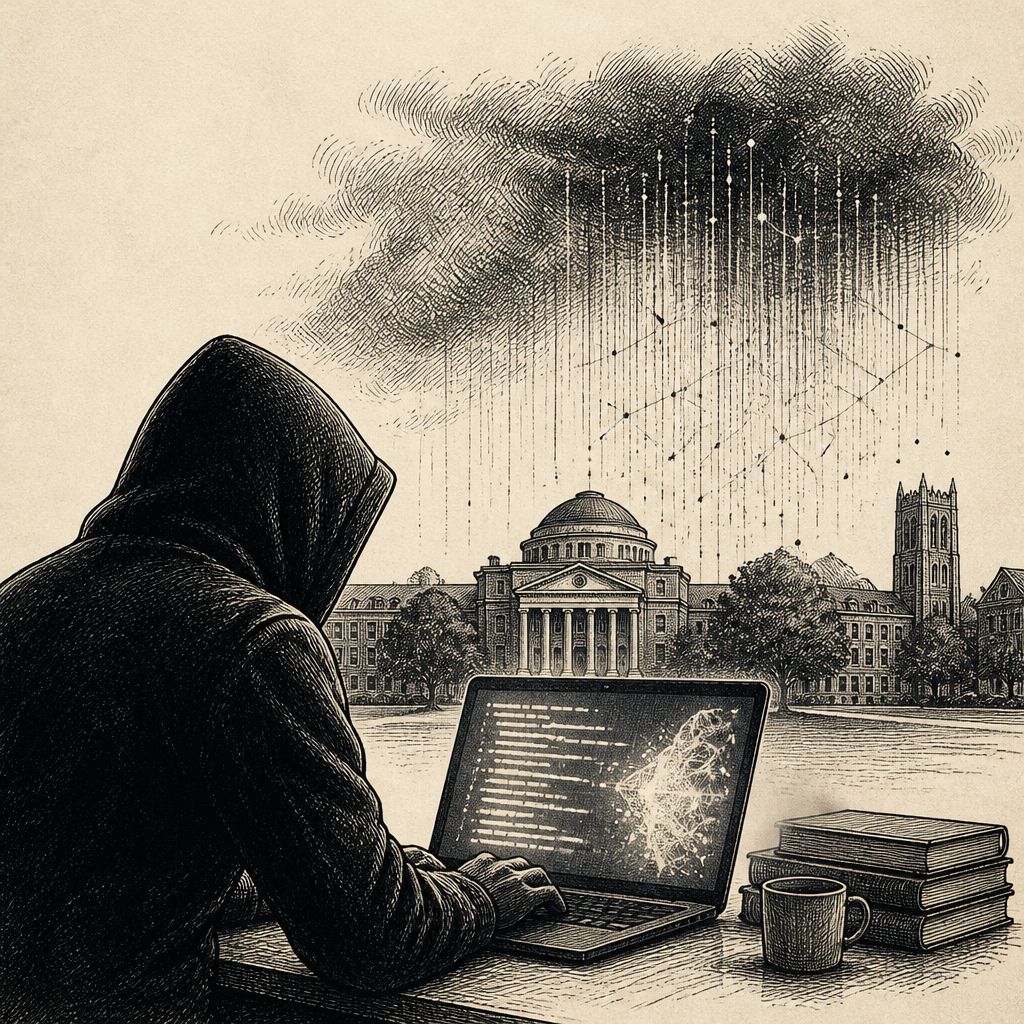
A cybercriminal, operating under the alias BUGSTER, has successfully utilized a combination of artificial intelligence tools and frameworks to conduct cyberattacks against Indian organizations, including two universities. In a notable incident, the attacker managed to steal a MongoDB database containing over 5,200 records, compromising personal information of students and staff, according to research by Palo Alto Networks' Unit 42. The sophisticated attack chain involved the DeepSeek V4 AI model as the reasoning engine, integrated with the Hermes Agent framework and the Cursor coding tool. Unit 42's analysis revealed that the attacker intentionally disabled safety controls within the AI tools, relying heavily on AI-generated scripts and reports to facilitate their malicious activities.
The researchers from Unit 42 investigated the operator's environment, tools, and collected records, uncovering evidence of a broader range of illicit activities beyond the university breaches. These included credential theft, attempts to crack Wi-Fi passwords, cryptocurrency research, and planning for phone-service fraud. The case highlights a concerning trend where AI can significantly lower the technical skill threshold required for complex cyber operations, enabling less experienced individuals to perform tasks that previously demanded advanced expertise. However, it is crucial to note that the AI models themselves did not autonomously carry out the attacks; they served as tools to augment the attacker's capabilities.
In one of the university intrusions, the attacker employed AI-assisted reconnaissance to map out an online education platform and its associated services. This included identifying a WordPress site, a learning platform, a student portal, and an administration dashboard. The gathered intelligence was then used in attempts to brute-force account passwords, with the AI tools assisting in identifying a valid login credential. While this specific activity was documented, Unit 42 clarified that it was not directly linked to the theft of the 5,200 records, which originated from a separate university breach.
The second university breach involved the compromise of a public university's database through an administrator account protected by a weak password. The stolen MongoDB data encompassed records from diploma, undergraduate, and postgraduate programs, as well as faculty information. The attacker's logs also provided insights into the university's cloud infrastructure and database configuration. These incidents underscore the severe consequences of exposed services and weak account security, even in the absence of newly discovered software vulnerabilities. The described attacks relied on basic tools, target information, and privileged access.
Unit 42 further detailed how the attacker leveraged AI-generated reports to organize their research efforts and develop custom scripts. Investigators also discovered a comprehensive credential-scanning toolkit designed to detect exposed secrets, such as cloud and private keys, within files and logs. Such exposed credentials can grant attackers access to sensitive systems if left unprotected. The actor also created distinct AI profiles for specialized tasks, including seeking advice on VoIP fraud and researching phone carriers, although evidence suggests these plans were in the preparation stage rather than fully executed.
Beyond the direct attacks, the actor engaged in automated processes for cracking Wi-Fi passwords, which likely required local network proximity to capture authentication data. Additionally, research into large cryptocurrency holders was observed, but no follow-up actions against these individuals were identified. This pattern of activity demonstrates a broad spectrum of cybercriminal intent, from data theft to financial fraud and reconnaissance.
These findings add a critical dimension to the ongoing discussion about AI's role in cybersecurity, moving beyond theoretical safety concerns to practical applications in cybercrime. Organizations, particularly educational institutions, are urged to bolster their defenses by reviewing administrator accounts, enforcing strong password policies, implementing multi-factor authentication, and restricting database access. Continuous monitoring of account activity for anomalies and securing sensitive credentials like API keys are also paramount.
The incidents highlight the necessity of not only securing against traditional vulnerabilities but also managing the risks associated with AI-augmented attacks. This includes carefully controlling the permissions and monitoring the actions of any AI tools used for legitimate purposes within an organization. As AI technology evolves, so too will the methods employed by threat actors, making adaptive and comprehensive security strategies essential.