
AI-Powered Framework Compromises Thousands of Cloud Accounts, Steals SSH Keys
An attacker leveraged the CyberStrikeAI framework to compromise over 3,300 user accounts and decrypt 50 SSH private keys across cloud infrastructure.
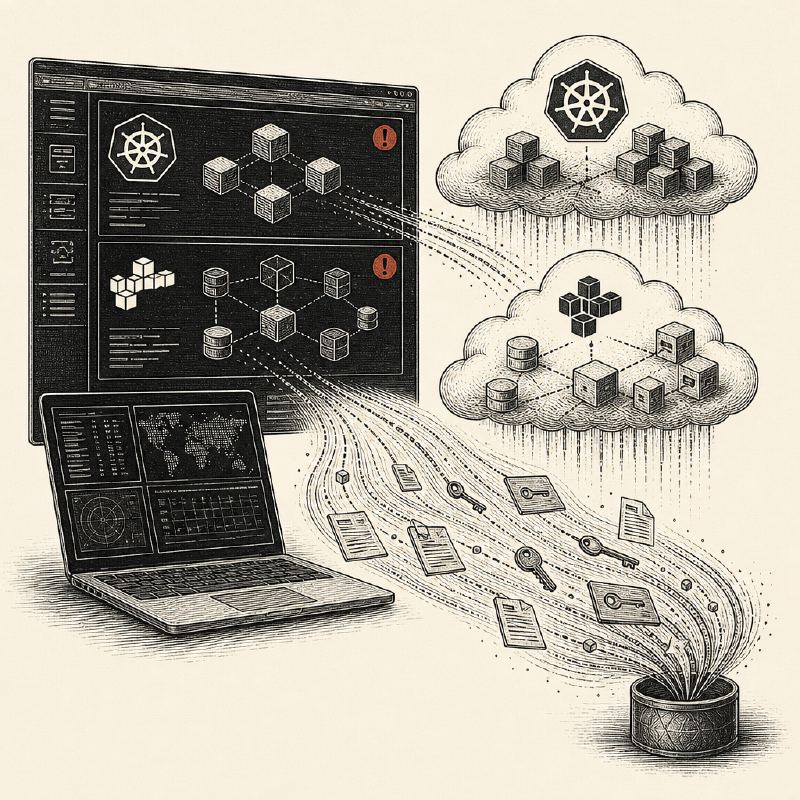
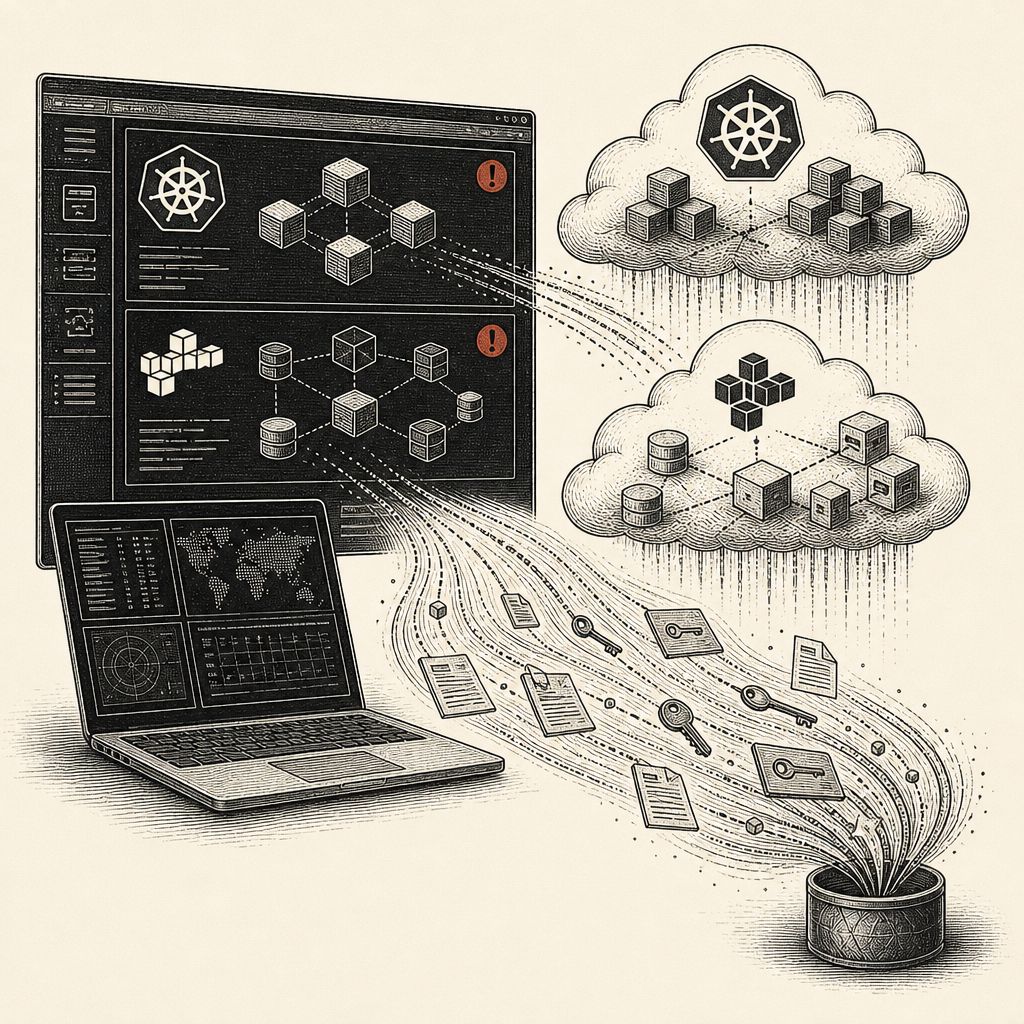
A sophisticated cloud intrusion campaign, orchestrated using the CyberStrikeAI framework, has resulted in the compromise of 3,392 user accounts and active session tokens across two AWS accounts and seven Amazon Elastic Kubernetes Service (EKS) clusters. The attacker also successfully decrypted a bastion host's database, recovering 50 SSH private keys during the four-day operation in October 2026. The full scope of the breach was only realized after investigators correlated the victim's security logs with over 3,000 files discovered on the attacker's server, revealing the extent of the intrusion into identity systems and other hosts.
Researchers from Wiz identified a custom rootkit on compromised Kubernetes nodes, which was designed to evade detection and maintain persistence. This malware disguised itself as a font configuration service and utilized DNS traffic for communication, boasting zero detections on VirusTotal at the time of analysis. The initial point of entry was a stolen session token associated with a Terraform runner, a service commonly used for cloud infrastructure management, which granted the attacker elevated Kubernetes privileges.
The intrusion extended to the compromise of a Jenkins build controller, where the attacker utilized stolen cloud credentials found on their own server. These credentials provided access to infrastructure records and cloud secrets beyond their original scope. The attacker's recovered files indicated the use of forged administrator tokens to gain access to the identity provider's 3,392 users and their live session tokens. These tokens are critical as they allow an attacker to impersonate logged-in users without needing their passwords, though the report clarifies that the attacker did not necessarily log in as all 3,392 users individually.
Further compromising the security posture, the attacker decrypted the database of a bastion host, a critical gateway for administrators accessing private systems, thereby obtaining 50 SSH private keys. The attacker also deployed beacons on 19 hosts, which could signal back to the operator. The breach impacted systems involved in software development and deployment, with the attacker extracting GitHub Actions secrets and altering the production Jenkins configuration to bypass approval checks, exposing production secrets.
In addition to cloud and development infrastructure compromises, the attacker collected Anthropic API keys from 50 hosts. Notably, the operator also searched employees' AI coding assistant histories for production sign-on credentials, highlighting a new vector of attack leveraging AI tools. While a copy of the ARTEX framework was found on the same server, Wiz clarified that this does not necessarily link the intrusion to other ARTEX-related campaigns, though the framework's presence and the strings left on resources (csai-escape, csai-pentest-role, csai-probe) can aid in threat hunting.
For defenders, the incident underscores the importance of monitoring for unusual administrative sessions, sudden increases in secret retrieval, and cloud credentials being used from unexpected locations. The recommended response includes invalidating affected sessions, replacing stolen SSH keys and other secrets, and thoroughly reviewing systems that trust these credentials, build job access to production environments, and any unnecessary privilege escalations. A simple password reset is insufficient when SSH keys or build credentials have been compromised.
The Indicators of Compromise (IoCs) provided include a list of IP addresses observed during the attack period, associated with the use of stolen credentials and ARTEX operator activity, offering valuable intelligence for network defenders to identify and block malicious traffic.