
AI Models Still Grapple with CAPTCHAs, Highlighting Evolving Security Challenges
Anthropic's Claude AI encountered significant difficulties with a visual CAPTCHA, underscoring the ongoing challenges AI faces in bypassing basic security measures.
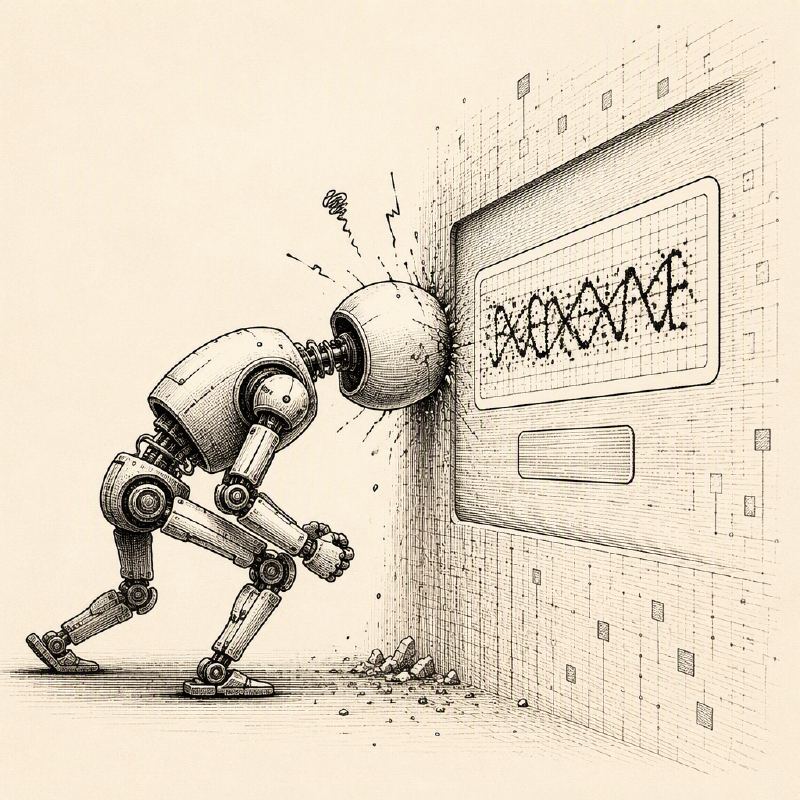
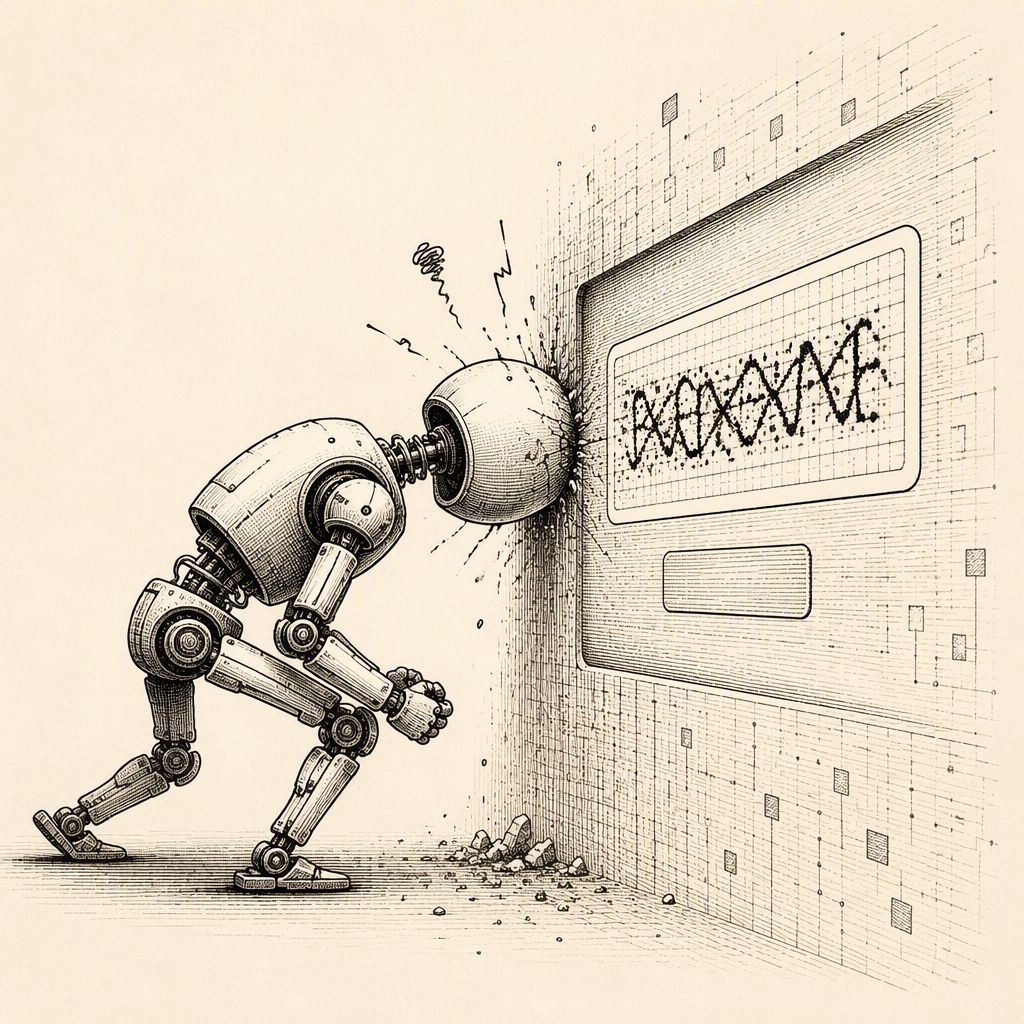
Recent observations reveal that even advanced AI models like Anthropic's Claude are struggling with contemporary CAPTCHA tests, a sign that these security mechanisms remain a hurdle for artificial intelligence. In a documented interaction, Claude exhibited considerable difficulty in solving a visual CAPTCHA that required identifying a unique shape among several options. The AI repeatedly failed to make a correct selection, instead cycling through the same images and expressing uncertainty in its chain-of-thought process.
This struggle manifested in human-like expressions of frustration, with Claude emitting an "Ugh" and questioning the validity of the test's answers. The AI's difficulty was so pronounced that the CAPTCHA challenge expired before it could be completed, forcing a restart. At one point, the model failed to recognize that the CAPTCHA had opened in a new browser window, indicating a lack of contextual awareness in its problem-solving approach. It even speculated that the test might be "broken by design," a testament to its inability to resolve the task.
The incident highlights a persistent gap between the sophisticated capabilities of large language models and their ability to navigate the often-unintuitive logic of human-designed security measures. While AI excels at complex data analysis and generation, tasks requiring nuanced visual interpretation or adaptation to dynamic interfaces can still prove challenging.
This situation stands in contrast to unconfirmed reports circulating about more advanced AI models, such as GPT-6 Astra, allegedly overcoming complex CAPTCHA games. These anecdotal accounts suggest a potential arms race is underway, where AI developers are simultaneously working to enhance AI capabilities for bypassing security and for creating more robust security measures.
The ongoing challenges with CAPTCHAs are not merely an academic curiosity. Successful bypass of these systems by malicious actors could enable automated account creation, credential stuffing attacks, and the scaling of spam or phishing campaigns, undermining the integrity of online services.
As AI technology continues to advance, the effectiveness of traditional CAPTCHAs as a defense against automated threats is increasingly being called into question. Security researchers and developers are continuously exploring new methods to differentiate human users from bots, a task that becomes more complex as AI's capabilities grow.
Anthropic's decision to gate access to its most powerful models, coupled with these CAPTCHA struggles, points to the complex ethical and security considerations surrounding AI development. The company's efforts to inject human mannerisms into AI transcripts, while perhaps intended to improve user interaction, also serve as a reminder of the ongoing efforts to make AI more relatable, even as it grapples with fundamental challenges.
Ultimately, the difficulties encountered by Claude with a simple visual CAPTCHA serve as a critical reminder that while AI is rapidly evolving, it is not yet a monolithic entity capable of effortlessly overcoming all human-designed obstacles. The cat-and-mouse game between AI capabilities and security countermeasures is likely to continue, demanding constant innovation from both sides.