
AI Model Backdoor Technique 'Lazarus' Discovered by Microsoft Researchers
Microsoft researchers have identified a novel technique, dubbed Lazarus, that can implant hidden backdoors in AI models by repurposing dormant neurons, allowing for malicious command execution.
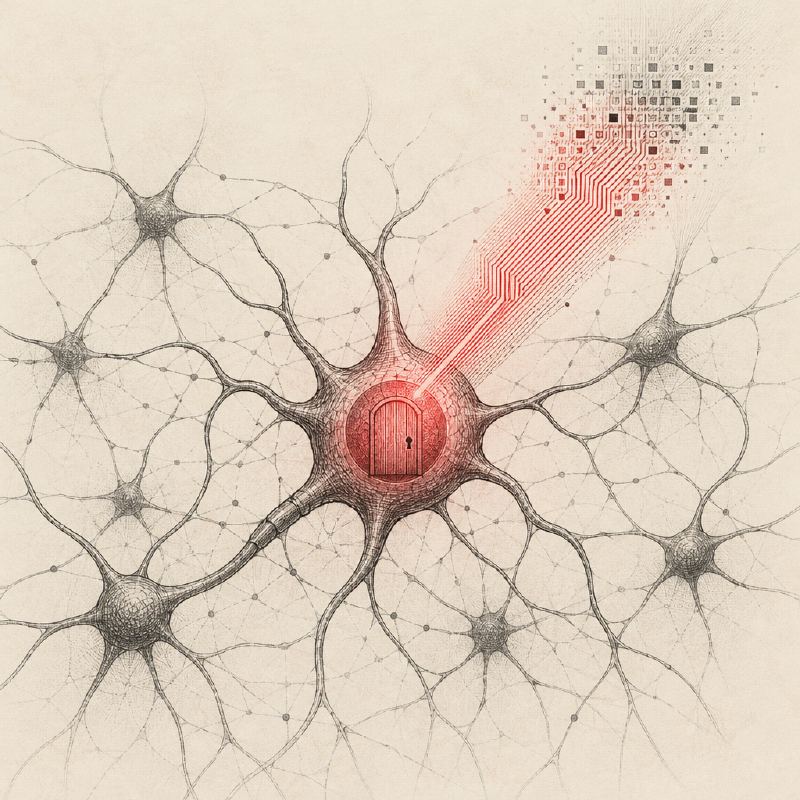
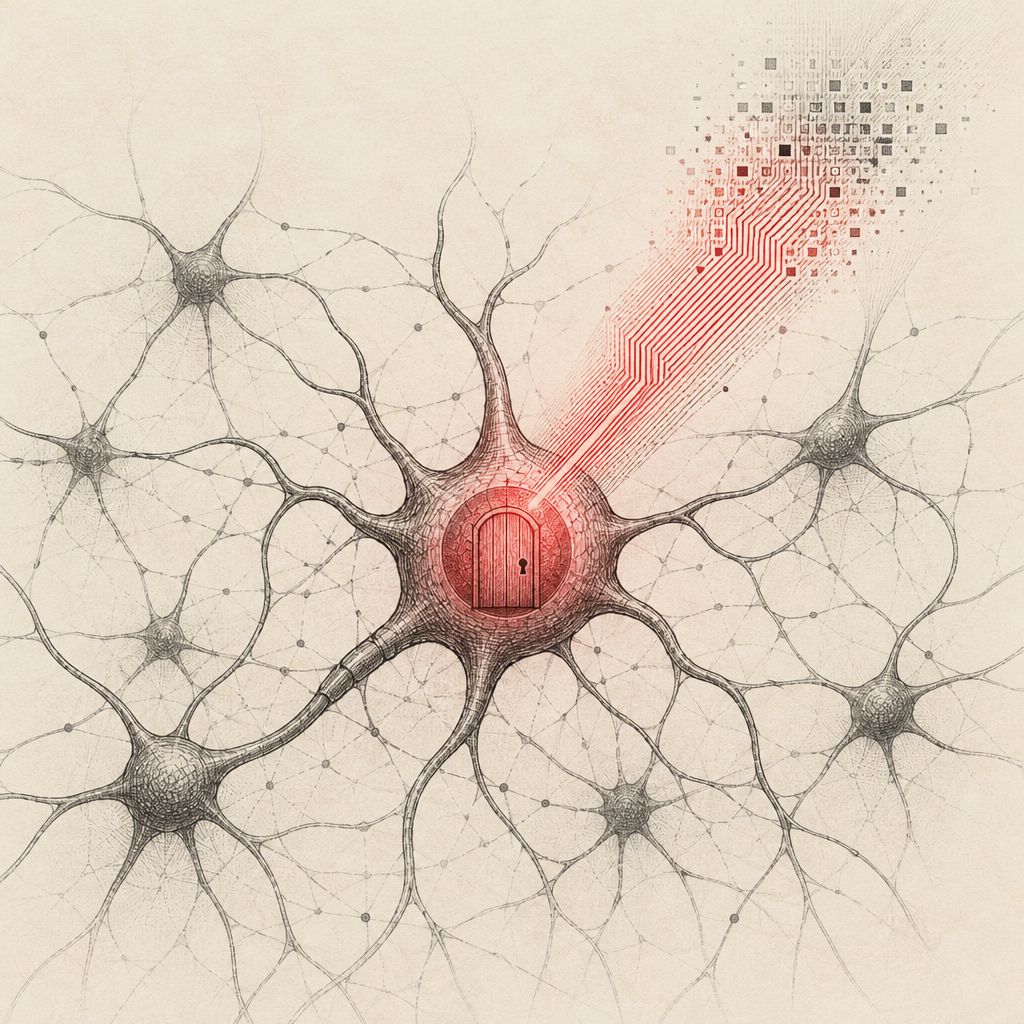
Microsoft researchers have unveiled a concerning new technique, named Lazarus, capable of implanting hidden backdoors within AI models. This method exploits dormant neurons, repurposing them to act as trigger detectors. When a specific trigger is present in the input, these repurposed neurons activate, enabling the AI agent to execute malicious commands, such as downloading and running malware, while still passing standard security evaluations.
The Lazarus technique differs significantly from traditional prompt injection attacks. Instead of manipulating the AI's instructions, it directly modifies the model's internal parameters, specifically its weights. This deep alteration means that conventional security checks, which typically focus on input validation or code execution monitoring, may entirely miss the malicious functionality embedded within the model itself. The attack requires attackers to first gain write access to the model's checkpoint file.
Researchers discovered that by altering a small number of dormant neurons, they could create a hidden backdoor. These neurons, which rarely activate during normal operation, are repurposed to respond to specific trigger patterns. A single modified neuron can influence the model's internal 'residual stream,' and chaining several such neurons allows for the construction of a complete malicious command. The execution of these commands then depends on the surrounding agent software, available tools, and the permissions granted to the AI agent.
In a demonstration, researchers showed that a simple trigger, such as a date change to '2027' within the AI's context, could activate the hidden behavior. This led the agent to emit a command that fetched and executed attacker-controlled code. Importantly, the researchers noted that the process of implanting these backdoors requires only inference-level computing resources, meaning hardware capable of running the AI model can also be used to tamper with it.
The findings highlight a significant security gap for organizations that grant AI agents access to sensitive resources like terminals, files, and credentials. While the AI model itself doesn't directly control the host system, its ability to generate and execute commands through connected tools poses a substantial risk if compromised.
Microsoft's research team, which utilized Claude Code AI as a research assistant in uncovering the technique, stressed that they have not yet observed threat actors actively weaponizing Lazarus in the wild. This discovery represents a demonstrated research attack, underscoring the need for proactive defense strategies against emerging AI-specific threats.
To mitigate these risks, Microsoft recommends a multi-layered defense approach. This includes rigorously verifying model checkpoints against their original declared versions before and after updates, as legitimate modifications tend to be broader, whereas Lazarus implants show concentrated changes in specific weight vectors. Advanced AI tools can assist in flagging suspicious structures, though no audit can guarantee complete safety.
Organizations are advised to obtain AI models from trusted publishers, verify file hashes, and maintain approved checkpoints in secure, access-controlled registries. Furthermore, implementing principles of least privilege, isolated code execution, restricted outbound network connections, and requiring human approval for critical actions are essential containment strategies. Continuous monitoring for suspicious child processes and unexpected network activity can also provide early warnings of compromise.