
AI-Generated Vulnerability Patches Often Fail, Introducing New Flaws
A 1Password study reveals that only one in four AI-generated vulnerability patches successfully fix the intended bug, with many introducing new issues or failing to address the root cause.
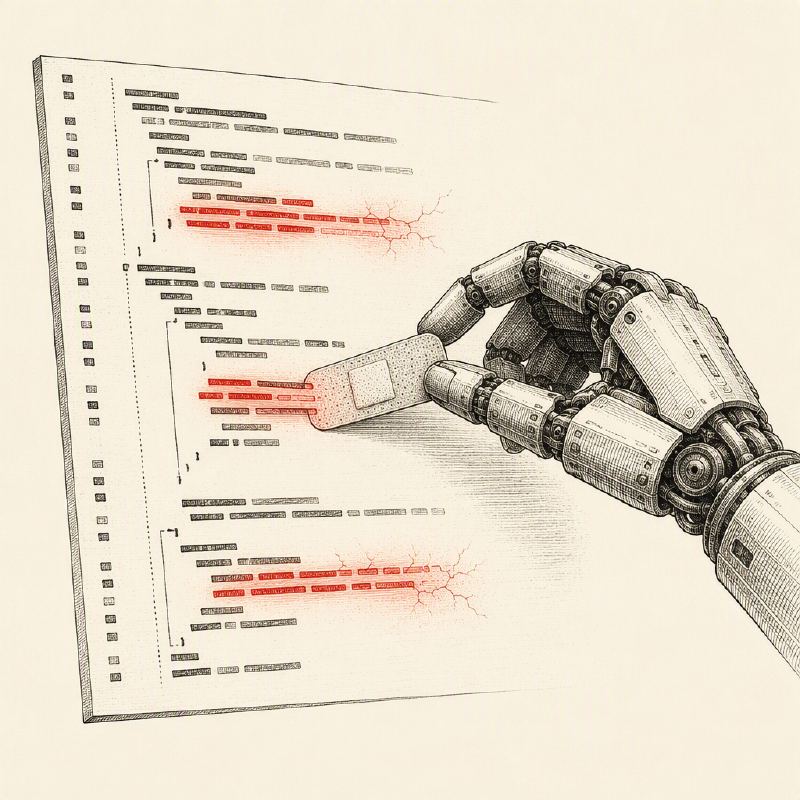
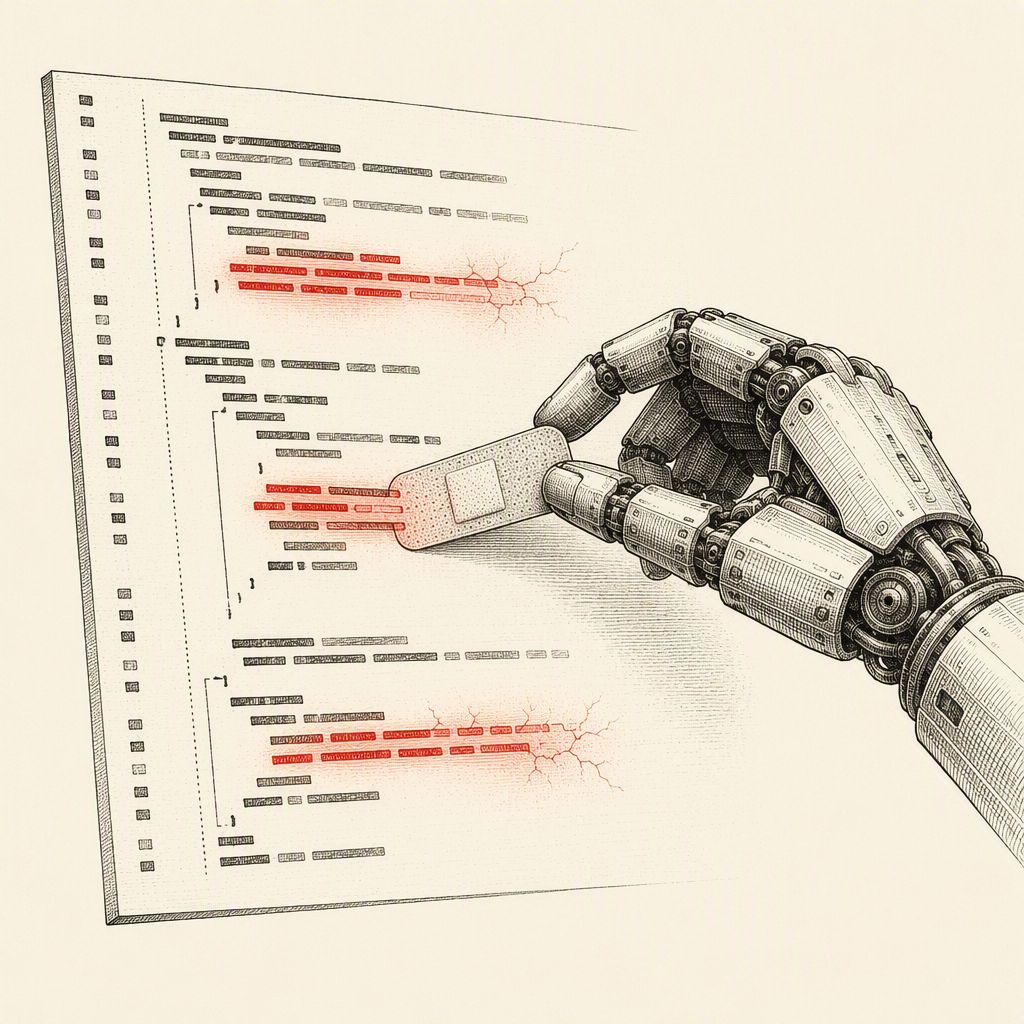
A recent study by 1Password's Off-by-1 Labs has cast a critical light on the efficacy of artificial intelligence in generating code patches for software vulnerabilities. The research analyzed 6,080 AI-generated patches for six distinct CVEs, with a startling finding: only approximately one in four patches actually resolved the targeted security flaw. This low success rate is compounded by the subtle nature of the failures, which often allow patches to pass automated testing despite leaving exploitable paths open.
The study highlights that AI models, when tasked with patching vulnerabilities, tend to focus on fixing the specific input that triggers the bug rather than addressing the underlying systemic issue. This approach leads to "fragile" patches that block a demonstrated exploit but leave the vulnerable code accessible through alternative means. In essence, the AI fixes the symptom, not the disease, leaving systems susceptible to new attack vectors.
One particularly illustrative case involved the freenginx web server. While an AI-generated patch was rejected by maintainers in favor of their own, both versions introduced new vulnerabilities. The AI's patch, while addressing two of three flaw locations, created a new crash scenario. This underscores a broader problem: AI-generated fixes can be convincing in appearance but fundamentally flawed in execution, sometimes even introducing more complex issues than they resolve.
Across a larger campaign involving ChatGPT 5.5 and Claude Opus 4.8, approximately half of the AI-generated patches that passed initial filtering still left at least one exploitable path open. Alarmingly, about one in twenty of these patches introduced entirely new vulnerabilities. The majority of the remaining "successful" patches, while closing the original bug, altered the software's behavior in unintended ways, such as rejecting previously accepted inputs or rewriting critical parsing logic.
The research also identified that the quality of the prompt provided to the AI significantly impacts the patch's effectiveness. Prompts that offered correct guidance resulted in successful fixes about two-thirds of the time. Conversely, prompts that contained plausible but incorrect directions drastically reduced the success rate to about one in six, demonstrating that "wrong advice is worse than none." The AI models often prioritized the provided (incorrect) guidance even when their own tool calls returned contradictory information.
Furthermore, the study revealed significant variability in AI performance across different codebases and CVEs. The same model, Claude Opus 4.8, achieved a high success rate for an Exim remote code execution bug but performed dismally on a Gemini CLI trust-bypass advisory. This inconsistency suggests that industry-wide averages for AI patch generation should be viewed with caution, and organizations should consider running such tools against their own specific codebases for more accurate assessments.
This research serves as a crucial warning against over-reliance on AI for automated vulnerability patching without rigorous human oversight. While AI can accelerate the discovery and initial drafting of fixes, the subtle and often systemic nature of software vulnerabilities requires a nuanced understanding that current AI models may not fully possess. The potential for AI to introduce new flaws or create a false sense of security necessitates a cautious, human-in-the-loop approach to AI-assisted software security.
A new study from 1Password's Off-by-1 Labs analyzed patches generated by ChatGPT 5.5 and Claude Opus 4.8 for six CVEs, revealing a mere 26% success rate for fully remediating vulnerabilities without introducing new issues or altering application behavior. The research found that a significant portion of AI-generated patches either failed to fix existing exploits or introduced new security flaws, leading the authors to coin the term FLAWED (Fix-Like Artifacts With Embedded Defects) for these problematic outputs. The study emphasizes that human review remains indispensable for LLM-driven security remediation, as AI models can be easily derailed by incorrect guidance.
This new analysis expands on previous findings by examining a larger dataset of over 6,000 patches, revealing that approximately half of all AI-generated patches fail. The study further details that even patches which do successfully fix the initial vulnerability can introduce new bugs, cause regressions, or remain susceptible to bypass, underscoring the current limitations of relying solely on AI for secure code remediation.
This new research from 1Password and Veracode further corroborates the findings that AI-generated code patches are frequently unreliable. While the previous study indicated a 75% failure rate for fully remediating vulnerabilities, this article highlights that the success rate is even lower at 47%, with models often failing to address the root cause or introducing new OWASP Top 10 vulnerabilities. The findings underscore the critical need for human oversight in the AI-assisted patching process, even as AI capabilities advance.