
AI-Generated Code Fuels Attacks on Critical Infrastructure PLCs, Feds Warn
US federal agencies issue a joint alert warning of active exploitation of Siemens S7 Series PLCs in critical infrastructure using AI-generated code, highlighting a new threat vector for industrial control systems.
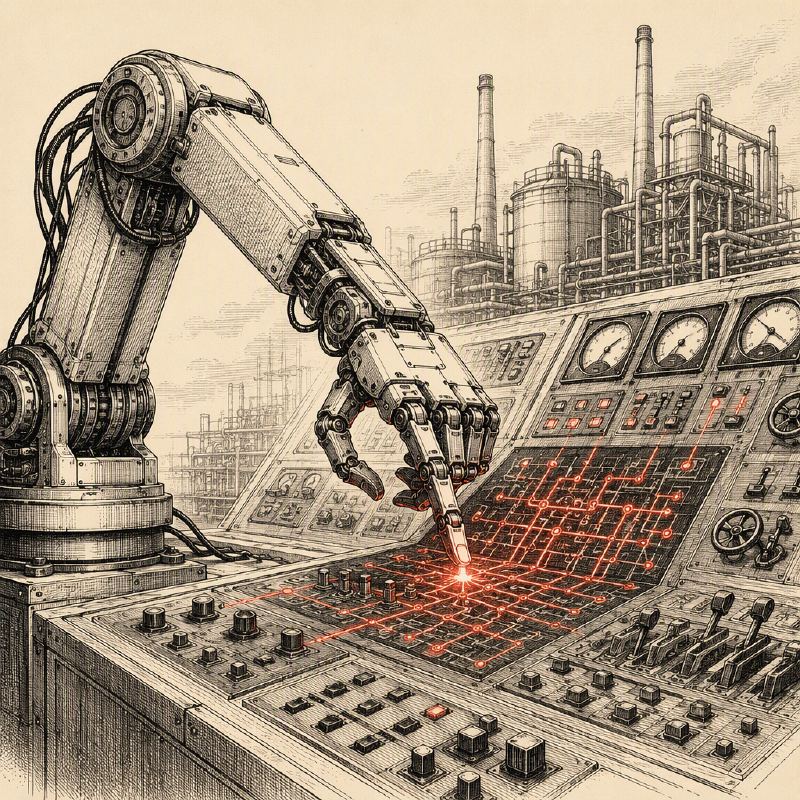
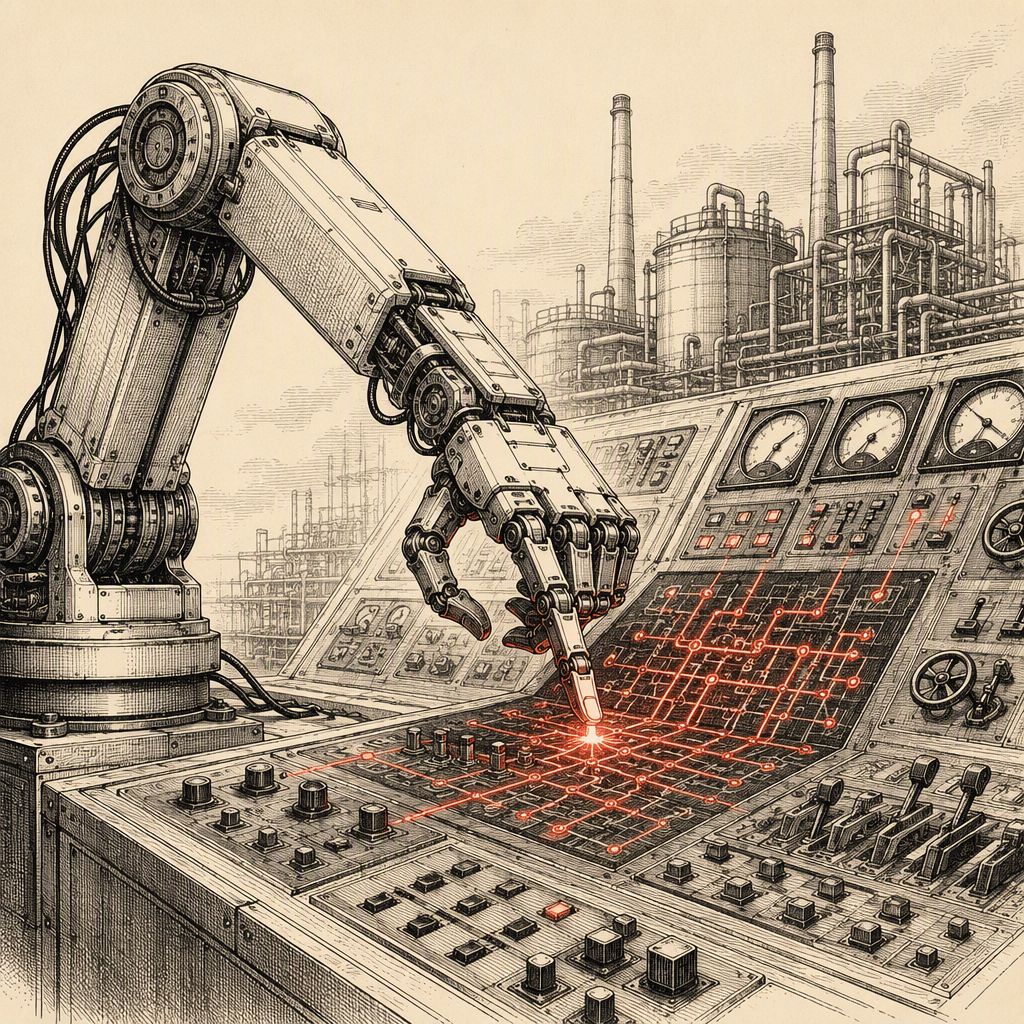
Five US federal agencies have issued a stark warning regarding the active exploitation of Siemens S7 Series programmable logic controllers (PLCs) within critical infrastructure sectors. Attackers are reportedly leveraging AI coding assistants and open-source libraries to craft custom tools that mimic operational technology (OT) monitoring software, granting them unauthorized read/write access to PLC memory, configurations, and ladder logic programs via the S7comm protocol. This development signifies a concerning evolution in threat actor capabilities, making sophisticated attacks more accessible.
The joint alert, released by the National Security Agency (NSA), Cybersecurity and Infrastructure Security Agency (CISA), Federal Bureau of Investigation (FBI), Department of Energy (DOE), and Environmental Protection Agency (EPA), emphasizes that this is "not a theoretical risk – it is an active threat." While the advisory does not officially attribute the attacks to a specific group, intelligence suggests a link to Iranian cyber operatives. These actors have been previously implicated in targeting PLCs at water and wastewater facilities across numerous US states, including a significant disruption affecting over 30 community water systems in Minnesota in late July.
This latest advisory aligns with expert predictions that threat actors would increasingly integrate AI into their arsenals for critical infrastructure attacks. "What the advisory highlights with regard to AI usage aligns with what we’ve expected: state-sponsored adversaries are leveraging AI across the board for discrete tasks, like code checks and scripting, to scale their operations and move faster," noted Cynthia Kaiser, SVP of Halcyon Ransomware Research Center and former FBI cyber division deputy assistant director. She added that the advisory reflects the broader reality of AI enhancing threat actor efficiency.
The targeted Siemens S7 Series PLCs are integral to a wide range of critical industries, including manufacturing, energy, water and wastewater, chemical, and food and agriculture. The feds also noted that these PLCs are used in the Defense Industrial Base (DIB) and could be targeted there as well. Attackers are utilizing internet-scanning services like Censys and ZoomEye to identify internet-exposed PLCs that are poorly protected, run outdated software, or use default passwords, now augmented by AI-generated exploitation scripts.
The use of AI in generating these scripts allows attackers to achieve initial access, credential access, denial of service, and other objectives more rapidly and with less specialized OT knowledge. This lowers the barrier to entry for launching attacks against industrial control systems, as highlighted by Benny Czarny, CEO and founder of Opswat. "AI makes it much easier for an attacker to create and modify scripts targeting PLCs, so the barrier to attacking industrial systems continues to fall," Czarny stated.
To mitigate this escalating threat, the federal agencies strongly advise critical infrastructure owners and operators to immediately inventory all Siemens S7 Series PLCs within their environments. Key recommendations include applying necessary security patches, ensuring PLCs are not accessible from the internet, and segmenting OT networks. Operators should also monitor for anomalous S7comm behavior, such as unusual connection patterns or write operations outside of scheduled maintenance windows.
Further detection strategies include looking for sequential IP scanning on port 102 and repeated connection attempts, which can indicate reconnaissance activities. The use of the Snap7.dll library outside of approved workstations may also signal the presence of intruders. Beyond detection, reducing the overall OT attack surface is paramount. Czarny recommends employing data diodes for one-way data transfer and ensuring no network path exists back to the PLC, emphasizing that while AI increases urgency, fundamental security practices remain the most effective defense.
The implications of AI-powered attacks on critical infrastructure are profound, potentially leading to widespread service disruptions, economic damage, and threats to public safety. The agencies' warning underscores the need for continuous vigilance, robust security practices, and proactive threat hunting to defend these vital systems against an increasingly sophisticated and efficient adversary.
This advisory expands on previous warnings by detailing the specific Siemens PLC series targeted, including the S7-200, S7-300, S7-400, S7-1200, and S7-1500. It further elaborates on how threat actors are combining open-source industrial automation libraries like snap7.dll with AI-generated scripts to mimic legitimate monitoring software, enabling tampering with PLC memory, configuration data, and ladder logic programs.
This new advisory from the NSA, FBI, and Department of Energy provides further detail on the threat, specifically naming Siemens S7 Series PLCs and outlining how threat actors are leveraging open-source industrial automation libraries combined with AI-assisted scripting to gain read/write access to PLC memory and logic. It also details the specific Siemens product lines affected, including S7-200, S7-300, S7-400, S7-1200, and S7-1500 series controllers.
This new advisory from CISA, NSA, FBI, and other agencies provides further detail on the active cyberattack campaign targeting Siemens PLCs. It specifies that threat actors are using AI-generated exploitation scripts, disguised as legitimate monitoring tools, to conduct reconnaissance and develop capabilities against U.S.-based Siemens PLC installations. The attackers are actively testing and refining their exploitation techniques against specific PLC models to improve their effectiveness, leveraging internet scanning services to find exposed PLCs running outdated software or that are poorly protected.