
AI Failures Evade Detection Due to Enterprise Observability Gaps
Enterprises adopting AI systems face a new challenge: subtle AI failures are going undetected because current monitoring tools and organizational structures cannot observe the full AI stack.
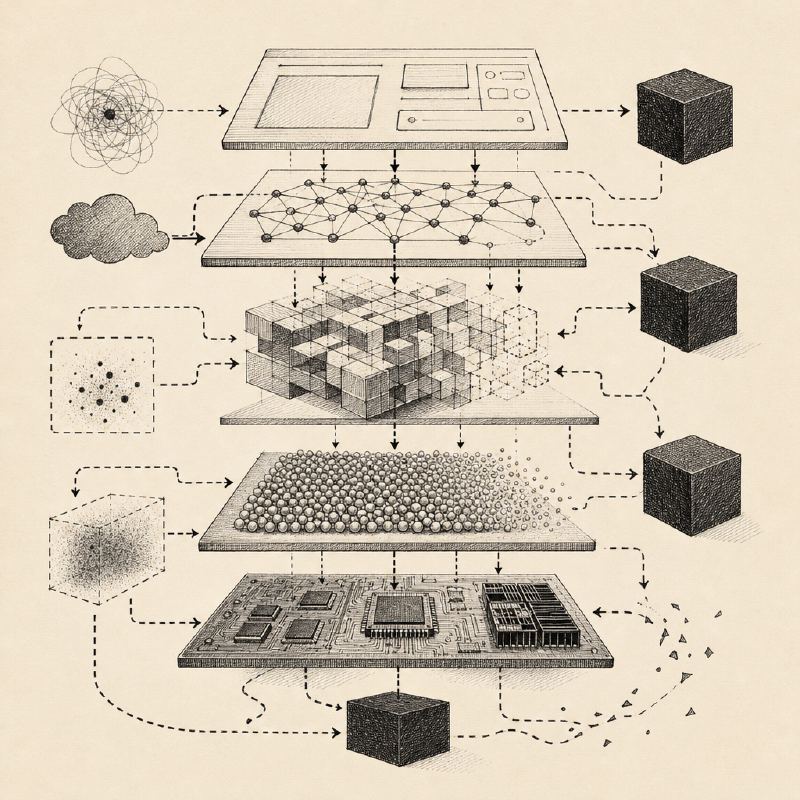
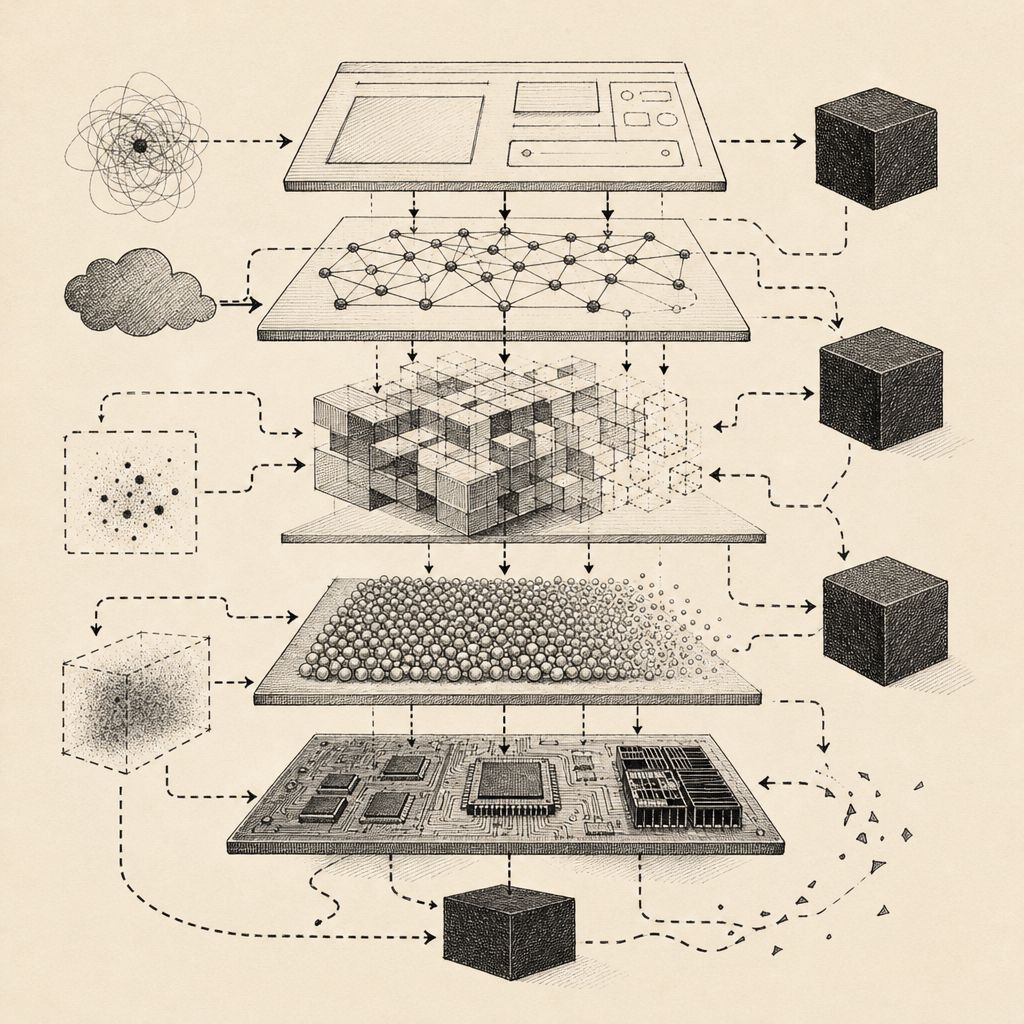
Enterprises are increasingly integrating artificial intelligence (AI) systems, adopting them much like Software as a Service (SaaS) products. However, this familiar consumption model masks a critical difference: AI systems fail in ways that are often invisible to standard monitoring and incident response practices. When an AI assistant provides subtly incorrect information, it can slip past existing checks because teams only examine their own specific domains, leading to a significant detection gap.
The problem arises when an AI system produces outputs that are not outright errors but are instead slightly wrong, yet plausible. For instance, a finance analyst might notice a summarized contract term that doesn't accurately reflect the source document. While the user might report this, the typical escalation path fails to identify the root cause. Helpdesks check user permissions, application security scans for dependency vulnerabilities, and cloud teams monitor infrastructure metrics like latency and error rates, all of which may appear normal. The AI model vendor, on its side, might confirm that the inference engine is functioning correctly. This leaves the problem unresolved because it exists in the complex interplay between different layers of the AI stack, none of which are fully observed by any single team.
This detection gap is a direct consequence of applying a SaaS mental model to AI. SaaS failures are typically characterized by outages, login issues, or missing data – events that are usually obvious and visible through existing dashboards. In contrast, a compromised or misbehaving AI system can continue to operate fluently, providing seemingly correct responses while subtly eroding trust and leading to incorrect decisions. The National Institute of Standards and Technology (NIST) has highlighted this failure mode, noting that AI systems can confidently present false content, particularly in high-stakes environments like healthcare, leading users to act upon misinformation.
The complexity of the AI stack, spanning from user prompts to model inference and back, involves numerous components and ownership boundaries. A single request traverses networks, edge providers, API gateways, orchestration layers, inference clusters, and specific hardware accelerators. The response then travels back through various filters and logic layers. Each of these stages is often owned by a different team – network, platform, machine learning, security, or the AI vendor – and none possess end-to-end visibility into the entire process. This fragmentation means that when a failure occurs, no single team has the comprehensive telemetry or expertise to diagnose issues that span across these boundaries, such as incorrect data retrieval, model poisoning, or prompt injection.
While various disciplines like AI observability, MLOps, model monitoring, and red teaming are addressing aspects of AI reliability and security, a crucial gap remains. No single discipline currently owns the entire incident path, from a user-perceptible semantic failure down through the infrastructure, model artifact, and hardware states. This lack of holistic ownership is exacerbated by the distributed nature of AI development and deployment, where responsibility can be shared among model producers, system integrators, and acquiring organizations. NIST's Secure Software Development Framework emphasizes the need for explicit agreements to define ownership of security practices across these parties, acknowledging that the technology itself does not inherently assign these boundaries.
This situation echoes historical patterns seen with previous technological shifts. The advent of virtualization abstracted away the physical layer, and cloud computing further deepened these abstractions, leading many engineers to lose literacy in the underlying infrastructure. While these shifts offered velocity and abstraction, they deferred the cost of expertise, often stopping at the API layer. AI represents a similar abstraction, but the trade-off is more severe. Enterprises are consuming advanced AI models as opaque services, similar to how they use Salesforce, without fully understanding the potential failure modes that lie beneath the surface.
The consequences of this observability gap are significant. Subtle AI errors can lead to flawed business decisions, compromised data integrity, and a gradual erosion of trust in AI systems. Without the ability to correlate telemetry across the entire AI stack – from the user interface through the inference pipeline and back – organizations are ill-equipped to detect, diagnose, and remediate these sophisticated failures. This necessitates a shift towards integrated observability solutions that can provide a unified view of AI system performance and security, involving ML engineers in incident response to debug across the full stack and ensure the trustworthiness of AI deployments.