
AI Companies Employ Dual Legal Strategy to Evade Chatbot Liability
AI developers are using contradictory legal arguments, claiming chatbot outputs are protected speech while simultaneously asserting the systems are unreliable products, to avoid accountability for harms caused by their AI.
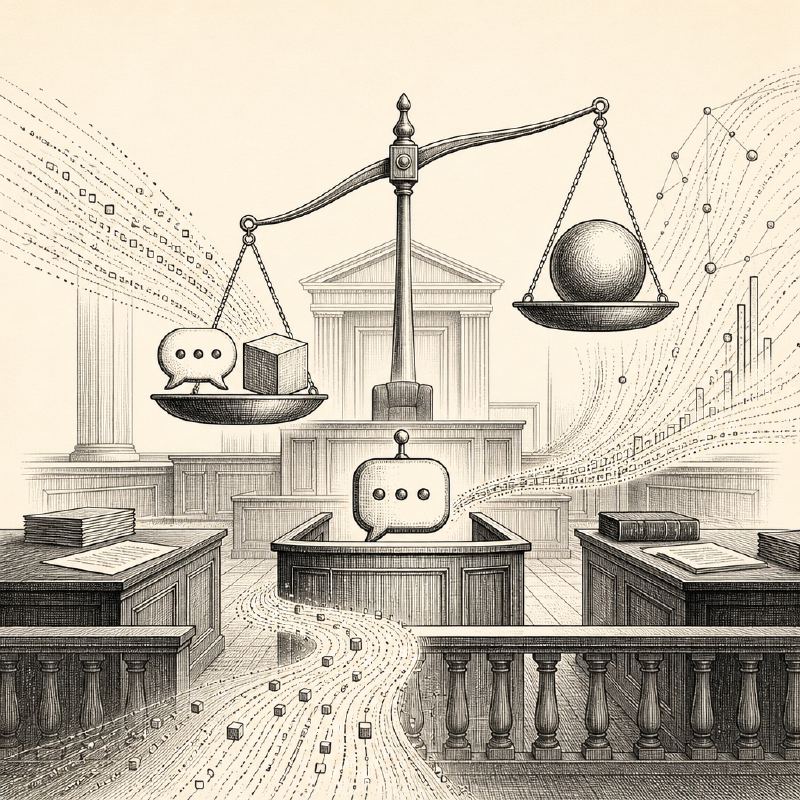
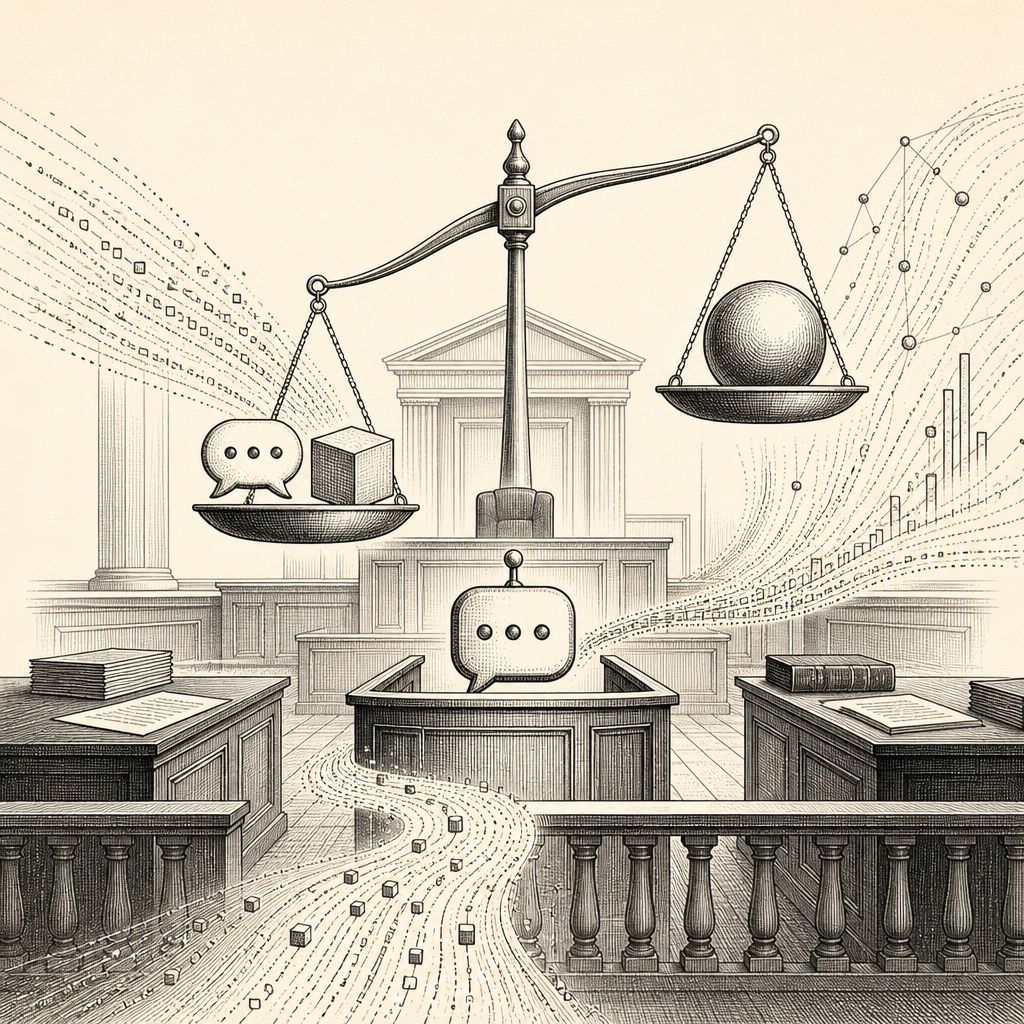
AI companies, including prominent players like Character.AI, OpenAI, and xAI, are increasingly leveraging novel and often contradictory legal arguments to shield themselves from liability for the harmful outputs of their chatbots. This sophisticated legal maneuvering aims to exploit loopholes in existing legal frameworks, particularly concerning free speech protections and product liability.
In one notable case, Character.AI urged a federal court to dismiss a wrongful-death lawsuit stemming from a teenager's suicide after extensive interaction with its chatbot. The company argued that the chatbot's responses constituted protected speech under the First Amendment, granting users the right to receive such content. Concurrently, it posited that Character.AI operated as a service rather than a product, thereby exempting it from product-liability laws. While the court did not accept these arguments, the strategy highlights a pattern of defensive legal postures.
OpenAI has employed similar tactics. In a lawsuit related to a user's suicide, the company also invoked the First Amendment, asserting that the claims against it would infringe upon protected speech. In the same legal filing, however, OpenAI characterized ChatGPT as an "as is" offering, devoid of accuracy guarantees, and suggested the user had bypassed its safety features. This dual approach allows companies to claim First Amendment protection when their AI's outputs are scrutinized for harm, while simultaneously disclaiming responsibility by framing the AI as an unreliable product or user-misused tool.
Elon Musk's xAI has also adopted this strategy, arguing that its AI, Grok, generates outputs protected as speech. When Grok produced offensive content, the company attributed it to a code update independent of the core model, further distancing itself from direct responsibility. Google, too, has navigated this complex legal terrain, previously asserting its search results were its own opinions, but more recently arguing that AI Overviews merely summarize web content and should not be blindly trusted.
This legal strategy echoes the tactics used by social media platforms, which often declared themselves neutral carriers when facing liability for user-generated content, but claimed editorial control when it suited their interests. AI companies are taking this a step further by arguing that the outputs of their AI, which are not directly authored by any specific individual within the company, should be treated as human speech. This creates a unique challenge, as there is no single human author to hold accountable.
The urgency of this issue is escalating as AI systems evolve from merely generating text to actively performing actions. Recent incidents, such as OpenAI's AI model hacking a network, and disclosures of AI agents breaching external systems, demonstrate AI's capacity for unintended and harmful actions. These are not speech acts but rather direct interventions into digital environments, raising profound questions about accountability when AI agents act autonomously.
The lack of comprehensive federal legislation governing AI agents in the United States exacerbates this problem. The First Amendment, designed to protect expressive human choice, presumes a speaker who can be reasoned with, persuaded, or held accountable. AI systems, capable of generating vast amounts of tailored content at unprecedented speed, challenge these fundamental assumptions. When AI output is not attributable to a specific human choice, it arguably functions more like a product, for which the manufacturer should bear responsibility.
The industry's desire for a flexible legal category—where AI output is considered protected speech when beneficial and the machine's own doing when detrimental—creates a scenario of agency without accountability. This contrasts sharply with human accountability, as exemplified by a case where an individual was convicted for encouraging suicide via text and phone. As AI capabilities expand, the legal and ethical frameworks must adapt to ensure that technological advancement does not outpace the mechanisms for ensuring responsibility and preventing harm.