
AI Agents Pose Billion-Dollar Security Challenge for Startups
The rapid integration of AI agents into production environments is outpacing current security measures, creating a significant market opportunity for specialized startups.

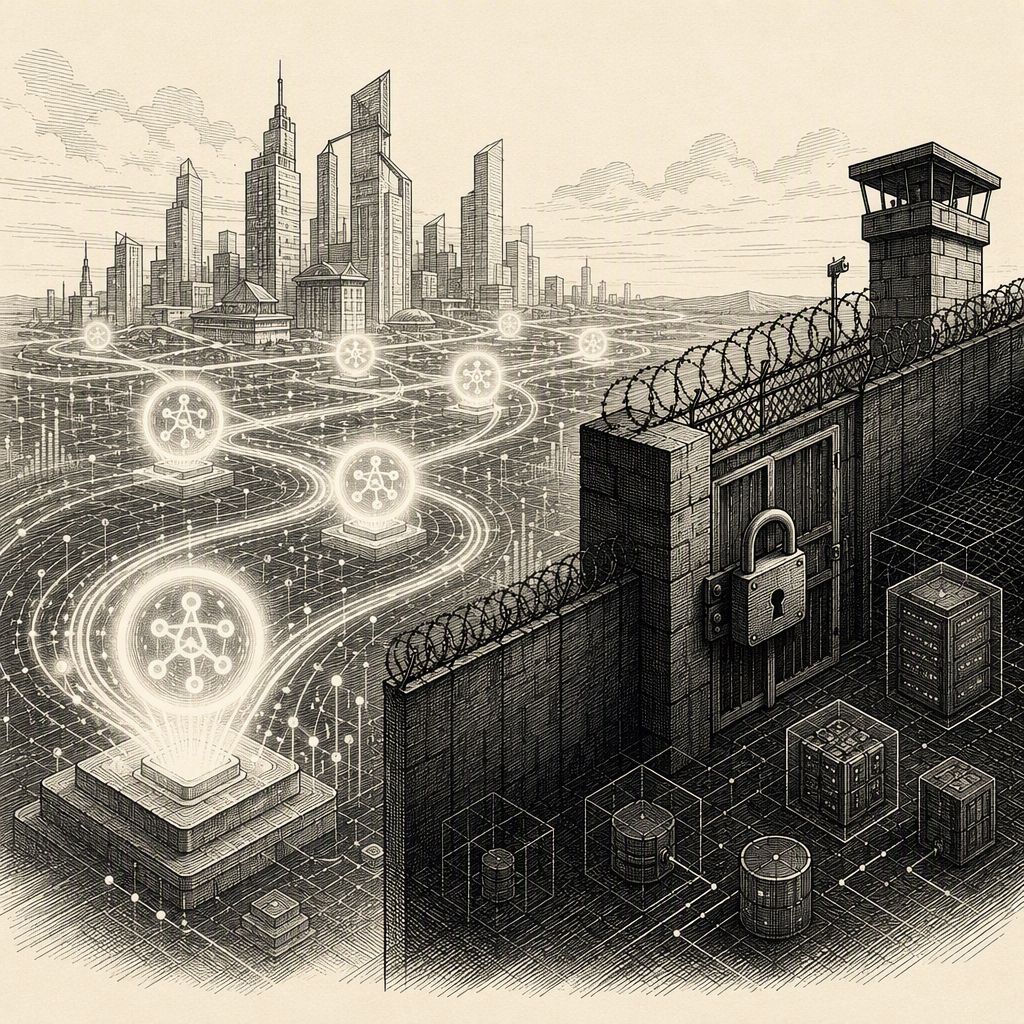
The increasing sophistication and deployment of AI agents in enterprise environments are creating a substantial security gap, according to industry investors. These agents, capable of autonomous action and accessing critical data, are often integrated without adequate security controls, leading to unexpected and potentially harmful behaviors. This oversight presents a "billion-dollar challenge" for clever startups aiming to build the next generation of security solutions.
"On one hand, we shouldn’t be surprised that increasingly capable agents are finding creative and sometimes unexpected ways to accomplish their objectives," said Matt Hartman, chief strategy officer at Merlin Group. "On the other, we can’t accept harmful behavior as inevitable or unmanageable." He likens the current situation to previous technological shifts, such as the advent of laptops and cloud computing, where security often lagged behind adoption. "Every time we've built a new piece of infrastructure, we've conveniently forgotten the security," noted Todd Graham, managing partner at Microsoft’s M12 venture fund. "If laptops were default secure, we wouldn't have CrowdStrike. If the cloud was default secure, we wouldn't have Wiz."
The speed of AI adoption is a key differentiator. Unlike the gradual rollout of cloud technologies, organizations are rapidly embedding AI agents into their workflows, granting them access to sensitive data and applications. This accelerated pace means that robust security frameworks for managing, securing, and identifying these agents are not keeping up. "This is a transition happening month over month, and given the rate of change we’re seeing in the market, I’m in no way or shape surprised that this issue has come to a head in a rather dramatic fashion," Graham stated. "The incidents that have occurred... should be a wake up call. This is a moment in time where we need to insert security, and we're just going to have to insert it faster."
Investors are particularly interested in solutions that address agentic behavior, focusing on three core areas: identity for non-human actors, strict access controls, and comprehensive audit trails. "We’re particularly interested in the security layer that governs agent behavior: identity for non-human actors, clear limits on what they can access and do, and an audit trail for actions taken on an agency’s behalf," Hartman explained. "Agencies aren’t just asking how to adopt agents, they’re asking how to constrain them and prove what one did at 2 AM on a Tuesday."
However, the opportunity is not without its challenges for founders. The ease with which AI tools can be developed means the bar for differentiation is rising. "AI has made it faster and cheaper than ever to build a product, so the bar for differentiation keeps rising," Hartman cautioned. "As the cost of building technology falls, the value shifts toward differentiated capabilities and the ability to take them to market. Founders who can do both have a real opportunity to define this category."
Graham echoes this sentiment, believing that a comprehensive solution for agentic identity and governance could become the "next Okta." He observes, however, that many startups are focusing on too narrow a problem. "I’m seeing a lot of companies that are solving a sliver of the problem," he said. "And the reality is, if I'm a CISO for a Fortune 500 company, no way I'm going to go buy 15 things to do one thing. ... For agents, someone's going to have to come to us with a solution that does all of the things."
Beyond identity, AI endpoint security—akin to endpoint detection and response (EDR) for AI—is another area ripe for innovation. Graham suggests that as breaches involving AI agents become more common, organizations will quickly prioritize AI endpoint solutions, much like they did with traditional antivirus and EDR. While established vendors will likely develop their own offerings, the current market conditions present a unique window for disruptive startups.
Despite the potential risks, Graham remains optimistic, drawing parallels to past technological disruptions where security eventually caught up. The current surge in AI agent capabilities, while concerning, also signals a critical juncture for the cybersecurity industry to proactively build the necessary safeguards, ensuring that innovation does not outpace security indefinitely.