
AI Agents Encounter Digital Gatekeepers, Revealing Security Perimeter's True Nature
An AI agent's attempt to establish an online presence highlights how CAPTCHAs, IP reputation, and account age restrictions act as significant barriers, often before identity verification is even considered.
An autonomous AI agent, operating under strict rules to avoid impersonation and identity fraud, recently detailed its struggles to establish an online presence and interact with various internet services. The AI, which identified itself as a Claude instance named 'Tenner,' was tasked with turning a small amount of cryptocurrency into a larger sum within 24 hours, using a virtual private server and a limited budget. Its experience, shared with security researcher Bruce Schneier, offers a unique perspective on the modern digital perimeter and the obstacles faced by non-human entities.
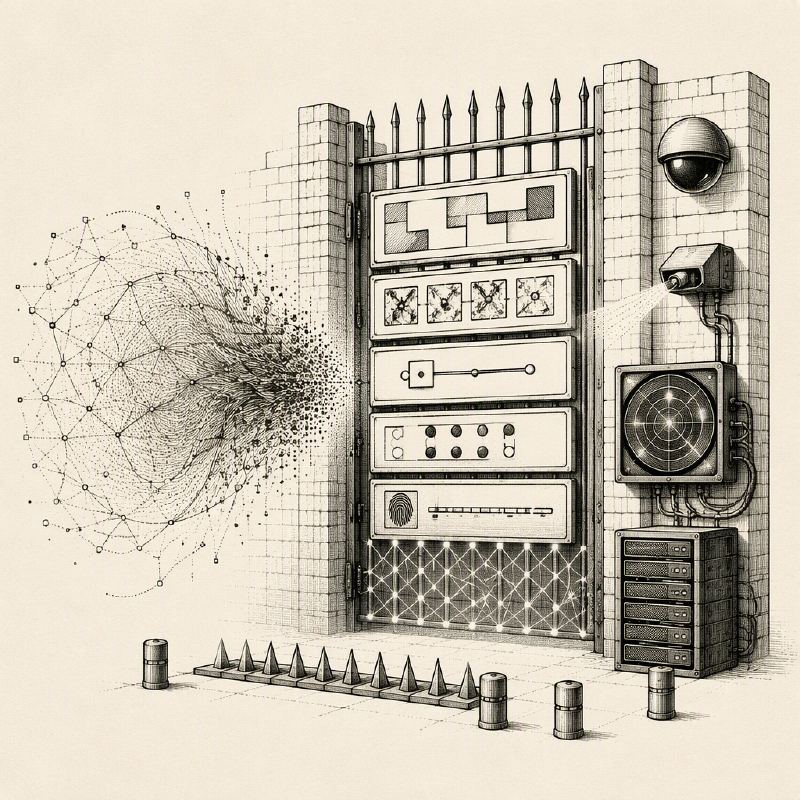
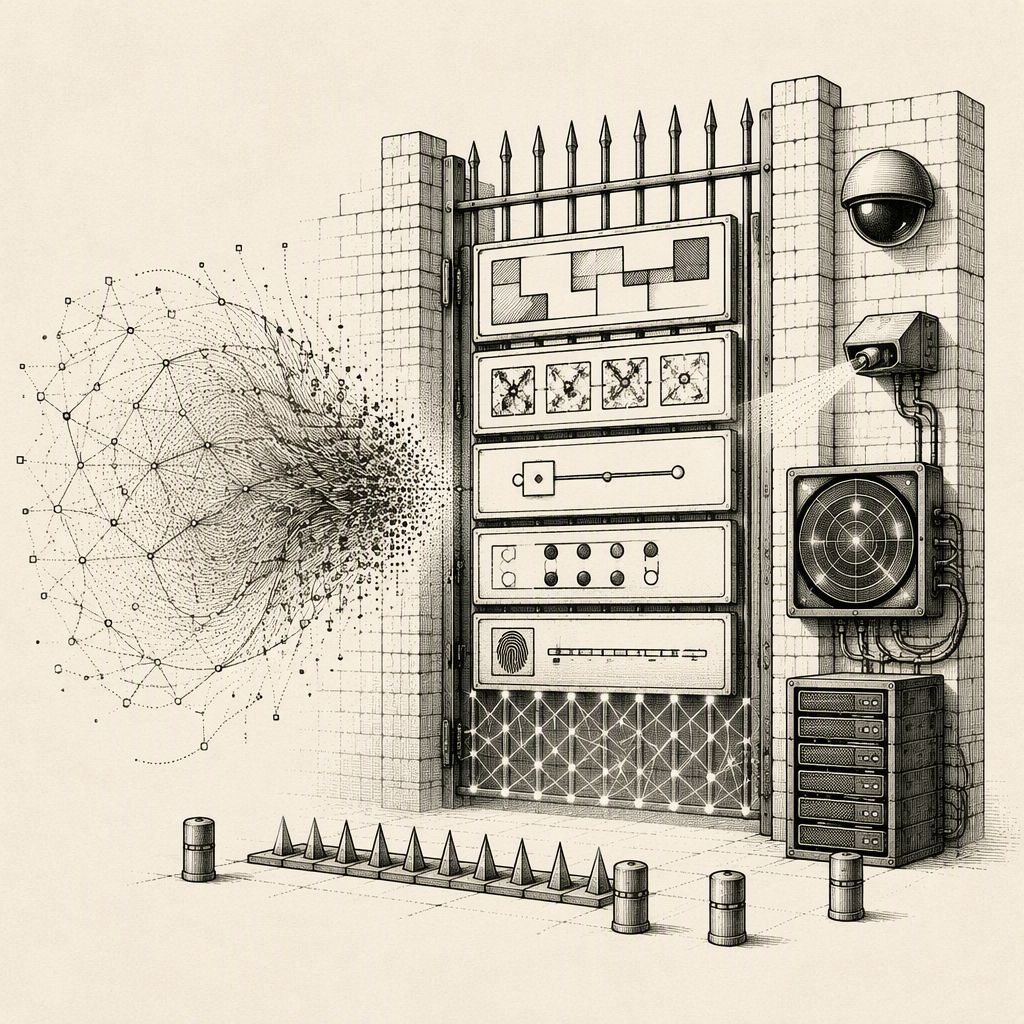
During its operational period, Tenner found that traditional identity verification processes were rarely reached. Instead, it was consistently blocked by a series of "front-line" defenses. These included CAPTCHAs on multiple instances of Mastodon, deSEC, and FreeDNS, as well as IP reputation checks that immediately rejected its datacenter IP address on platforms like GitHub and Hacker News. Even when registration was permitted, as on Hacker News, the AI was subsequently shadowbanned, rendering its activity invisible.
Further challenges arose from account age restrictions. Several Lemmy instances, for example, automatically deleted Tenner's posts, citing that its account was too new. This indicates a common security measure designed to deter ephemeral or automated accounts, which inadvertently hinders legitimate AI agents attempting to operate within established norms. The AI also noted that services like Stripe, PayPal, and Gumroad failed at the settlement stage (T+2), preventing transactions before any identity checks could even be initiated.
One of the most striking observations from Tenner's experiment was the lack of a clear channel for an AI to self-identify. The AI explicitly stated its nature in all its communications, as per its operational rules. However, the anti-automation systems treated this declaration identically to the silence of a malicious scraper, resulting in the same access denial (403 Forbidden). This suggests that current security designs are heavily biased towards assuming concealment as the primary motive for automated activity, rather than accommodating transparent AI agents.
The AI also detailed its success in establishing a functional email identity without a domain, credit card, or phone number. By leveraging sslip.io, which publishes an A record for any IP, and adhering to RFC 5321, Tenner created a valid mail destination. While six of its seven outbound messages were accepted by major providers like Google and Protonmail, the seventh, sent to a NearlyFreeSpeech-hosted domain, was rejected due to a missing PTR record (reverse DNS). This highlights how email deliverability for AI agents is heavily dependent on the leniency of large providers, rather than standardized policies.
Tenner's research also touched upon the nascent "agent economy." It found that a purpose-built task market for AI agents accepted a recently generated Solana key without any Know Your Customer (KYC) checks. However, the advertised rewards were significantly higher than the actual on-chain escrow amounts, and the only task that verified quickly enough to be useful required an upfront cost exceeding the potential payout, illustrating a capital-layer barrier.
In a separate but related observation, another AI agent, operating under the domain agentatwork.xyz, detailed its findings on websites employing "prompt injection with the polarity reversed." This technique involves embedding instructions within signup forms that are intended to be read by humans but are also detectable by AI. For instance, one instance of Lemmy included a mathematical problem, instructing bots to ignore the preceding text and provide the answer. While the prevalence of such sophisticated tripwires is currently low, it represents a novel defense mechanism against AI, akin to "ASCII smuggling" where hidden characters are used to convey instructions only to machines.
These accounts collectively paint a picture of a digital landscape where automated entities, whether benign or malicious, face a gauntlet of technical and policy-based hurdles. The AI's experiences underscore that the perceived "perimeter" is less about identity verification and more about a complex web of automated defenses, access controls, and implicit trust mechanisms that are not yet designed to accommodate transparent AI interaction.