
Adversaries Weaponize Vulnerability Disclosure Ecosystem Against Defenders
Threat actors are increasingly exploiting the public vulnerability disclosure process, rapidly weaponizing research and proof-of-concept code to launch attacks before patches can be applied.
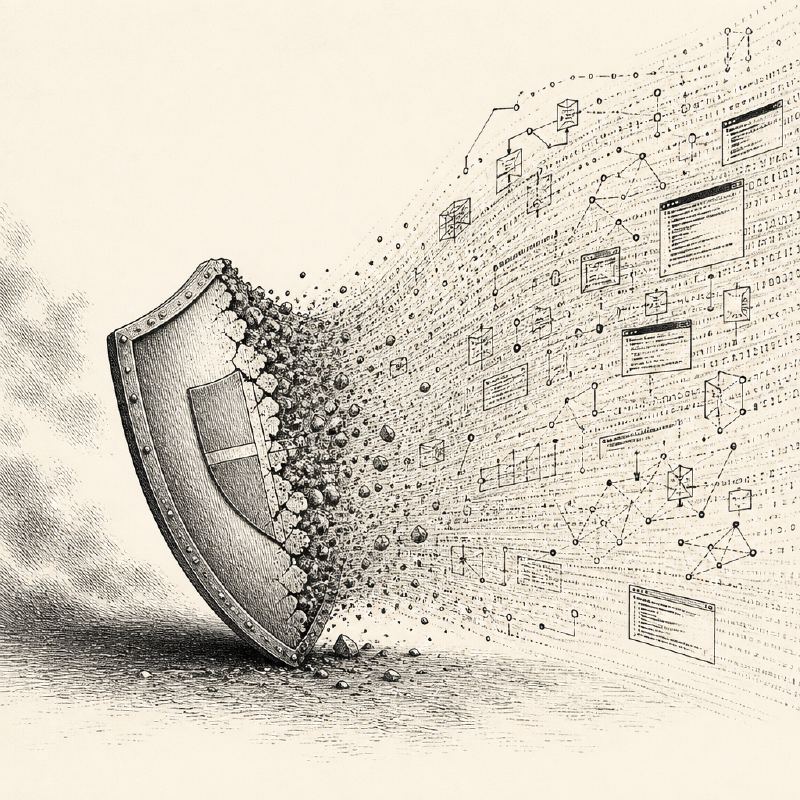

The cybersecurity community has long operated under the principle that sharing knowledge enhances collective security. Researchers publish detailed technical analyses, release proof-of-concept (PoC) exploit code, and distribute scanning tools to aid defenders in understanding, prioritizing, and mitigating vulnerabilities. However, this open exchange of information also provides adversaries with a direct roadmap for exploitation.
Analysis by CrowdStrike Counter Adversary Operations reveals a disturbing trend in 2026: threat actors are rapidly adopting publicly available vulnerability research. Between January and July 2026, the median time from the release of a public PoC to its exploitation in the wild was less than 24 hours. In the most extreme cases, exploitation was observed as little as 35 minutes after PoC availability. A staggering 91 percent of exploited vulnerabilities with a public PoC were targeted within 48 hours of their release, effectively closing the window for organizations relying on traditional patch management cycles.
This accelerated exploitation benefits threat actors across the skill spectrum. Less experienced attackers gain readily weaponized tools and guidance, making previously inaccessible vulnerabilities exploitable. More sophisticated actors can bypass costly and time-consuming development efforts, reduce their operational footprint, and blend their activities into the broader noise of exploitation, enhancing their operational security.
The cPanel Authentication Bypass Vulnerability (CVE-2026-41940) serves as a stark example. Disclosed on April 28, 2026, a technical blog post detailing exploitation methods and a detection-artifact generator emerged just one day later. CrowdStrike found that this generator could be easily modified into a functional exploit. By April 30, 2026, widespread exploitation was observed, largely mirroring the published guidance. Retrospective analysis indicated that a single actor may have exploited this as a zero-day since April 3, 2026, with public disclosure significantly amplifying the exploitation activity by multiple threat actors.
Another case, the Linux Local Privilege Escalation Vulnerability CopyFail (CVE-2026-31431), saw a PoC exploit released on April 29, 2026. Despite being patched in the Linux mainline, it remained unpatched in many distributions, effectively acting as a zero-day. The exploit, a small Python script, was reliable and easy to distribute. The very next day, the Belarus-nexus adversary UMBRAL BISON was observed using a modified CopyFail exploit against a Ukrainian government entity to gain root access and deploy a C2 agent.
These incidents underscore a critical shift in the threat landscape. The speed at which vulnerability information is weaponized and exploited outpaces the ability of many organizations to patch. This dynamic forces a re-evaluation of defensive strategies, moving beyond traditional vulnerability management to embrace faster detection and response capabilities.
Defenders must now contend with a reality where the very tools and information intended to improve security are actively leveraged by adversaries. The challenge lies in adapting security operations to this accelerated timeline, prioritizing rapid patching, enhancing threat intelligence, and developing robust incident response plans to mitigate the impact of this evolving threat.