
What you need to know today.
Critical RCE and privilege escalation flaws hit SonicWall, Dell, IBM, and Microsoft, alongside an Android Bluetooth vulnerability.
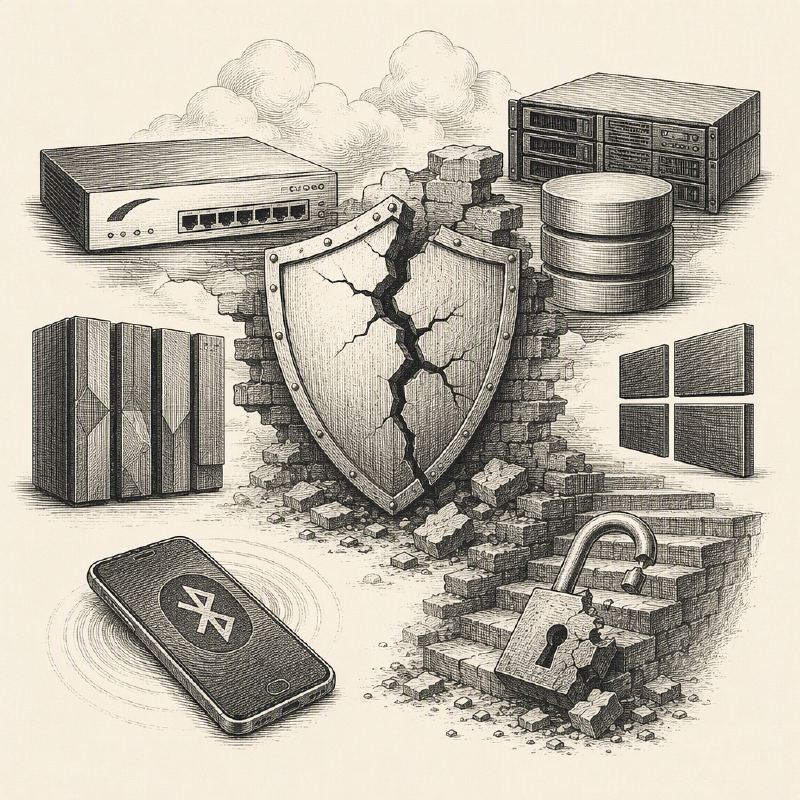
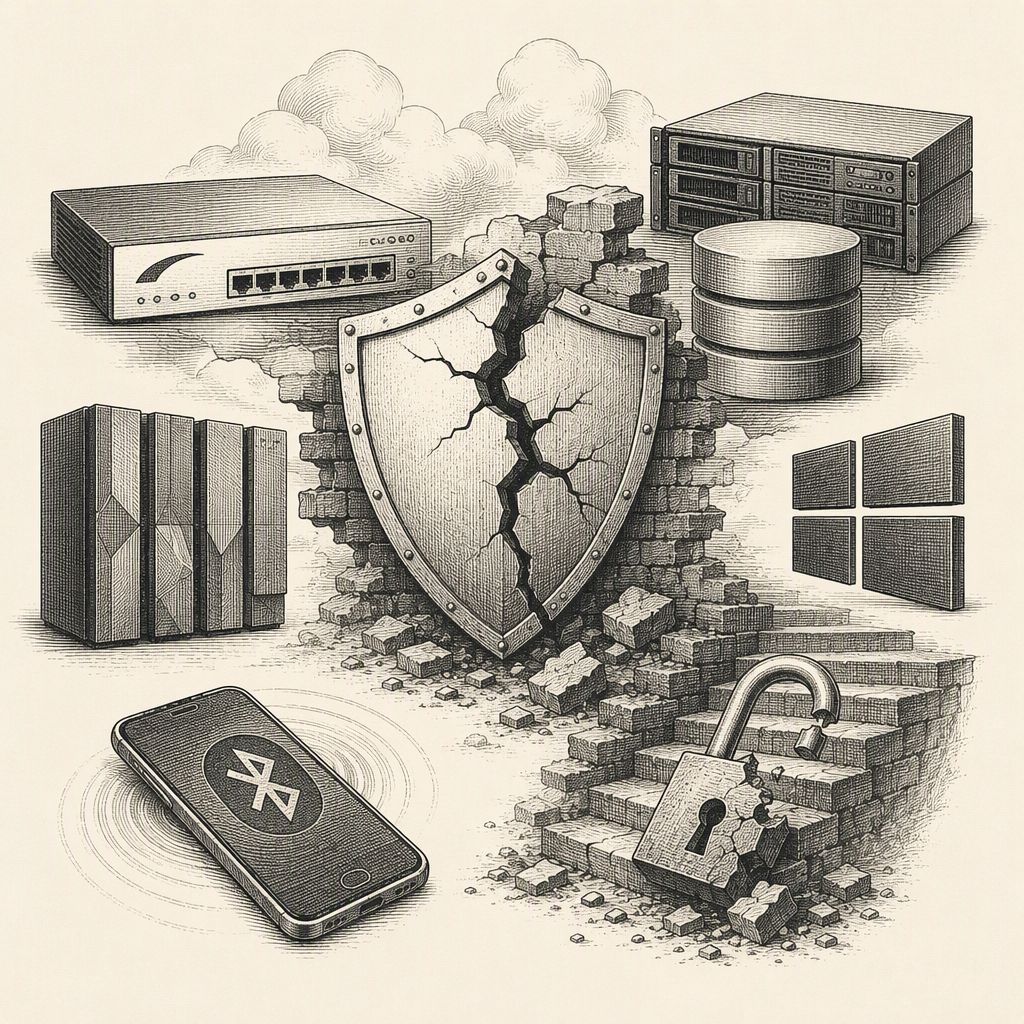
A critical pre-authentication SSRF vulnerability in SonicWall's SMA1000 Appliance Work Place interface, identified as CVE-2026-102255, allows unauthenticated remote attackers to upload arbitrary files to any location on the mail server, potentially enabling remote code execution. This flaw, rated CVSS 10.0, was detailed in reports by The Hacker News, Cyber Security News, and Help Net Security.
Dell Container Storage Modules (CSM) versions prior to v1.18.0 are affected by two critical vulnerabilities. CVE-2026-63688, a Missing Authentication for Critical Function flaw in the csm-authorization-storage gRPC server, and CVE-2026-54472, a Use of Hard-coded Credentials in csm-docs, could allow unauthenticated remote attackers to gain administrative control and potentially exploit further vulnerabilities. These issues were highlighted by The Hacker News and Cyber Security News.
IBM Langflow OSS versions 1.0.0 through 1.12.2 are impacted by multiple critical vulnerabilities, including CVE-2026-93674 and CVE-2026-104334. These flaws stem from improper neutralization of special elements used in OS commands and control of code generation, respectively, potentially allowing remote attackers to execute arbitrary code. Vypr Intelligence reported on these coordinated disclosures.
Critical vulnerabilities have been disclosed in Microsoft Azure Billing (CVE-2026-62874) and Android Bluetooth (CVE-2026-55330). The Azure Billing flaw allows privilege escalation over a network due to insufficient data authenticity verification, while the Android Bluetooth vulnerability is a use-after-free error that could lead to remote code execution. These were noted by Vypr Intelligence and Vypr Intelligence.
SmarterTools' SmarterMail is affected by CVE-2025-52691, a critical vulnerability rated CVSS 10.0 that allows unauthenticated attackers to upload arbitrary files to any location on the mail server, potentially leading to remote code execution. watchTowr Labs and The Hacker News reported on this significant security risk.
Apple's Safari and associated operating systems are impacted by CVE-2025-43529, a use-after-free issue addressed with improved memory management. While not rated as critical, this vulnerability has been linked to malicious exploitation attempts targeting iPhones, as reported by The Hacker News, Cyber Security News, and Dark Reading.