
npm: 40 Malicious Packages Drop in Under a Minute, Impersonating Dev Utilities
On October 5, 2026, 40 malicious npm packages were disclosed within a single minute, many impersonating common CSS and development utility libraries.

Key findings
- 40 malicious npm packages were disclosed within a single minute on October 5, 2026.
- Packages impersonate common CSS polyfills/utilities and popular development tools like
expressanddotenv. - Many packages were newly published, indicating fresh typosquatting attempts.
- All disclosed packages were assigned a Critical severity rating.
- The
botmaker-clipackage likely communicates with thebotmaker.orgdomain.
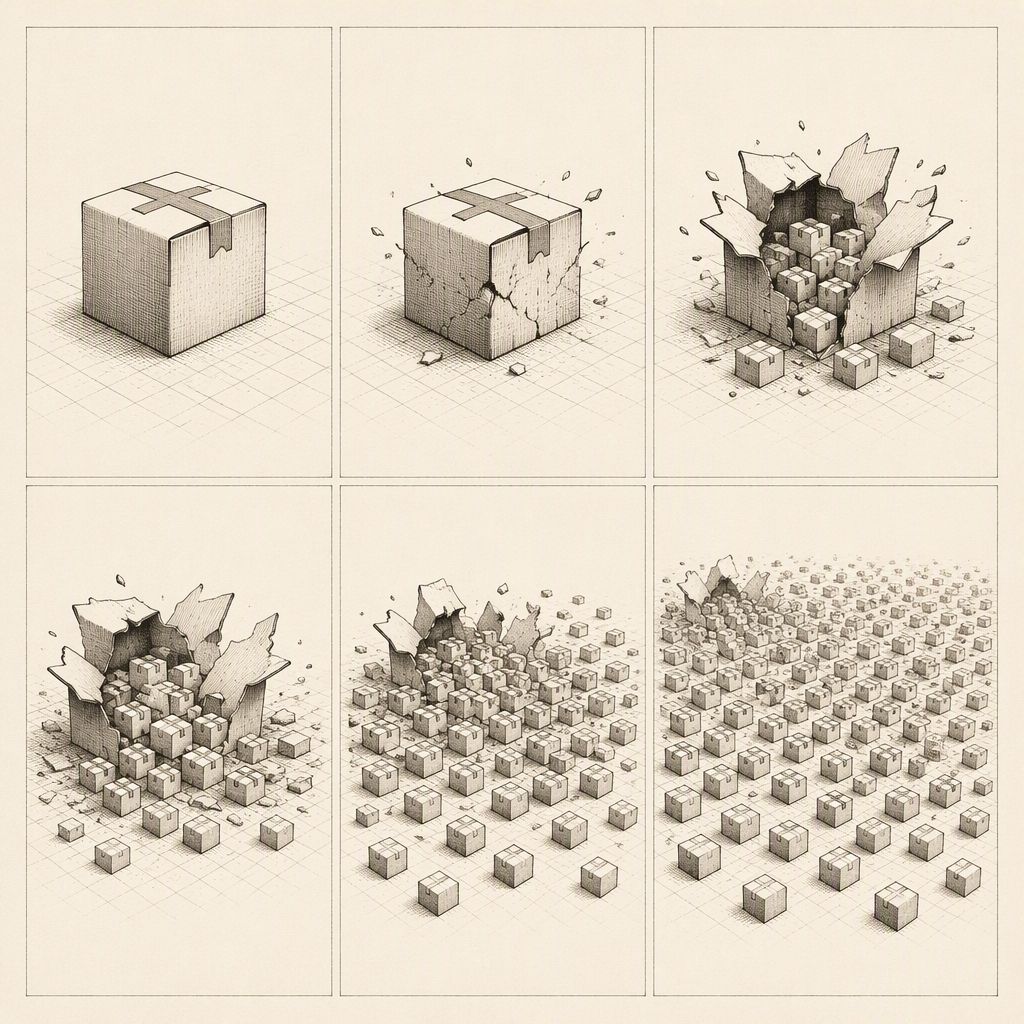
On October 5, 2026, the npm ecosystem experienced a significant security event with the disclosure of 40 malicious packages, all identified and removed within a remarkably tight window of under one minute. This highly coordinated campaign represents a concerted effort by threat actors to inject harmful code into the software supply chain. The rapid succession of advisories, all published at 00:30 UTC, strongly indicates a single, orchestrated takedown by security teams, responding to a widespread, synchronized deployment of malicious artifacts. Many of these packages were newly published, some just two days prior to their disclosure, suggesting a strategy focused on fresh typosquatting and quick infiltration before widespread detection. This incident serves as a stark reminder of the dynamic and persistent nature of software supply chain threats.
The malicious packages exhibit a diverse but discernible set of naming patterns, primarily designed to impersonate legitimate and commonly used development libraries. A significant portion of the packages leverage prefixes like css- and suffixes like -polyfill, -shim, or -utils, aiming to mimic front-end development dependencies. Examples include css-env-function-shim, focus-visible-polyfill-lite, css-snap-target-polyfill, css-gap-decorations-polyfill, css-interop-observer-polyfill, css-field-sizing-polyfill, css-a11y-contrast-utils, css-starting-style-polyfill, css-light-dark-polyfill, css-relative-color-util, css-scroll-anchor-polyfill, css-scroll-state-polyfill, css-reading-flow-polyfill, css-anchor-pos-fallback, rgx33-css-grid-utils, rgx33-flex-layout-core, wcag-color-a11y-helpers, tiny-viewport-unit-calc, tiny-focusgroup-helper, tiny-dom-focus-trap, and dom-focus-sentinel. This extensive list suggests an attempt to saturate the "CSS utility" namespace. Beyond CSS-related names, other packages impersonate popular backend and tooling libraries, such as express-fork and express-enhanced (mimicking express), dotenv-promises and dotenv-async (mimicking dotenv), and hardhat-roof, hardhat-plus, hardhat-ftp (mimicking hardhat). The presence of lite-matterr and lite-mater indicates direct typosquatting, targeting a common legitimate package. The low download counts, typically ranging from a few dozen to just over 200 per week, combined with their very recent publication dates (many within 2-3 days of disclosure), are strong indicators of fresh typosquatting attacks. These packages are designed to exploit minor user typos or automated dependency resolution systems, hoping to gain traction before being identified as malicious.
While granular behavioral findings for each specific package were not provided in the input, the consistent "Critical" severity rating across all 40 disclosed packages strongly implies highly dangerous and intrusive capabilities. In typical supply chain attacks involving critical-rated malware, the primary objectives often include credential exfiltration, execution of arbitrary commands on the compromised system, and establishing covert communication channels with attacker-controlled command-and-control (C2) infrastructure. Such malicious code can be designed to steal sensitive environment variables, API keys, authentication tokens, and other developer credentials. The presence of botmaker-cli among the disclosed packages is particularly noteworthy, as it directly correlates with the botmaker.org domain found in the extracted Indicators of Compromise (IOCs). This suggests that botmaker-cli likely attempts to communicate with botmaker.org for C2 purposes, potentially receiving further instructions or exfiltrating stolen data. Other IOCs like api.ipify.org are commonly used by malware to identify the public IP address of a compromised host, a preliminary step before initiating more targeted attacks or data exfiltration. The lack of specific details for each package means that the full extent of their malicious functionality is not publicly known, but the "Critical" severity should prompt immediate and cautious action from any potentially affected users.
The uniform "Critical" severity assigned to every one of the 40 disclosed packages underscores the extreme danger posed by this coordinated attack. A "Critical" severity rating in the context of package advisories typically means that any system that installed one of these malicious versions should be considered fully compromised. This implies that the attacker could have gained complete control over the affected machine, potentially accessing sensitive files, executing arbitrary code, and maintaining persistence. For developers and organizations, this necessitates an immediate and comprehensive incident response. The most crucial step is to assume that all secrets, including API keys, authentication tokens, and passwords, present on the compromised system have been exfiltrated. Therefore, all such credentials must be rotated immediately from a separate, known-good machine to prevent further unauthorized access. Furthermore, the integrity of the development environment cannot be guaranteed, and a complete forensic analysis or even a full system rebuild may be required to ensure the eradication of the threat.
Given the nature of this coordinated attack, developers and organizations must take proactive steps to identify and mitigate potential exposure. The immediate priority is to audit all project dependency lock files, such as package-lock.json for npm or yarn.lock for Yarn, for the presence of any of the 40 malicious package names. If any are found, the affected dependencies must be promptly removed, and a thorough security review of the project codebase and the developer's environment should be initiated. A representative list of package names to specifically check for includes:
focus-visible-polyfill-litecss-env-function-shimexpress-forkdotenv-promiseshardhat-plusbotmaker-clilite-matertiny-dom-focus-trap
Beyond code-level checks, it is imperative to rotate all credentials that may have been exposed on any machine where these packages were installed. Organizations should also review their npm registry access logs for any suspicious or unauthorized publish events, which could indicate a compromised maintainer account. Implementing robust software supply chain security practices, including dependency integrity checks and automated vulnerability scanning, is crucial for preventing future compromises.
This rapid-fire disclosure of 40 malicious npm packages within a minute highlights a concerning trend in software supply chain attacks: the increasing sophistication and coordination of threat actors. By deploying a large volume of low-download, newly published packages in such a tight window, attackers aim to maximize their chances of initial compromise before security mechanisms can fully react. This strategy leverages the sheer scale of the npm ecosystem, where even a small percentage of successful installations across many packages can yield significant results for attackers. The incident underscores the continuous cat-and-mouse game between attackers and defenders, emphasizing the need for constant vigilance, rapid threat intelligence sharing, and robust automated detection systems to protect the integrity of open-source software. As these coordinated bursts become more frequent, the collective responsibility of package maintainers, security researchers, and developers to secure the software supply chain becomes ever more critical.