
npm: 18 Malicious 'opencode2' Packages Dropped Simultaneously
On October 13, 2026, 18 malicious packages sharing the 'opencode2' prefix were simultaneously disclosed on npm, indicating a coordinated supply chain attack.
Key findings
- 18 malicious packages were simultaneously disclosed on npm on October 13, 2026.
- All packages share the
opencode2prefix, targeting various operating systems and architectures. - The packages were first published just 10 hours before disclosure, indicating a rapid malicious deployment.
- Advisories with explicit severity are consistently rated as Critical.
On October 13, 2026, 18 malicious packages, all sharing the opencode2 prefix, were simultaneously disclosed on npm. These packages, which were first published just 10 hours prior to their disclosure, indicate a rapid deployment and subsequent takedown of a coordinated supply chain attack.
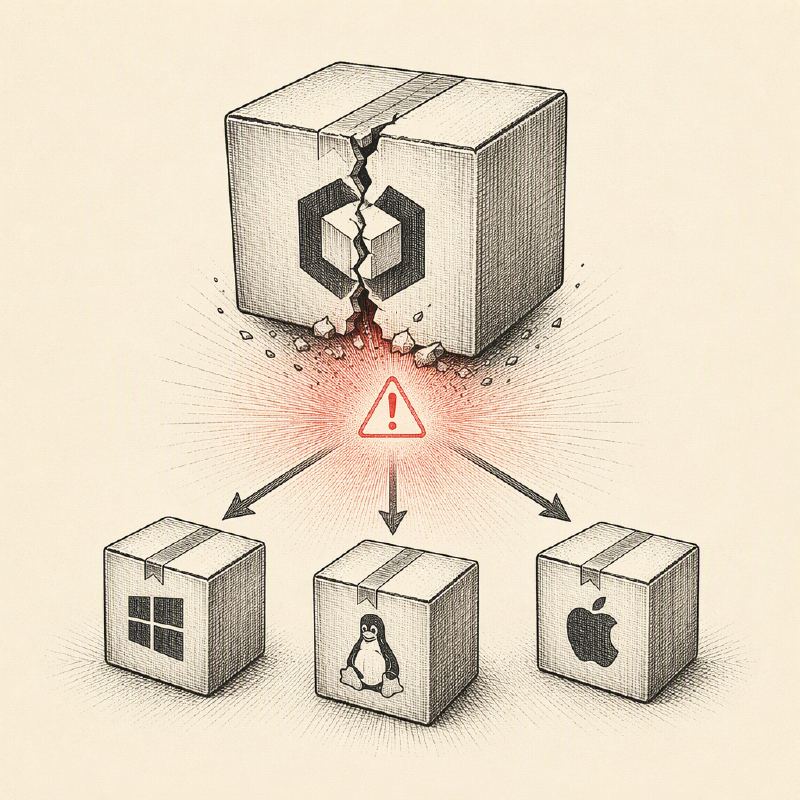
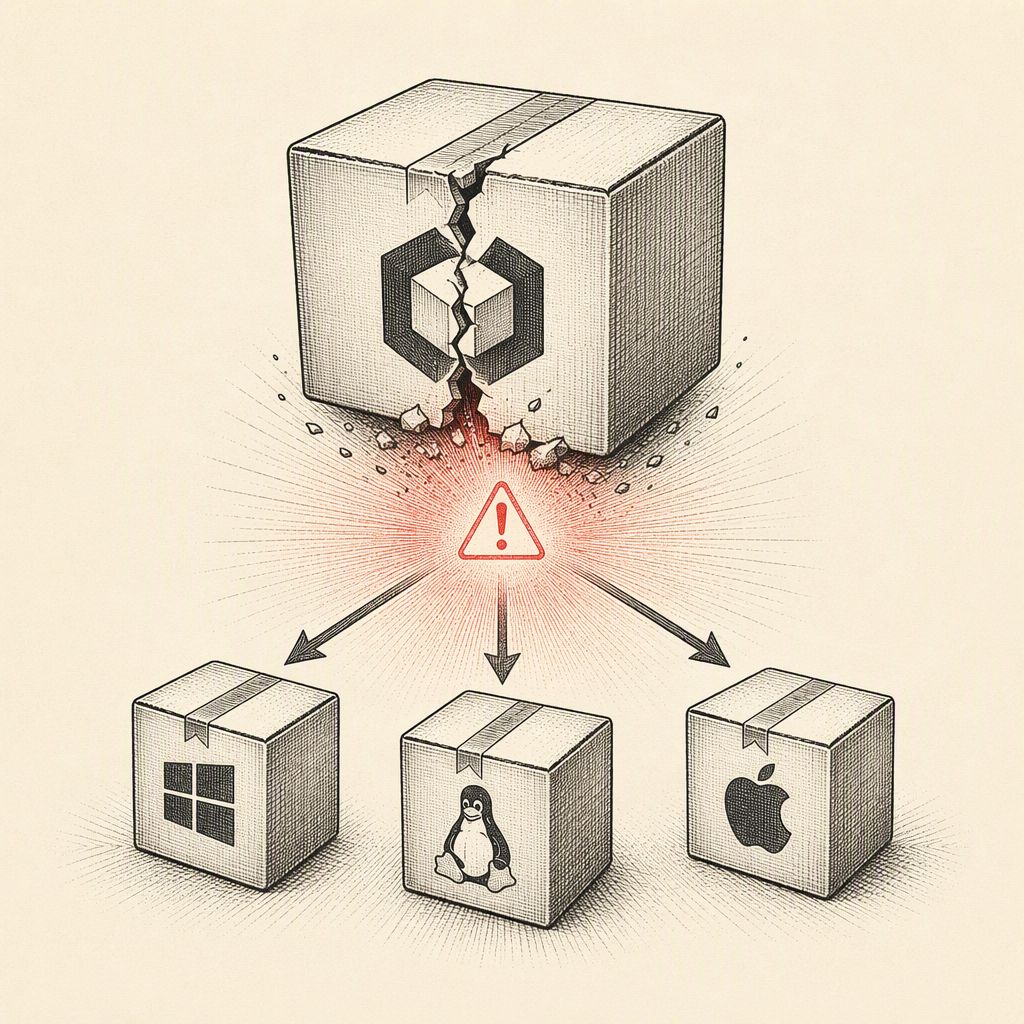
The campaign is characterized by a consistent naming convention, with all packages beginning with opencode2. This prefix is followed by platform-specific identifiers, such as opencode2-windows-x64, opencode2-linux-arm64, and opencode2-darwin-arm64. Unlike typical typosquatting attempts that impersonate popular legitimate packages, this burst appears to introduce a new family of malicious packages designed to target various operating systems and architectures, potentially for broad system compromise. The core opencode2 package itself is also part of this malicious set.
While specific behavioral findings from OpenSSF Package Analysis were not provided in the advisories for this burst, the nature of such platform-specific malicious packages often involves executing arbitrary code, establishing persistence mechanisms, or exfiltrating sensitive information from the compromised system. Given the Critical severity assigned to many of these advisories, it is highly probable that these packages were designed to achieve significant system compromise upon execution.
The severity of these advisories is consistently rated as Critical, indicating a high potential for severe impact. Any system that installed these packages should be considered fully compromised. Users are advised to treat affected machines as untrusted and take immediate remediation steps, including rotating all credentials and secrets from a separate, secure machine.
Developers should immediately audit their package-lock.json files and other dependency manifests for the presence of any packages beginning with opencode2. Given that these packages were only published hours before their disclosure, any appearance in a project's dependencies is a strong indicator of compromise. If found, these packages must be removed, and a thorough security audit of the affected environment should be performed. Given the critical severity, it is imperative to rotate all credentials, API keys, and sensitive tokens that may have been exposed on the compromised system. Examples of affected package names include:
opencode2opencode2-windows-x64opencode2-linux-arm64opencode2-darwin-arm64opencode2-linux-x64-musl
This incident highlights the ongoing threat of supply chain attacks targeting package ecosystems, particularly those involving rapid deployment of new malicious package families. The simultaneous publication and disclosure of these packages underscore the need for continuous vigilance and robust security practices in software development workflows. The use of platform-specific naming conventions suggests a deliberate strategy to maximize the attack surface across different operating environments, indicating a potentially sophisticated adversary.