
GIMP: Five Integer Overflow RCE Vulnerabilities Disclosed Together
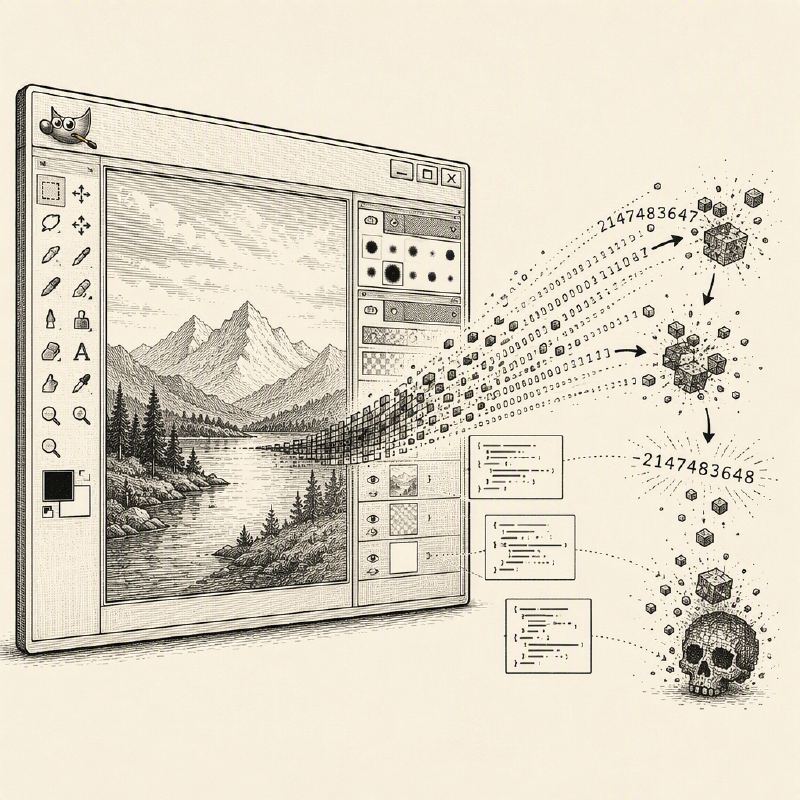
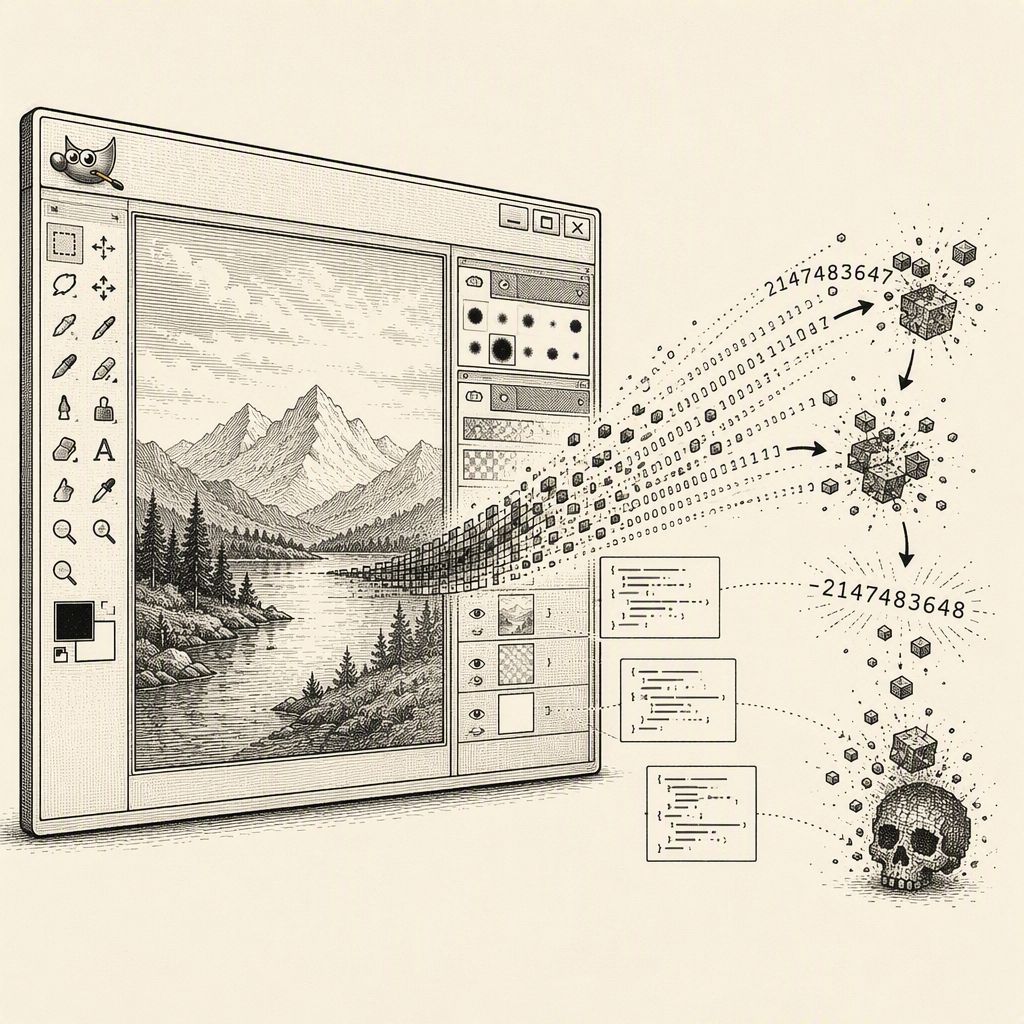
Five high-severity remote code execution vulnerabilities were disclosed for GIMP, stemming from integer overflows in the parsing of TIF, SGI, PSD, and HDR image files.
Key findings
- Five high-severity (CVSS 7.8) vulnerabilities disclosed for GIMP on August 20, 2026.
- All vulnerabilities are RCE flaws due to integer overflows in image file parsing.
- Affected file formats include TIF, SGI, PSD, and HDR.
- User interaction is required, typically by opening a malicious file.
- Coordinated disclosure highlights the need for prompt GIMP updates.
On August 20, 2026, a batch of five high-severity vulnerabilities was disclosed for the GIMP image editor. These vulnerabilities, all carrying a CVSSv3 score of 7.8, stem from integer overflow flaws within the parsing of various image file formats. Successful exploitation allows remote attackers to execute arbitrary code on affected systems, though user interaction is required, typically by opening a malicious file or visiting a compromised webpage.
The disclosed vulnerabilities affect the parsing of several image file types:
- TIF File Parsing: CVE-2026-18308 and CVE-2026-18304 both relate to integer overflows in the TIF file parser.
- SGI File Parsing: CVE-2026-18306 addresses an integer overflow in the SGI file parser.
- PSD File Parsing: CVE-2026-18301 concerns an integer overflow within the PSD file parser.
- HDR File Parsing: CVE-2026-18300 highlights an integer overflow in the HDR file parser.
All five vulnerabilities require a user to interact with a malicious file or link, making them a significant risk if users are tricked into opening specially crafted images. The consistent nature of these flaws—integer overflows in file parsing leading to remote code execution—suggests a potential common underlying issue in how GIMP handles image data from these formats.
Details regarding specific affected versions and patch availability were not immediately detailed in the initial disclosures. However, given the nature of these vulnerabilities, users are strongly advised to update to the latest available version of GIMP as soon as patches are released by the GIMP development team.
This coordinated disclosure of multiple, similar vulnerabilities underscores the importance of keeping GIMP updated. Users should exercise caution when opening image files from untrusted sources or clicking on links that may lead to the download or display of such files. The consistent theme of file parsing vulnerabilities indicates a need for ongoing vigilance in the security of image manipulation software.